Sterling rally looks vulnerable as strategists bet selling will resume in coming months
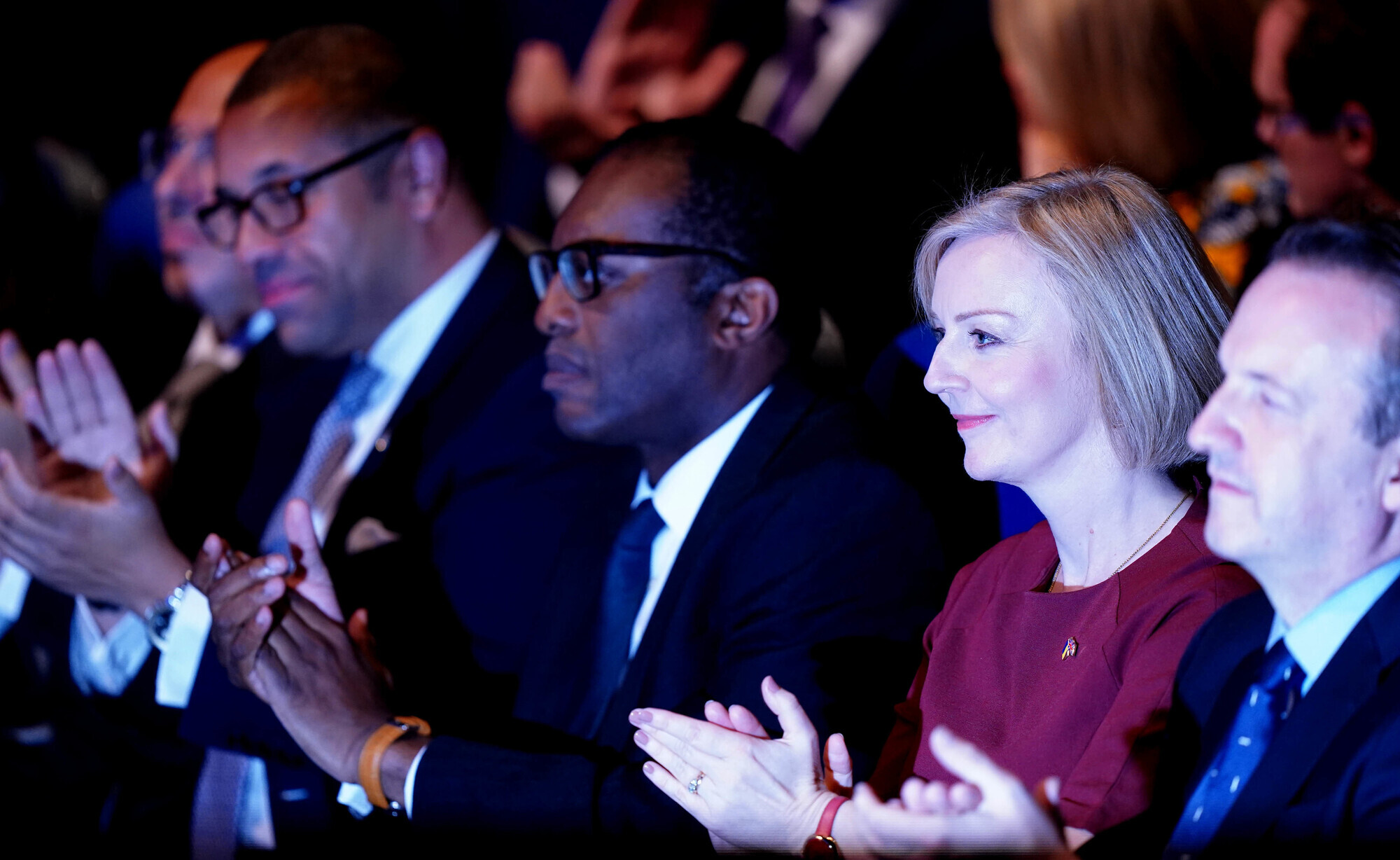
British prime minister Liz Truss, sits with chancellor Kwasi Kwarteng, centre, foreign secretary James Cleverly, second left, and her husband Hugh O'Leary, right, during the Conservative Party conference in Birmingham.
Sterling has rallied more than 10% from last week’s lows against the dollar but most strategists are sticking to bets the British currency will resume losses, with some predicting a new record low by year-end.
Entering its sixth straight day of gains, sterling is poised to post its longest rally since April last year, bouncing off last week’s record low of $1.035.
Bank of England interventions to shore up the country’s bond market have boosted the pound, but have also ramped up expectations for UK interest-rate rises, which strategists at Barclays say “may translate to a weaker pound down the line”.
Standard Chartered and Royal Bank of Canada both expect sterling to weaken almost 10% from current levels by year-end after government policy missteps undermined confidence in the currency. Nomura Holdings and Morgan Stanley are among those forecasting it will slip to parity during the same period.
The pound tumbled to its current all-time low of $1.035 on September 26, recovering as the UK government backed off its pledge to scrap a proposed tax cut. It traded at $1.138on Tuesday.
Economists at Barclays are on the dovish end of market expectations for the Bank of England and expect a terminal rate well below market pricing above 3%.
“Given the MPC’s hiking path to-date in this cycle we concur that risks are for a smaller amount of tightening than market pricing,” currency strategists wrote in a research note.
“This would effectively amount to yet another decision to let the currency bear the brunt of the adjustment at the cost of higher inflation for longer,” they said.
As a result, they believe sterling is exposed to further downside risks once short-term bearish positions have been cleared out, particularly in euro-pound where the rebound has been most pronounced.
The government’s U-turn on its tax-cut plans shaves only about £2bn (€2.3bn) off an overall reduction of around £45bn, according to ING currency strategist Francesco Pesole, who says it is not a game changer in terms of the country’s finances and continues to see “an elevated risk that the UK will face a rating downgrade”.
S&P Global Ratings cut the UK’s credit outlook to negative from stable last week, citing the country’s fiscal health over the next two years, while Moody’s has warned the government’s stimulus could do permanent damage to its public finances. S&P’s next scheduled publication on the UK’s sovereign ratings will be on October 21.
• Bloomberg
CONNECT WITH US TODAY



Be the first to know the latest news and updates