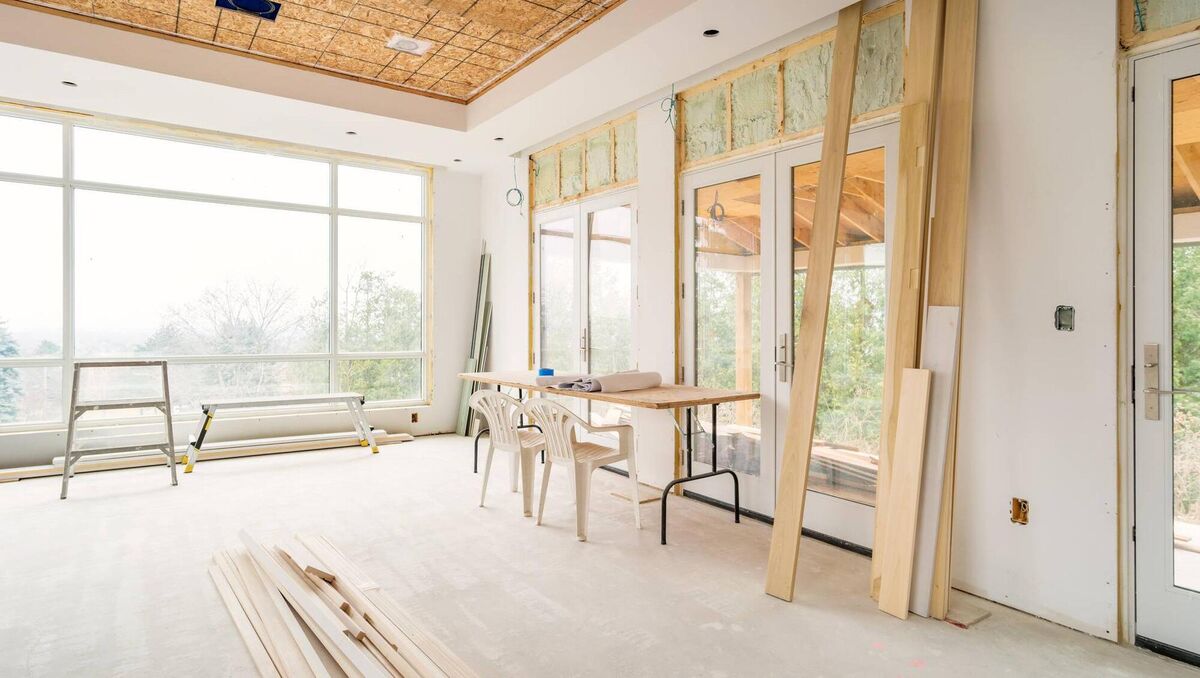
Cost of €40k energy retrofit cut to €26k with grant aid scheme

Home owners can avail of grant finance of up to 35% for attic insulation, external wall insulation, installation of solar panels, boiler replacement, and upgrades to windows and doors
Cost of €40k energy retrofit cut to €26k with grant aid scheme

Solar panels can save money in the long-term.

ProEnergy Homes is a home retrofit scheme being run by the Credit Union Development Association (CUDA) in association with the Sustainable Energy Authority of Ireland (SEAI) and project management firm REIL.

Home owners can avail of grant finance of up to 35% for a range of retrofit measures, including attic insulation, external wall insulation, the installation of solar panels, boiler replacement, and upgrades to windows and doors. 

The remaining cost of the works can then be financed either by savings, or through loan finance from your local credit union — if it’s participating. 

The scheme was piloted by CUDA in early 2019 across 20 credit unions, and was quickly oversubscribed.

There’s been such strong demand from participating credit unions this year that CUDA now reports that half of the 2021 SEAI €1.5m in grant aid is already allocated. 

CLIMATE & SUSTAINABILITY HUB

That doesn’t mean you’ve missed the boat however. As part the agreement, it’s anticipated that additional funding will be sought in later in the year.

Kevin Johnson, CEO of CUDA, confirms that based on the current level of interest from credit union members, not to mention the number of credit unions signing up to the scheme, they will need to look for additional funding shortly.

He anticipates that the annual level of grant funding will run at between €6m and €10m.

One-stop-shop

In addition to the grant aid, the big attraction of the scheme is that it provides a one-stop-shop for homeowners seeking comprehensive energy retrofits. 

It begins with a no-obligation home survey report which outlines the options most appropriate to the house. 

Thereafter, a dedicated project manager is assigned to arrange contractors and carry out quality assurance on the works as they’re completed.

CUDA say the scheme has been tweaked slightly in response to the pandemic. Home surveys and works will resume as soon as it is safe to do so, but in the interim, a team of expert project managers and surveyors are available for telephone consultations with interested applicants.

Loft insulation is one option.

The ‘free and no obligations’ call-backs can be requested from ProEnergy Homes and applicants will have the opportunity to discuss all their available options and receive professional advice on any technical questions they may have.

The most popular measures undertaken in 2020 were external wall insulation and new glazing. Multi-zone boiler controls — which allow separate control of heating zones and hot water — were also popular.

“In our experience of running the scheme, the cost to the average household of bringing their home up to the recommended B2 level rating will be approximately €30,000-€40,000,” said Mr Johnson. 

“So, just accounting for 35% of €40,000 through grant aid will leave a bill of roughly €26,000 for works.

“We recommend homeowners to use some savings to help lower the cost of any additional borrowing to cover the remaining bill, or indeed to cover the full cost of works, depending on how much they have saved.”

Restrictions

Josephine Maguire, of SEAI, recognises that access to finance can be a barrier to residential retrofitting.

“The SEAI has supported the ProEnergy Homes scheme for a number of years and the one-stop-shop model has proven to be a case study for the delivery of residential retrofitting at the ambitious scale targeted in the National Climate Action Plan," she said.

There are a number of restrictions attached to accessing the grant funding. You have to be a member of a credit union and your house has to have been built before 2006.

To qualify for a 35% grant, a home must generally be upgraded to a B2 building energy rating.

A building energy rating, or BER, is a rating given to your home, or indeed any building, based on its overall efficiency. The scale runs from A through to G, with A1 being the most energy efficient.

These ratings are calculated on energy performance and associated carbon dioxide emissions for the provision of space heating, ventilation, water heating and lighting under standard operating conditions.

A B2 comes after A1, A2, A3 and B1 — putting it into the fifth most efficient category.

REIL will perform a home survey for a set fee of €99, but this will be refunded if it turns out that your home isn’t eligible. It will also be refunded against the cost of works if your home is eligible and you choose to proceed.

Costs and finance

Your home survey report will detail any terms and conditions attaching to any grants you are eligible for. For certain works, additional surveys may be required at additional cost. REIL will advise of all options available before you incur any cost.

All contractors have to be REILapproved. All are regularly audited by SEAI and REIL to ensure they keep up with latest building regulations and SEAI requirements. 

REIL are solely responsible for all works and surveys conducted under this scheme.

You don’t have to borrow from the credit union in order to access the scheme, but you can access what they’re terming a ‘low rate loan’ if you do need finance.

A low rate loan means a rate under 7% on loans over €20,000. 

For example, €20,000 borrowed at 6.95% over five years would have monthly repayments of €395.55. 

Total cost of credit would be €3,733.14 at an annual percentage rate (APR) of 7.12%.

Higher rates apply to smaller sums. 

Pro Energy Homes offers this example: €5,000 borrowed at 10.48% over five years would have monthly repayments of €107.42 and total cost of credit would be €1,445.20 at an APR of 11%.

The full list of potential measures is broken into three categories.

  • Under insulation, the options include attic, internal wall, external wall and cavity wall insulation. 
  • Under heating upgrades, you’ve got heating controls, solar thermal panels and heatpumps. 
  • The ‘other’ category includes door and window upgrades and solar electric panels.

Contact your local credit union to see if they’re participating, or check out the list of credit unions on the website.

To initiate the process, you’ll need to fill out an application form in the branch, or fill out the online form — though at the time of writing this didn’t appear to be working.

The ProEnergy Homes grant is currently the only deep retrofit grant finance available in Ireland.

The SEAI, which is of course providing the grant finance here, had been running its own deep retrofit scheme directly, but this has now been discontinued. The agency does however continue to offer grant finance for individual energy efficiency upgrades: insulation, heating controls, heat pumps and solar panels.

These may suit those who want to invest in their thermal comfort but don’t qualify for or don’t have the resources to go for the full deep retrofit.

Note however that these energy efficient grants don’t include window or door upgrades.

CLIMATE & SUSTAINABILITY HUB

More in this section

The Business Hub

Newsletter

News and analysis on business, money and jobs from Munster and beyond by our expert team of business writers.

Cookie Policy Privacy Policy Brand Safety FAQ Help Contact Us Terms and Conditions

© Examiner Echo Group Limited