ESRI: Government may not need to borrow billions more despite lockdown; PUP bill tops €6bn
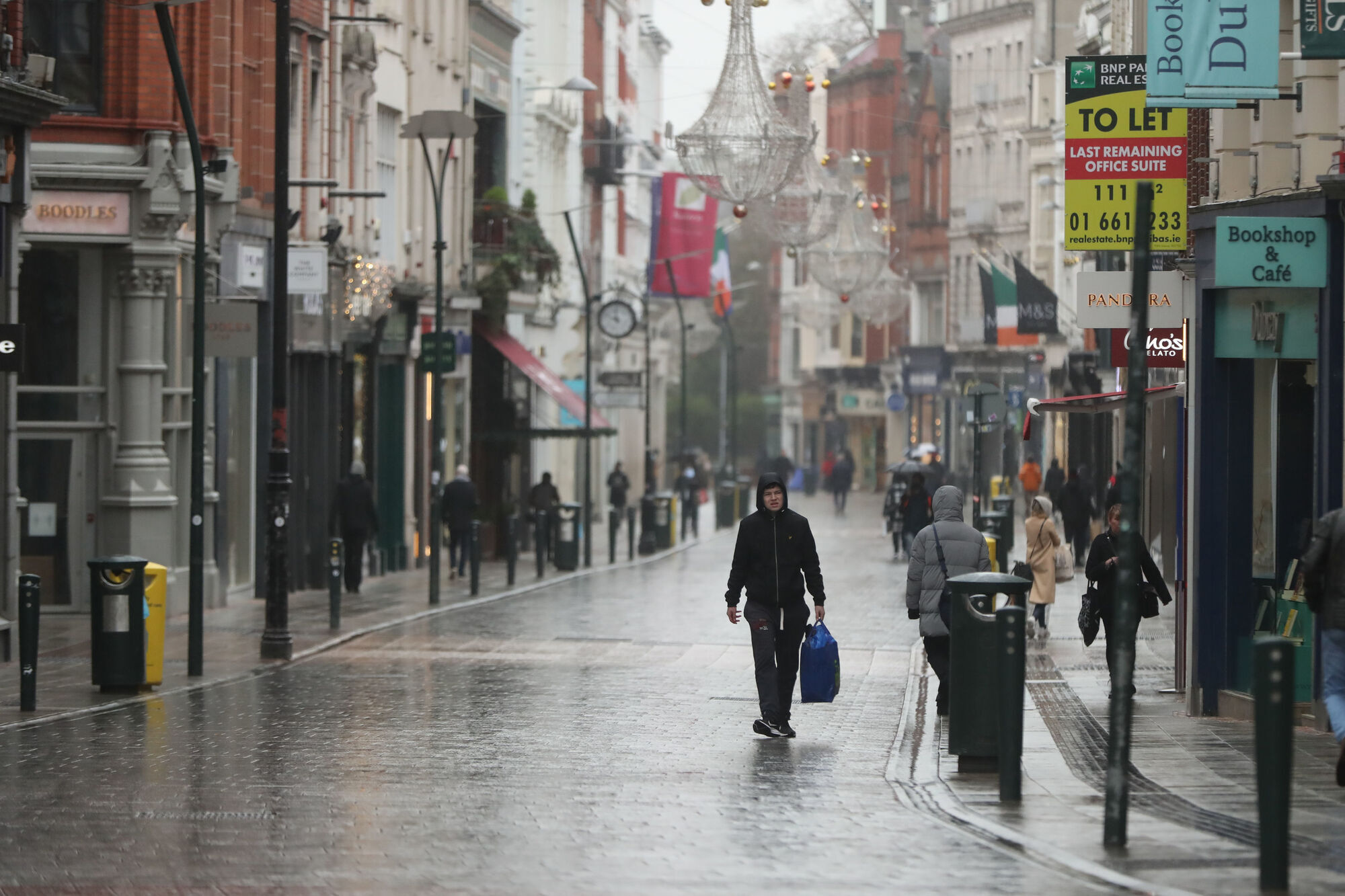
People walk along a near empty Grafton Street in Dublin. The extended lockdown will mean that unemployment will not return to its pre-pandemic level of below 5% 'until at least 2023. Picture: Niall Carson/PA
The Government was given some welcome news as a leading expert predicted it may not automatically need to borrow many billions more this year despite the level 5 lockdown extending longer than anticipated.
Kieran McQuinn, research professor at the Economic and Social Research Institute, said the ESRI was unlikely to increase its own forecast by a significant amount for a Government budget deficit of about €18.5bn this year.
"The lockdown is definitely more significant than we envisaged and it has come earlier in the year but I think that by end of the year, if the vaccines are rolled out, we will see an improvement in the labour market, which means we wouldn't need sizeable borrowings on top of what we already forecasting," Prof McQuinn told the .
However, the extended lockdown will mean that unemployment will not return to its pre-pandemic level of below 5% "until at least 2023", mainly because the shutdown of building sites has lasted longer than most anticipated.
The comments come as Bloomberg reported that German leader Angela Merkel is weighing as much as €50bn in additional debt spending to fight the fallout from the coronavirus crisis. Its cabinet discussed funding, which is equivalent to about 1.5% of German GDP, but it’s still unclear if the money will be needed in the end, according to sources.
Here, new Government figures showed the costs of the Pandemic Unemployment Payment (PUP) had topped €6bn since its launch last spring.
However, the Department of Social Protection figures shows the number of PUP claimants fell by 4,252 to 473,400.
The latest figures show 110,700 accommodation and food service workers, 75,200 wholesale and retail staff, and 61,080 building workers required the pandemic payments this week.
Meanwhile, Capital Economics in London said Britain's plan to ease its Covid-19 lockdown will help the UK economy get back to its pre-pandemic size by the first quarter of next year.
CONNECT WITH US TODAY



Be the first to know the latest news and updates