Irish truckers seek subsidies for France-direct sea freight amid disruption at Dover
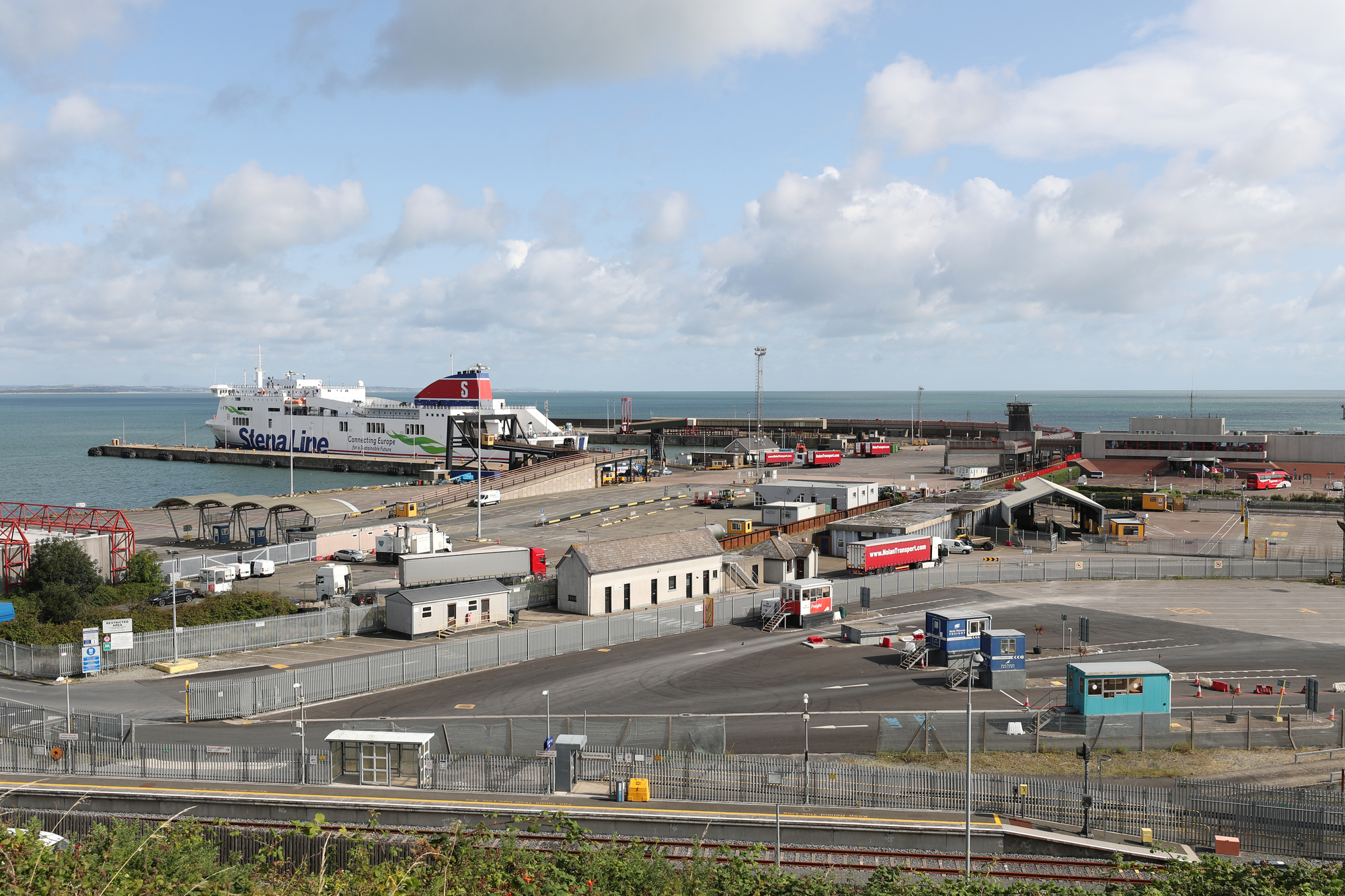
A general view of Rosslare Europort in Co Wexford.
Irish truckers want the Government to tap more EU funds to subsidise the costs of exporting and importing directly to France by sea.
Aidan Flynn, general manager for the Freight Transport Association Ireland, said the new Dunkerque lorry cargo route from Rosslare, which DFDS starts in January, was the most viable route because it circumvents the UK motorway landbridge to Dover and gets Irish products into the populous north European markets.

The Irish Government had properly focused on boosting capacity on the direct route to Cherbourg from Rosslare, which Stena has brought forward to this week, Mr Flynn said, but it also needs to help lower the costs of the Dunkerque route for trucking firms.
That is because using the land route through Wales and England and onto the continent from Dover was still the cheaper option, Mr Flynn said. The call comes as the sudden temporary shutdown by the French authorities of British cargo arriving from Channel ports following a new strain of the coronavirus had shown up the "fragility of the UK landbridge" for Ireland, Mr Flynn and other experts said.
Mr Flynn said the Covid-related disruption was evidence that regardless of any Brexit free-trade deal in the coming weeks, the UK landbridge was highly susceptible to disruption. He said that there was capacity for 115 trucks on the Dunkerque route, and capacity for up to 100 trucks on the direct Ireland-to-Cherbourg route, equivalent to about 40% of the Irish trucks travelling both ways between the channel ports.
John Whelan, co-founder of trade consultancy The Linkage Partnership, said the Covid-related disruption at Dover that had ensnared Irish exports and imports was something of a foretaste of what will happen under a hard Brexit.
The addition of extra capacity from Ireland to Cherbourg which arrives this week was welcome, "but we need more capacity", Mr Whelan said.
"It does highlight the fragility of using the landbridge to get to our main Europen markets," he said.
"There isn't a difficulty at Holyhead, which is the second biggest port in Britain.
Bans by many European countries on passengers from Britain sparked by the heightened health scare, disruption at the channel ports, and fears of a new round of lengthy lockdowns led to a sharp fall in sterling, as well as global shares.
Sterling fell to 91.6 pence against the euro, and the Ftse-100 in London ended 1.7% lower.
IAG, the Aer Lingus and British Airways owner, slid 8% in London, and Ryanair fell 4.5% in Dublin.
"Volumes are dropping back, and it is only natural to see such quick and dramatic reactions around today’s headlines. Whether it lasts beyond today is open for debate."