Watchdog criticises extra €8.5bn Budget spend without a plan to fund it
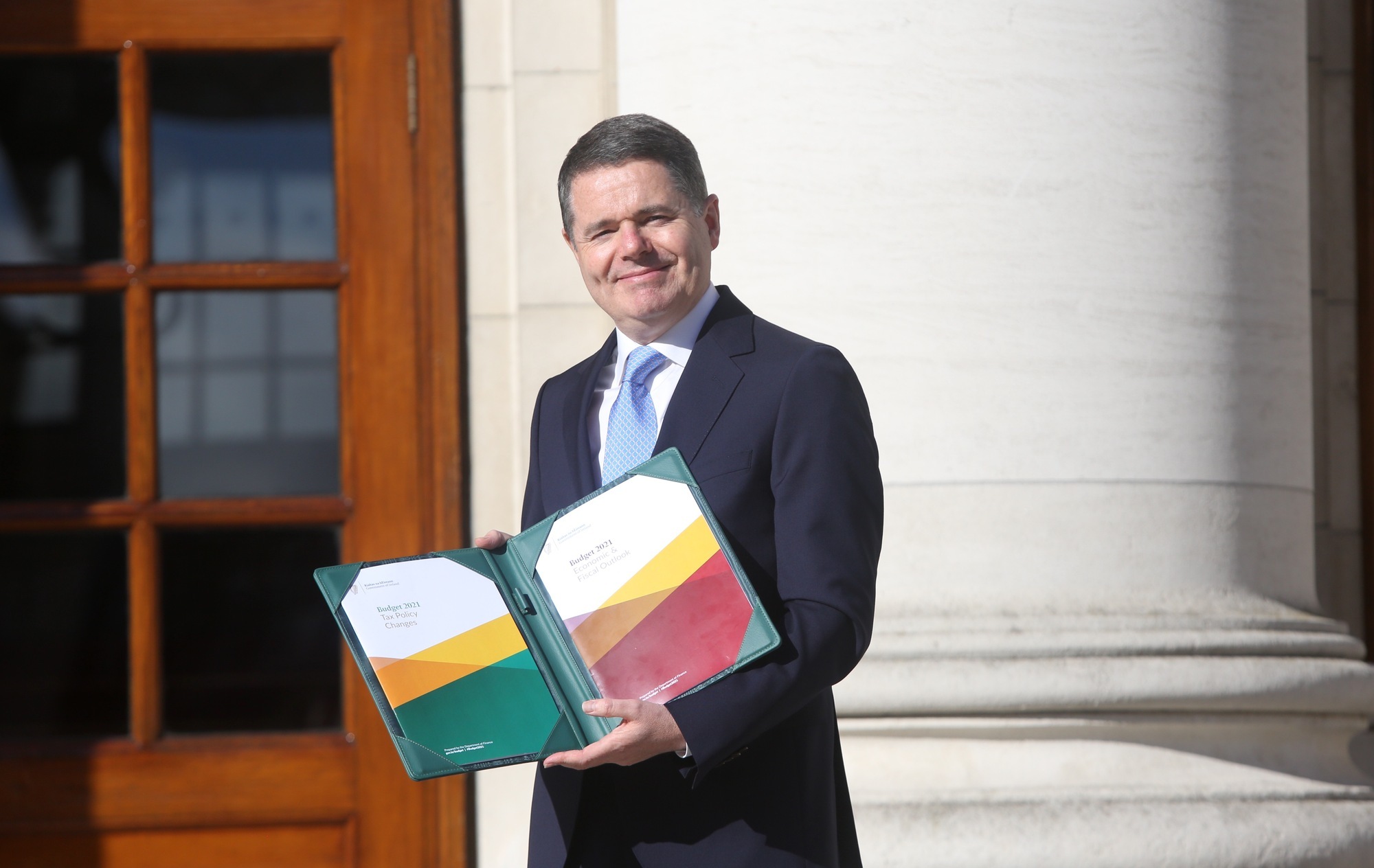
Minister for Finance Paschal Donohoe presenting the budget in October.
The Government has not explained how it will finance up to €8.5bn in increased permanent spending announced in the recent budget that will remain long after the current pandemic, Ireland's spending and tax watchdog has said.
In its report assessing the Government’s Budget 2021 plan, the Irish Fiscal Advisory Council (Ifac) said the extra spending increases will make it more difficult to bring the debt ratio back down at a steady pace in the post-Covid recovery period. They also pointed to major longstanding issues that will impact the State finances including Ireland's rapidly ageing population, an over-reliance on corporation tax, climate change, and ambitions to embark on large-scale Sláintecare reforms of the health sector.
A €1.9bn increase in health is the largest element of the extra, permanent spending increase, along with €0.7bn spending increases in the areas of education, social protection, housing, and transport. Ifac also raised transparency concerns about almost €3bn in spending increases for 2021 in non-exchequer areas such as local councils.
"The increase in permanent spending is surprisingly large," the report stated. "There is limited transparency on a large portion of it, and there is little indication as to how new measures will be financed sustainably over the medium term."
Chairperson of the Fiscal Council, Sebastian Barnes, said the increased spending creates a "bit of a hole in the public finances at a time where we don't know, exactly where revenue is going to be, but likely on a lower path than we were before".
"Having these big increases in spending is potentially a risky strategy. The increases are very large, amongst the largest increases in net policy spending in recent years. Very much on a par with the very big increase in 2018," he said.
“Budget 2021 is right to continue massively supporting and stimulating the economy at a time when Covid-19 and Brexit will weigh on the Irish economy," he said. "However, introducing large permanent spending commitments without a plan to fund them sustainability creates fiscal risks."
Ifac said the Government should use its medium-term strategy in April 2021 to set out credible plans for how it intends to manage the pressures on the budget after the economy has recovered.
In relation to Covid, the report states that the large temporary supports and stimulus of up to €12bn are welcome, and the €2.1bn contingency and €3.4bn recovery fund for 2021 are helpful.
"These policies will help to support the economy and limit lasting damage from the crisis. Government debt will rise further to high levels, but low interest rates create a favourable environment for debt sustainability."
The Government refinanced €17bn on bonds this year. Previously, they were paying €800m a year in interest. They are now paying €36m a year in interest. It's a phenomenally favourable environment for Government borrowing.
CONNECT WITH US TODAY



Be the first to know the latest news and updates