Employer must see AI as core to talent retention: Microsoft boss
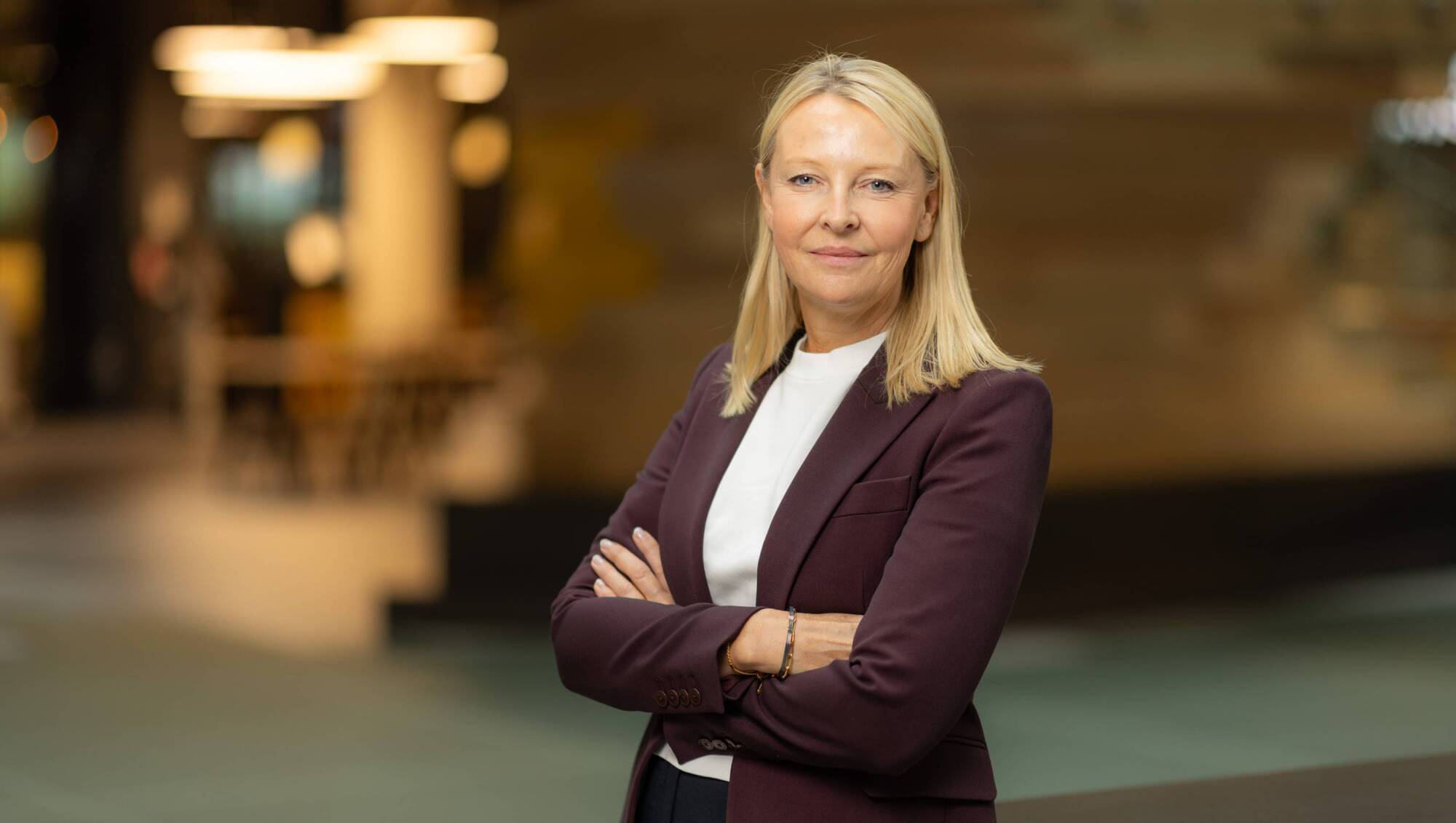
Catherine Doyle, general manager, Microsoft Ireland.
Employers need to view AI capability as part of their talent proposition as people want access to modern tools, useful training and the chance to build future-ready skills.
Almost half (47%) of Irish workers say they are considering new career paths, as AI shapes the future of work, Microsoft Ireland's 2026 Work Trend Index has found.
The survey reveals a workforce increasingly focused on future-ready skills, career paths, and what it expects from employers, while many organisations struggle to provide the tools, training, leadership and governance needed to keep pace.
In this Q&A interview, Catherine Doyle, general manager, Microsoft Ireland, outlines the main implications for employers and employees alike of this latest survey of workplace trends.
The findings show that Irish workers are quickly embracing AI, while organisations are still catching up. AI use at work has risen to 63%, and 48% already use AI agents regularly or occasionally. This sits within a wider picture of global adoption. Microsoft's latest Global AI Diffusion Report ranks Ireland third in the world and first in Europe for AI adoption, up from fourth globally in the previous quarter and now ahead of both Norway and France.
The challenge is not employee appetite. It is whether employers provide the right level of skilling, investment and leadership to turn that enthusiasm into practical capability, trusted adoption and business value. Only 40% of workers say they have received enough AI training or guidance, less than half say their employer provides the tools and resources they need, and fewer than half say leadership expectations around AI use are clear.
For employers, the advice is to start with the business outcome, not the technology. In our own experience applying AI across Microsoft, the work that succeeds begins with a specific problem – a process that is slow, a decision that takes too long, a customer question that is hard to answer – and then asks what AI could do about it. Pick the handful of areas where AI could make a measurable difference this year, and be clear about what better would actually look like before you start.
AI is now part of how people judge an employer. It is rarely the single reason someone moves, but it increasingly shapes who they are willing to move to. Almost half of Irish workers changed employer in the last year, up from 38% in 2025 and 19% in 2023, so there is a lot of movement in the market generally. What is new is that AI is now shaping how people think about where they go next: 47% say it is making them reconsider their career path, 65% believe AI skills are essential to compete, and around one in eight say they would consider changing employer specifically for access to better AI tools.
For employers, that makes AI capability part of the talent proposition. People want access to modern tools, useful training and the chance to build future-ready skills.
No – not yet. The findings point to a clear gap between employee readiness and organisational readiness.
Employees are ahead. They are already using AI - 57% can already point to where AI agents would help in their role. That figure is the one I would encourage employers to sit with, because it means the knowledge of where AI would make a difference already exists inside the organisation. It is just sitting with the people doing the work rather than with the people deciding where to invest.
So, the priority is not to persuade employees of AI’s value. It is to ask them. The organisations moving fastest are treating their own people as the best available intelligence on where the friction is, rather than settling on an approach centrally and rolling it out.
Absolutely. The research suggests organisations need to look at how work gets done, not only at how AI tools are deployed.
Burnout has risen to 44%, while more than a third of workers struggle to maintain the right work-life balance. Employees see AI as a way to reduce workload pressures and focus on higher-value work.
The opportunity is to redesign workflows around better outcomes. Employers have a great opportunity to use AI to remove friction, reduce low-value work and give people more time for judgement, creativity and customer-focused activity.
Two things matter in particular. The first is governance. Only around half of Irish workers say their organisation has clear rules on what data can be put into an AI tool, and that is a straightforward gap to close. Closing it gives people the confidence to use AI properly, rather than quietly working around the organisation to get their job done. The second is measurement. Decide what you expect to change before you begin, so you can tell the difference between activity and progress.
Microsoft's Frontier Playbook, which draws on our own experience of applying AI across the business, points to the same conclusion. Successful adoption depends on people, processes and technology moving together, and the technology is rarely the hardest part.
Beyond that, the real opportunity is to use AI to expand what people can do, not only to speed up what they already do. That is where the lasting value sits, and it is well within reach for organisations willing to put the basics in place first.


CONNECT WITH US TODAY



Be the first to know the latest news and updates