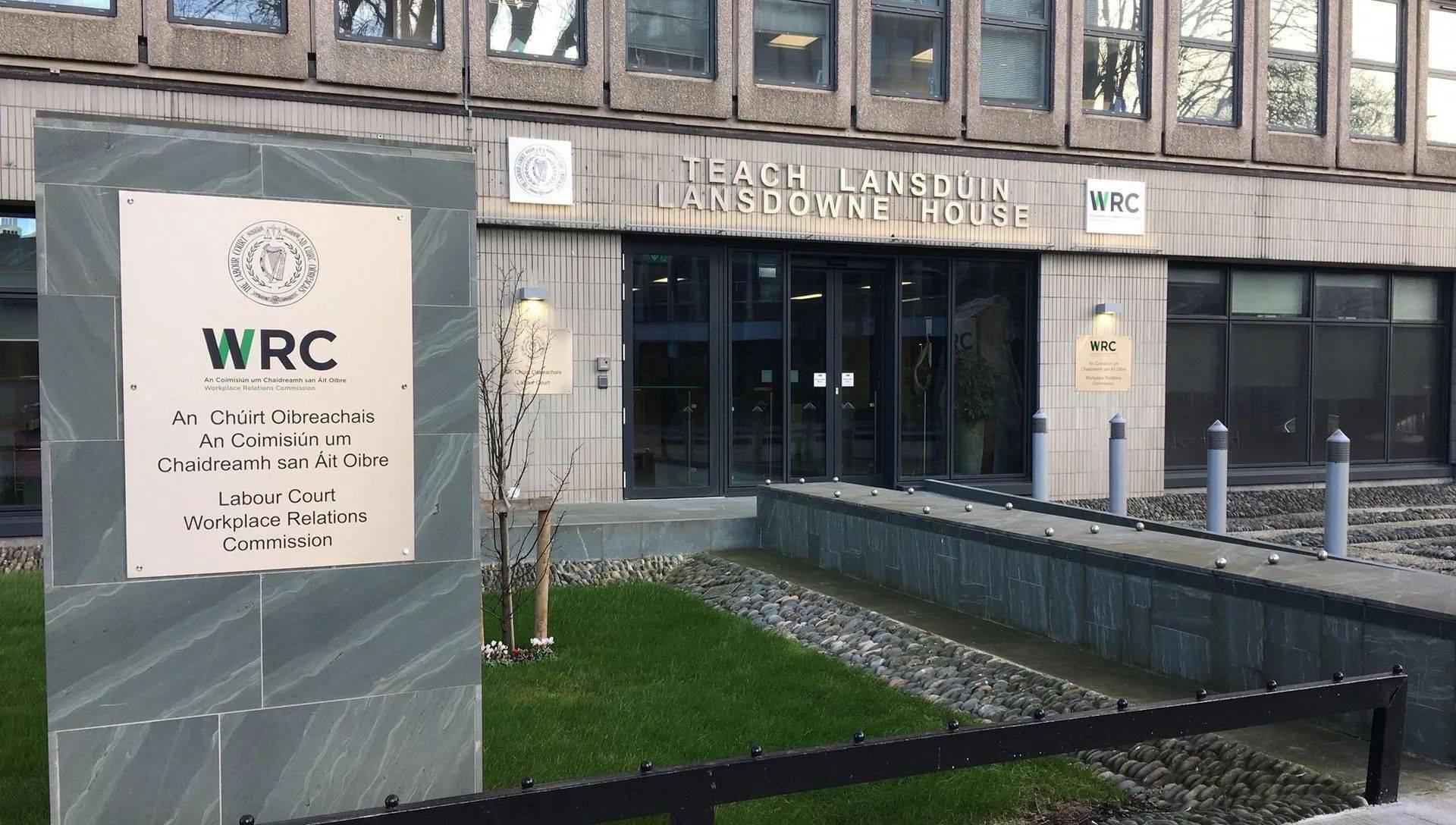
Woman accused of violating remote working policies by logging in from Spain has WRC case thrown out
Complainant said she did not log in from Spain, and instead used a Spanish IT connection from Dublin that belonged to her husband
A Spanish worker who was accused of manipulating her Dublin office's attendance-tracking swipe system and violating the terms of her employer's remote working policy by logging in from Spain has had her case dismissed by the Workplace Relations Commission (WRC).
Maite Gutierrez Fenoll worked at financial services company Interactive Brokers Ireland Ltd for almost three years before she was dismissed from her role as a client service associate in October 2024.
Ms Gutierrez Fenoll was accused of gross misconduct by the company for "serious breaches" of its remote working policy. While the worker claimed that she did not log in from Spain, and instead used a Spanish IT connection from Dublin that belonged to her husband, an IT expert employed by Interactive Brokers gave technical evidence that, on the balance of probabilities, electronic addresses, tracking records, and protocols that "this could not have happened."
Ms Gutierrez Fennoll argued that her husband was based in Ireland but worked in e-commerce for a Spanish company. She said he had a Spanish IT facility in Dublin, and this had picked up her connection attempts while her Irish connection was offline. The complainant said this appeared to show that she was physically in Spain but was actually in Dublin.
She also said her department manager, who is based in Switzerland, had reassured her that the department had a "relaxed and flexible" remote working policy.
However, a representative for the company cited findings from it's IT expert who said the logins examined were, in his opinion, from a physical address in Spain and not from Ireland.
The employer also noted inconsistencies in Ms Gutierrez Fenoll's records on the attendance system, which she refuted.
"Issues such as inadvertently “tailgating” on colleagues going through the doors were a well-known feature/flaw of the system," Ms Gutierrez Fenoll added.
After two extensive meetings with the complainant, a senior manager at Interactive Brokers said "trust and dishonesty" were key to formulating her opinion, and that Ms Gutierrez Fenoll had "regularly changed her explanations and was simply not presenting a credible version of events.
"The complainant was in a high trust position, and her lack of credibility was incompatible with this role," the WRC heard.
The senior manager added that the dismissal was a "difficult decision" to make but the lack of credibility and what she called "basic dishonesty" on the complaint’s part had decided the issue for her.
Following her dismissal, Interactive Brokers said the complainant did not lodge an internal appeal and instead, lodged a "very early" complaint with the WRC.
The company argued that as no internal appeal happened, the case should be “ab initio” decided in its favour.
In his findings, WRC adjudicator Michael McEntee said that while Ms Gutierrez Fennoll presented as a "very capable worker," she had taken a "relaxed view" of remote working procedures, noting evidence that pointed to her being advised, if not, formally cautioned of this a year before her dismissal.
"The time clockings were direct evidence and the varying explanations did not add to her defence," Mr McEntee noted, adding that a failure to appeal was also indicative of the complainant’s approach of "not really appreciating the seriousness of the situation."
"Her shortcomings in not having proper representation at internal hearings, although this was pointed out to her by the respondents at all stages, did not help her case," Mr McEntee added, ruling that the company's procedures were fair and dismissing the case.