Irish consumer sentiment drops to two-year low on trade war uncertainty
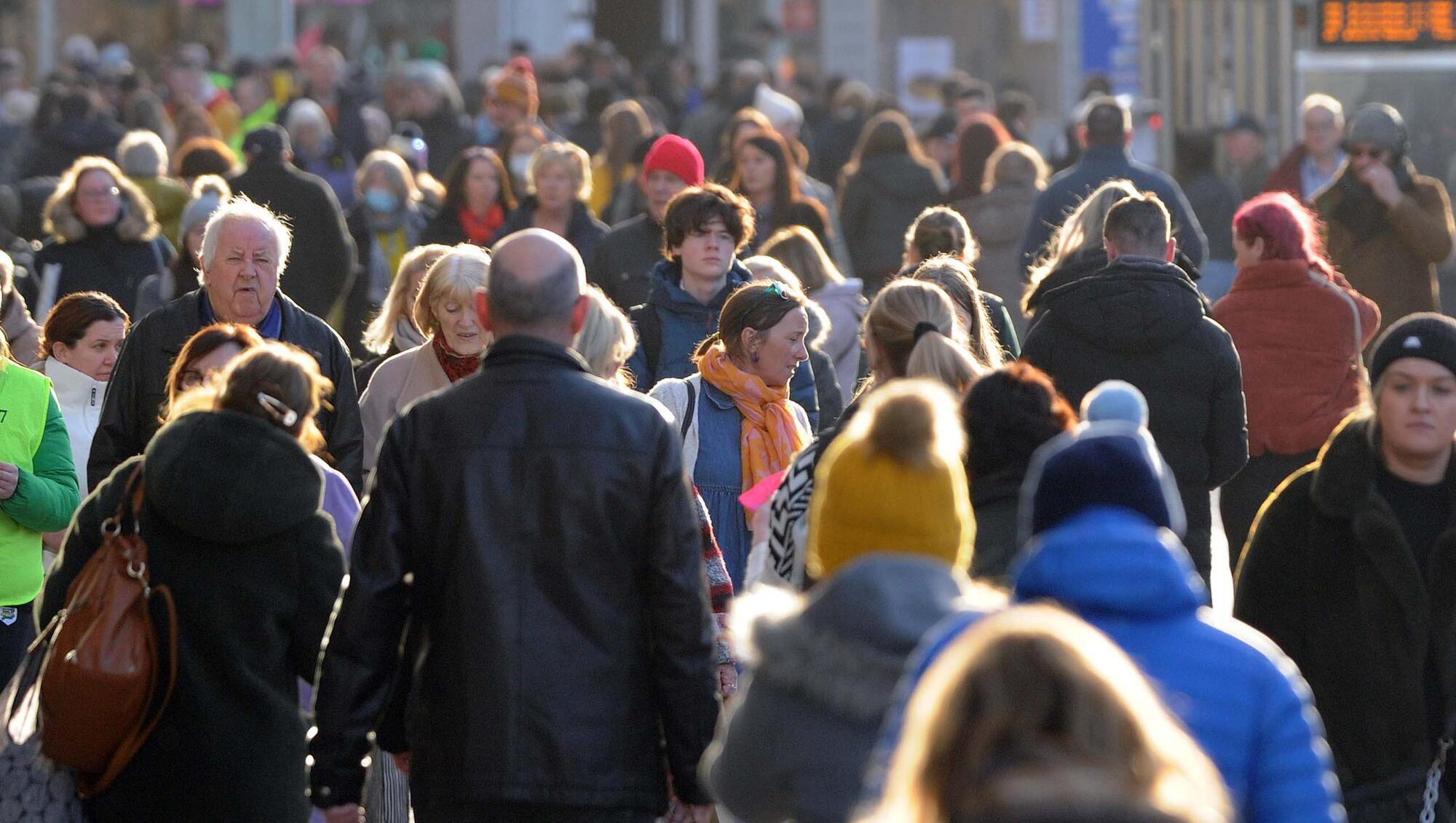
The drop in consumer confidence here is comparable to but slightly larger than marked sentiment declines elsewhere. US consumer sentiment has dropped to its second-lowest monthly reading since 1953. Picture Denis Minihane.
Irish consumer sentiment has fallen to its lowest level in two years on the back of a global trade war set off by US president Donald Trump.
The findings of the April Credit Union Consumer Sentiment Survey now show that the gap between current conditions and expectations for the future is the largest since the threat of a ‘no-deal’ Brexit in late 2020.
The drop in consumer confidence here is comparable to but slightly larger than marked sentiment declines elsewhere. US consumer sentiment has dropped to its second-lowest monthly reading since 1953.
The monthly survey found that most households have confidence in their personal finances for the year ahead their outlook for the wider economy is much gloomier.
Exactly how far or how fast Irish economic conditions might weaken in the future remains unclear and subject to rapid and random changes on policy pronouncements from the White House and elsewhere. It makes it difficult for Irish consumers to assess how much to adjust their behaviour.
A state of flux as well as fear is likely to dominate consumer sentiment and spending in the coming months.
The survey, in partnership with Core Research, shows an index reading of 58.7 in April, significantly lower than the 67.5 figure for March, and marking a second successive month of substantial decline in Irish consumer confidence. The April reading is materially weaker than the 29-year survey average of 84.1 and also some distance below the 66.6 average of the past five years.
Economist Austin Hughes said the survey suggests that any pullback in Irish household spending in the months ahead seems likely to be driven by fears about the future rather than current financial problems. "The nature of the very real risks facing the Irish economy from a global trade war at present are very different in terms of the speed and type of fallout to those seen in the 2008 crash," he said.
"The survey was taken between April 5th and 15th, during which time there were an almost bewildering number of pronouncements, qualifications, postponements and rumours on trade measures and their possible economic repercussions."
However, Mr Hughes said the element of the survey that saw the smallest drop in April was in relation to spending plans. "This element could have been boosted by a falling trend in ECB interest rates and may also have gotten some temporary support from Easter-related outlays."
The survey asked consumers about specific plans for spending on home improvements. Just under half of Irish consumers (47%) say they have undertaken significant home improvements in the past two years, up markedly from just over one in three consumers (37%) who gave this answer in the 2024 survey.
"Our judgement is that a comparatively high incidence of home improvement spend among the 55 to 64 age group may owe something to ‘empty nesters’ and/or ‘re-nesters’ being financially able and wishing to ‘rightspec’ their properties for changed household circumstances involving either fewer or more occupants," Mr Hughes said.
CONNECT WITH US TODAY



Be the first to know the latest news and updates