Revenues rise as cost of labour and materials drives up construction project prices
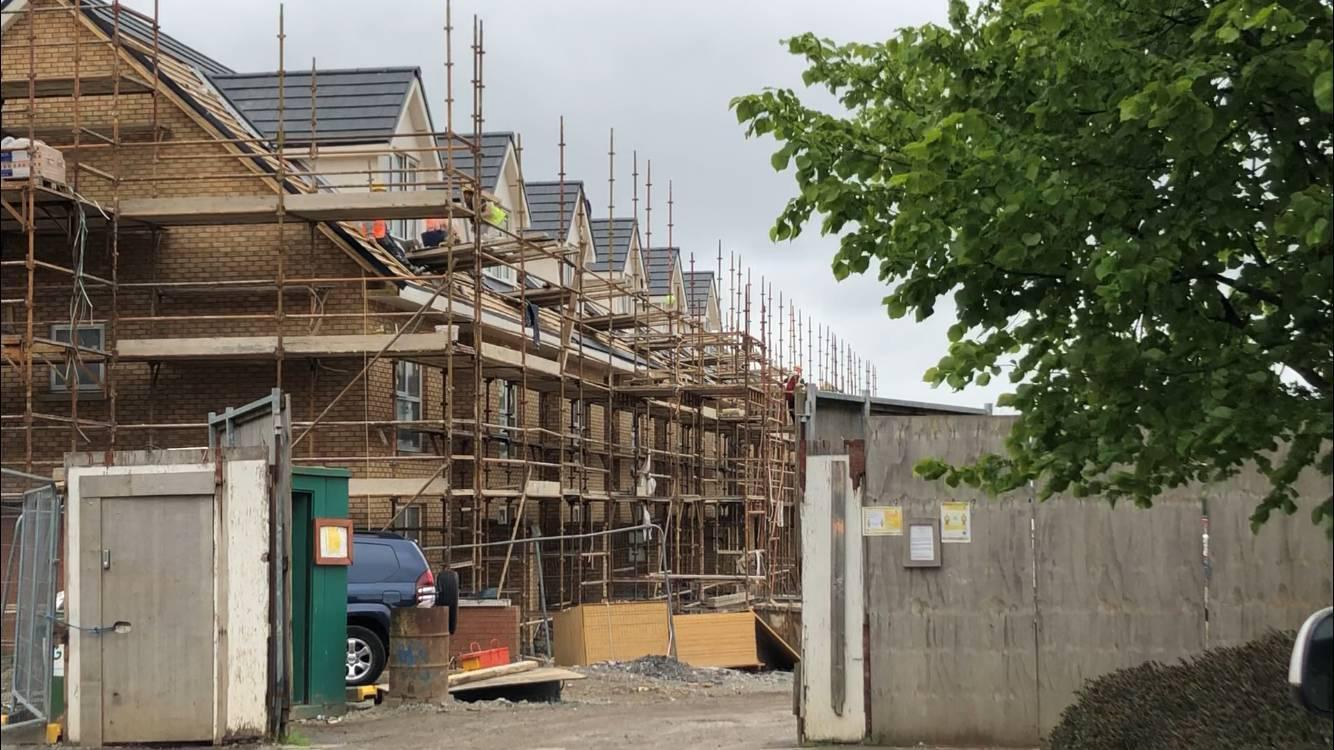
Access to skilled labour, securing a good profit margin on projects, and the increasing cost of raw materials was cited by firms as the most significant challenges the construction industry is currently facing. File picture: PA
A third of firms operating in the construction sector have seen revenue increase over the last year as growing costs continue to push up project prices for a majority, a new report by the Construction Industry Federation (CIF) shows.
In the CIF’s latest construction outlook survey, which sampled 242 construction companies across the country, 33% of companies reported an increase in turnover between July and September compared to the same period last year with 35% expecting turnover to increase during the last three months of 2024.
While the residential and the non-residential construction companies reported an increase in revenue from new orders over the last year, there was a decrease recorded in civil engineering firms.
Just over one in five companies, 22%, said they have increased the total number of employees in three months to the end of September with 25% expecting the trend to continue through the rest of the year.
However, costs are still a major concern for construction companies with 66% reporting they’ve experienced a year-on-year increase in the cost of labour with 43% expecting that to continue as well.
On top of that, 64% said they’ve seen an increase in the cost of raw materials.
Increasing costs continue to impact the pricing of projects with the majority of firms, 52%, reporting an increase year-on-year. The increase in project pricing is likely to continue through the rest of the year, albeit at a reduced rate.
Access to skilled labour, securing a good profit margin on projects, and the increasing cost of raw materials was cited by firms as the most significant challenges the construction industry is currently facing.
In addition, one in five companies acknowledged sustainability reporting as a key challenge.
The volume of companies that export constriction services was very low with only 5% reporting having done so in the last 12 months — the highest rate of this was seen in the civil engineering sector at 11% followed by 10% of specialist contracting companies.
In terms of projects being completed overseas, data centres, pharma plants and energy generation were the most common projects in the last 12 months.
Director general of the CIF Hubert Fitzpatrick said there is an increasing level of Irish construction contractors exporting their services and working with their existing foreign direct investment (FDI) clients in other jurisdictions.
“This illustrates that capacity exists within the sector to deliver upon much-needed infrastructure, like water and energy, supporting services, job creation, FDI and housing,” he said.
“Any uncertainty around government or state agency budgets could result in contractors constructing public infrastructure projects joining this export movement at a time when we need them delivering Ireland's infrastructure,” he said.
Of the 242 firms surveyed, 50% were in general building contracting while 17% were specifically in home building. A further 25% were specialist contracting and 8% worked in civil engineering.
CONNECT WITH US TODAY



Be the first to know the latest news and updates