How Munster's businesses are diversifying to meet the challenges of Covid-19

Businesses across Munster are diversifying their output to meet the challenges the coronavirus pandemic has created.
From hospital cubicle dividers and gowns, neighbourhood communication apps and perspex dividers, intuitive business owners have adapted to answer the public health need, as well as to keep trading.
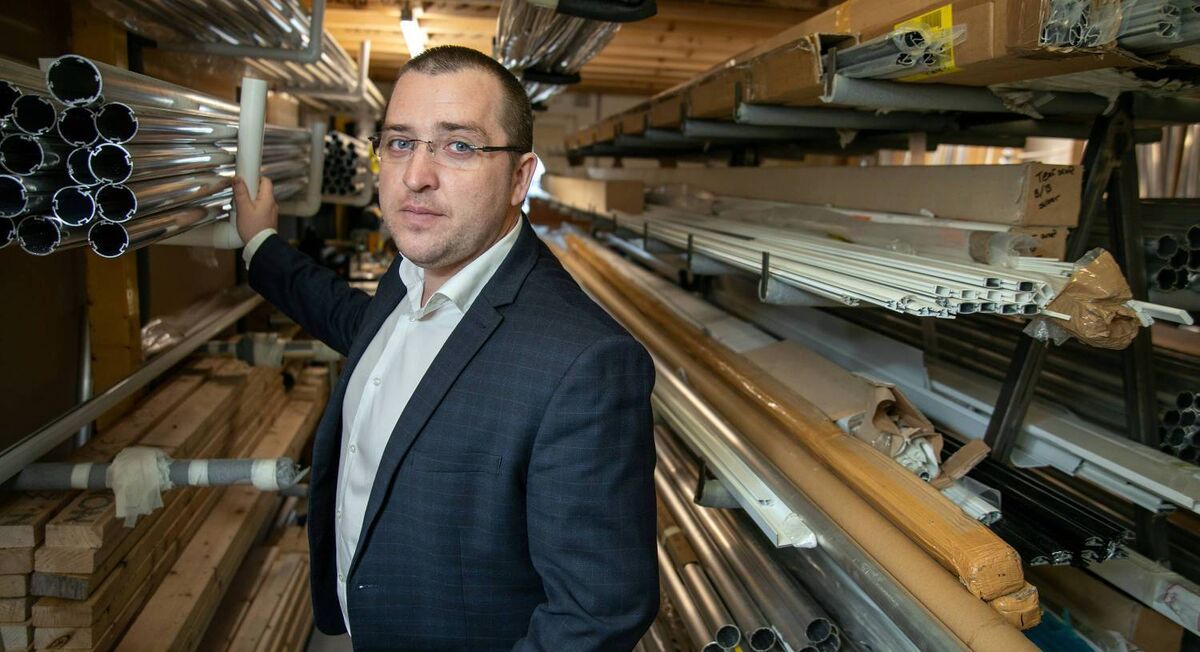
Shadetech, a Clare based provider of manual and automated blinds, has pivoted to making privacy screens, hospital cubicle tracks and disposable curtains for the HSE.
Pat Naughton, founder of ShadeTech, began as a sole trader with Castle Blinds in 2011. The company grew bigger and he set up a factory in Shannon in April 2016.
"We have 15 staff and the projects are getting more interesting as time goes on. 80% of what we do are commercial projects, and we also manufacture our own blind systems."
Mr Naughton says for the past couple of months, he had been gearing up to brace Brexit by securing suppliers from outside the UK. However, it soon became apparent that Covid-19 would affect Ireland’’s industrial landscape quicker.
"As soon as we realised we would be facing a shutdown, we stopped all residential sales, which would be about 20% of the business."
The next snag was global supply chains crumbling due to lockdown measures. "France, Germany, Spain, they all shut up shop without much notice."
Leading up to the lockdown, hospitals rang Mr Naughton and told him there would be a number of emergency HSE projects. This enabled him to get enough stock to complete the orders, which were mainly privacy blinds and cubicle tracks. This has kept the company busy.
ShadeTech is also manufacturing in-house during the crisis. "We had received a grant from the Local Enterprise Office for something else, but now there is so much uncertainty. We put in a request to the LEO to take a portion of that grant to buy a hospital track bending machine.
"That enabled us to do things a lot faster. We would have been waiting 10 to 14 days, now we can turn around a relatively small project, from survey to install ready, in three days."
ShadeTech has also created a new product called a ’’rollerscreen’’ made of clear plastic and is styled like a blind which can be retracted. Mr Naughton hopes that this will help keep shop staff and customers safe.
"It can be used as a divider between the customer [and shop assistant]. It can be rolled up if not needed.
In Cork, Benson’’s Workwear has traded school and work clothes for hospital gowns.
Co-founder Beni Moussa says Bensons Workwear was established in 2012. "I am a fully qualified fashion designer, so fabric technicalities, patterns, dying and stitching would be my areas of expertise.
Bensons’’ mainly produced bespoke garments such as custom workwear, sportswear and uniforms. "We trade across Ireland, France and the UK."
"The virus hit China in December, and for our fabric sourcing, we partnered with Chinese factories. Things were very slow. Shipments got delayed as people stopped coming to work."
When the pandemic hit Ireland, Mr Moussa knew the company had to react. "We weren’’t going anywhere. We had to use our initiative to keep the business going."
Bensons Workwear began to source fabric from an Irish supplier, new machinery was bought and their staff were trained to manufacture medical-grade garments.
"We started making hospital gowns for the HSE. We were inundated with orders. It’’s not a case of how many the HSE need, it’’s a case of how many we can produce at this stage. We are doing everything we can."
Mr Moussa says before the pandemic, they mainly dealt with the Far East for textiles and fabrics, but post-pandemic Ireland could return to manufacturing.
"There is a history of textile making in Ireland. There used to be so many factories, then when the first recession came it took out a lot, then the second recession wiped them out completely.
"With China, even before the pandemic, it was getting way too dear. That’’s why some people were still producing in Spain and Portugal.
"Why can’’t we do the same in Ireland? There isn’’t a better place in the world. We have skilful workers. Many of them came to us, ready for work."
Mr Moussa adds that the Cork community showed great support. "We had phone calls from different people of all ages and nationalities, wanting to help."
However, the company is actively hiring as opposed to seeking volunteers. "It is paid work, with some part-time, contracted, and full time. We are hiring packers, cutters, seamstresses.
"I also want to thank the people behind the scenes, like the Local Enterprise Office, for all of the support they have given."
Ben Keohane, who lives in Midleton, has created Neighbouroo, a hyper-local social media platform which aims to connect neighbourhoods and communities.
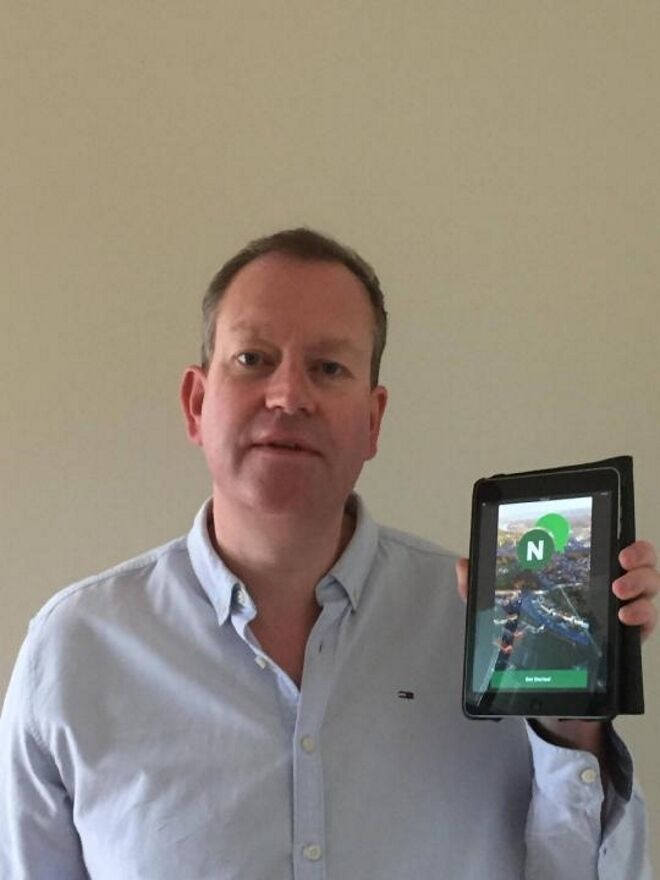
"The app is relatively new. I started this two years ago. Originally I wanted to create a tasker app, so if someone was looking for a plumber in their local area, they could find one easily, instead of having to use Google or post on their local Facebook group. I also wanted to create a carpool platform too.
"I went to the Local Enterprise office and spoke to Joe Burke, he was instrumental, he gave me great mentoring and advice."
Eventually, Mr Keohane decided to merge his ideas into one community-focused app. One service is Taskaround, where members can post private requests under different categories, such as shopping, gardening, babysitting, electrical work or plumbing.
"This is for people willing to help others, or people who are looking for help. The tasker can choose their working radius, so they won’’t get tasks that are too far away. They will only receive tasks for their chosen category, like going to the chemist, or shopping for someone," says Mr Keohane.
While Mr Keohane says the app will be tweaked and perfected over time, the most important thing is that it’’s out there and ready to launch. "It’’s not perfect, but it’’s done."
Conor Murray of Kilkee Forge in Clare, a fifth-generation blacksmith, says he had to adapt quickly when the pandemic hit. "I grew up working with my Dad since I was about ten."
The forge mainly makes bespoke ironwork creations like sculptures and corporate awards, however, they were badly affected with supply chain issues, and sourcing metal proved difficult. "A lot of our components came from abroad. A lot of jobs were put on hold or cancelled [by clients].
"The big events we had lined up in April or May are now pushed back to October. Larger commissions for steel projects, such as large entrances to houses, gates, railings were pushed back too... we did feel the effects but we just had to react or we would have been left behind."
Kilkee Forge is now focused on making perspex sneeze guards for local shops, to protect staff and customers.
Mr Murray says bigger chains were able to construct perspex dividers quickly and relatively easily as their tills are a standard size across all stores. "Smaller stores were being left out, that was the case in West Clare. They weren’’t being catered for. Each shop has its own requirements, with different till lengths and widths."
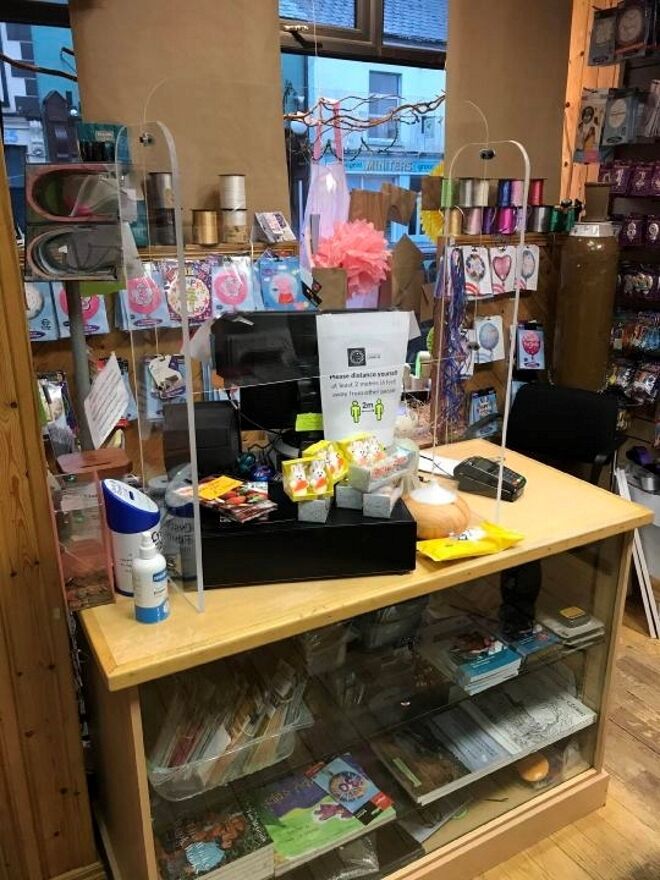
Mr Murray says the company will focus on what the community needs for as long as necessary, but he is looking forward to getting back to his true calling: designing and creating ironwork pieces.
CONNECT WITH US TODAY



Be the first to know the latest news and updates