Clearly defined working from home policy could be key to attracting talent, says cloud expert Fergal O'Sullivan
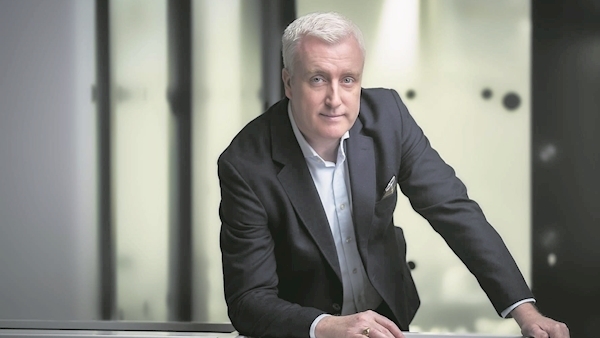
In conversation with John Daly
At the start of the Covid-19 crisis, Fergal O’Sullivan and his colleagues immediately began the implementation of a business continuity plan, driven by a small group of global executives representing all of the critical functions inside Nutanix. “Our top priority is to protect the health and safety of our employees,customers, partners, and communities. As a global IT company, we are using our own technology Xi Frame which is designed to support remote work at scale, with half our global workforcealready working remotely in their day-to-day roles.”
Given the agile nature of the Nutanix workforce, the company has been able to scale with ease. “We were already well prepared to continue running our business and focusing on our customers during a crisis.” As an additional step, Nutanix conducted a supply chain analysis and created contingency plans with key suppliers.
“One of our most important differentiators is our Net Promoter Score of 90+, therefore the contingency plans already in place as a global business allow us to continue to provide 24/7 worldwide support to our customers. Like the rest of the world, we are hoping that this crisis passes as quickly as possible,” he adds
As country manager and regional director Ireland and Scotland Territories at Nutanix, he has overall responsibility for managing existing customers, growing the install base, and driving recruitment across the regions. Prior to joining Nutanix, Fergal held various positions at IBM, most recently as Cloud Business Unit Leader at IBM Ireland.
Looking to the horizon beyond the current crisis, he sees Ireland’s economy having the agility to recover quickly: “All indicators prior to the pandemic demonstrated that the Irish economy was doing well. We were enjoying record levels of investment from global companies, notably in Dublin, Cork and Galway. Cork, in particular has seen a massive growth in technology investment.”
Recalling a quote from economist David McWilliams that “capital is like water and it flows the path of least resistance,” Ireland is very much open for business and will continue to see capital flowing inward. “I see no reason for that to stop. We can pick up where we left off, and I do believe that Ireland has the agility and ability to ‘return to normal’ quicker after this period.”
In its position as an enterprise cloud software platform company, Nutanix is dedicated to solving one of businesses’ biggest challenges: how to simplify and integrate in the multi-cloud world.
“We are the only hybrid cloud company that can operate on-premises and off-premises and with all of the Public Cloud hyperscalers. For that reason, Nutanix gives flexibility and mobility that you can’t get elsewhere. We are customer-obsessed innovators solving IT’s biggest challenge: how to virtualise, simplify, and integrate in the multicloud world,” he explains.
Nutanix software uses a single platform to manage any app at any location at any scale for their private, hybrid and multi-cloud environments. “We create portable, pay-as-you-go solutions so IT can be as agile and transformative as the business needs them to be or indeed when the business challenges change or have to adapt.”
Talking to Irish customers on an ongoing basis, he sees that many businesses have well-developed business continuity policies and infrastructure, however working from home policies vary widely depending on the nature of the business. “Larger companies have been building a capability for teams to work remotely over the last decade,” he says. Most are utilising the latest technology to enable remote working, which has developed rapidly over recent years, helped by increased internet speeds and the availability and acceptance of cloud-based services.
“At a user-level, ease of use is critical, so the easier the system is to access, the happier everyone will be. However, it has to be done securely, and often via a home network. That presents a challenge for IT teams but is where virtual desktop infrastructure technologies come into play.” The latest VDI technologies allow users to securely access all of their applications and systems as though they’re in the office, via a virtual environment. All employees have to do is to log in via their internet browser.
“These technologies aredesigned to get remote teams up and working quickly, which is vital when emergencies of any kind strike. The benefits have been quite clear — not only has business continued, productivity is up. As we spend less time commuting, we have made more time for communicating and collaborating with our teams and our partners. We have been forced to to spend more time thinking strategically and to ‘look around the corner’. One could envisage that a clearly defined and well-thought out working from home policy could be the next competitive advantage to attract and retain talent.”
Nutanix recently announced that Dublin-based Smartbox Group is leveraging its infrastructure as the company embarks on its digital modernisation. As the first Nutanix customer in Europe eight years ago, Smartbox is the European leader in gift experiences and operates in 11 countries. “Smartbox Group harnessed Nutanix software to modernise its IT infrastructure, streamline operations, and reduce costs to enable tailored, real-time experiences for its customer base.”
Smartbox can now predict cost, and model how it is going to look all the way through from ideation through to production. “The company knows that whatever decisions they make today, they are safe in the knowledge that they can seamlessly move from on-premises to off-premises and back again as and when it suits the business and the applications. In buying into the Nutanix vision it has allowed the company to be truly flexible and agile with the public cloud hyperscalers moving forward — effectively, future proofing the business.”
As to the question of what sectors in Ireland could most benefit from digitisation using cloud computing, Fergal is succinct: “It’s not an exaggeration to say everyone, especially when most of us are working from home, like we are at the moment. There used to be a perception that ‘digitisation’ was only for companies ‘born in the cloud’ or technology businesses, but that’s simply not true; digitisation is for everyone, particularly if their hands are forced like today with a global pandemic and half of the world population in lockdown.”
It gives companies the ability to rapidly pivot and mobilise members of their team away from the office, he points out, whether that be a global event like a pandemic, or someone who needs to look after their sick child at home.
“We’re finding that it’s now a topic that’s being discussed at board level, and all roads lead back to technology. CIOs have been under pressure to deliver a robust disaster recovery strategy — probably ever since the events of 9/11 — but quite often this has been focused on the office facilities and infrastructure for business continuity, not necessarily people. The discussion is now around how business continuity planning will focus around remote and home working capabilities for individuals, and that’s where digitisation using cloud computing comes in.”

CONNECT WITH US TODAY



Be the first to know the latest news and updates








