Mohamed A. El-Erian: We must be ready for the brave new world

GOVERNMENTS and firms must accept the likelihood of an acceleration of four secular developments that will influence what political and business leaders do and how they do it. If these trends occur simultaneously, they could overwhelm those who fail to adapt their thinking and practices in a timely manner.
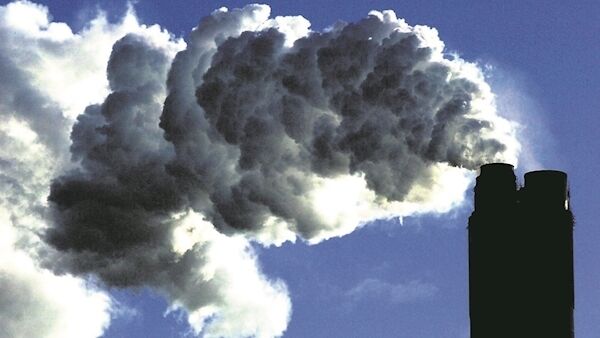
The most important trend is climate change, which has evolved from a distant concern, about which there is ample time to take remedial action, to an imminent, urgent threat.
The mobilisation of various concerned segments of society, owing partly to unusual climatic disruptions in recent years, has greatly increased the pressure on companies to act now.
BP’s recent announcement that it intends to achieve ‘net-zero’ carbon emissions by 2050 — a notable promise by an energy company that operates in several highly challenging settings —is the latest example of business responding to such calls. It is only a matter of time until this pressure also prompts governments to take further steps, not only to encourage green activities, but also to tax and regulate polluters.
Second, privacy concerns have grown alongside technical innovations in artificial intelligence and big data.
Technological advances allow not only for more efficient compilation of huge amounts of personal data, but also for use of this information to monitor and alter behaviours.
Broadly speaking, data are controlled and exploited either by governments (particularly in China), big tech companies (as in the US), or by users (as in Europe). But none of these three operating paradigms provides sufficient comfort and assurance to most people.
The third secular force is disruption to the multi-decade process of economic and financial globalisation.
The initial trigger for this was the trade-policy pivot by US president Donald Trump’s administration — from cooperative conflict resolution to explicit confrontation, from multilateralism to bilateralism (or even unilateralism), and from rule-based to more ad hoc arrangements — which was aimed at creating a still-free, but fairer trading system. But de-globalisation has been turbocharged by the outbreak of the deadly coronavirus, which has disrupted the flow of goods and services in China and beyond.
These challenges to globalisation have opened the door for governments to weaponise economic tools to meet objectives that transcend economics, such as national security. This, in turn, is calling into question conventional wisdom about cross-border supply chains, just-in-time inventory management, and reliance on external demand to boost domestic growth.
The final trend is demographic and concerns more than the aging of societies in Europe and Asia and this trend’s economic and political implications. It also goes beyond the growing realisation that millennials’ starkly different expectations — regarding professional careers, personal engagement, political action, and the delivery of goods and services — will persist and deepen.
For starters, businesses need to be smarter about ‘anywhere, any place, any time’ delivery. Furthermore, job loyalty and tenure are decreasing, while expectations of comprehensive job fulfillment and engagement are rising. Self-mobilisation for political and other causes, often with no visible leadership structure, has become much easier, yet often is less durable and raises tricky questions about what comes afterward.
And all of this is taking place amid the continued migration of an ever-expanding range of interactions, from physical to virtual spaces.
Each of these secular forces will have an important impact on the effectiveness and success of companies and governments alike. And while being challenging overall, the four trends involve a diverse and geographically dispersed set of winners and losers. Executives and policymakers, therefore, must make timely revisions (including pre-emptive changes) not only to their business models and operational approaches, but also to both their tactical and strategic mindsets.
Getting this right will require cognitive diversity, openness to constructive criticism, repeated scenario analyses, and multi-disciplinary approaches. Moreover, because each of the secular forces involves a considerable degree of uncertainty (with lots of known unknowns, and probably more than a few unknown unknowns behind them), a combination of resilience, optionality, and agility is important. And this is even before one considers unanticipated, periodic shocks, such as the Covid-19 outbreak.
The challenges to sound decision-making and leadership, in both business and government, are not limited to mapping the four secular forces and the required adaptation.
Decision-makers must also consider correlations and causalities between these trends, which can make their impact multiplicative rather than merely additive.
Consider another aspect of demographic change: Migration and the humanitarian challenges that often come with it. Climate change confronts countries with the possibility of waves of migratory human flows, which they will find hard to accept and inhumane to refuse.
The combination of deglobalisation and the misuse of artificial intelligence and big data to infringe individual privacy is similarly troubling. This could lead to questionable behaviour by some governments and encourage malicious, non-state actors to disrupt societies and economies.
The world is in a period of accelerating change, the leading edge of which is the ever-growing list of developments that have gone from impossible to inevitable. Many (though by no means all) of the challenges facing business and political leaders may be broken down into four secular changes that can anchor the timely formulation of required responses at the local, national, regional, and global levels. The faster that companies and governments recognise this, the likelier they will be to alter the balance of benefits, costs, and risks in their favour.
CONNECT WITH US TODAY



Be the first to know the latest news and updates