Paschal Donohoe faces Davos barrage over Ireland’s tax regime
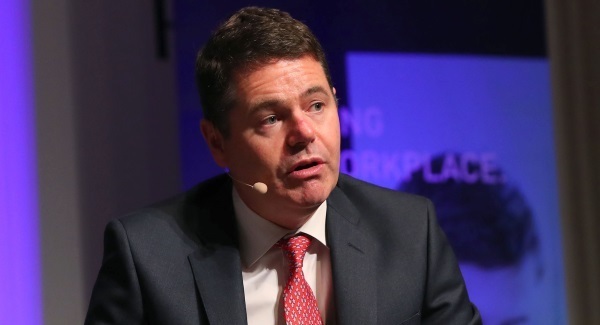
Finance Minister Paschal Donohoe yesterday faced a barrage of criticism over Ireland’s tax regime from a prestigious panel at Davos, amid claims the country was facilitating the “stealing of jobs and tax revenues” from fellow Europeans and the world’s hard-working poor.

Paschal Donohoe faces Davos barrage over Ireland’s tax regime

Finance Minister Paschal Donohoe yesterday faced a barrage of criticism over Ireland’s tax regime from a prestigious panel at Davos, amid claims the country was facilitating the “stealing of jobs and tax revenues” from fellow Europeans and the world’s hard-working poor, writes Eamon Quinn.

The finance minister was a participant on a key panel at the World Economic Forum, the annual gathering of world political and business leaders on the Swiss mountain resort of Davos.

Panel participants, including former White House adviser and Nobel prize winner, Professor Joe Stiglitz, and Winnie Byanyima, the UK-based executive director of Oxfam International, accused Ireland of helping prop up a failed system of global taxation that, with the world’s largest companies such as Apple and Google, was failing to tax companies in a fair manner.

Professor Stiglitz said Ireland did a good job in staying competitive, “but stealing jobs and tax revenues” and “in some cases” jobs from the rest of Europe should not be allowed.

Another key participant in the session, ‘Beyond the Paradise Papers: Can Global Tax Avoidance Be Stopped’, was the EU head of taxation Pierre Moscovici.

He hailed his “ambitious” proposals for a new digital tax across the EU, and promoted the Commission’s existing policy to shape a so-called common consolidate corporate tax base —which the Irish Government opposes — saying the EU wanted to take a leading role in reforming the global tax system.

However, Mr Donohoe said Ireland also supported global tax reform, and perched on the edge of Europe, Ireland wasn’t engaged in any “race to the bottom” and wasn’t guilty of striking special tax deals with any company. Ireland hadn’t been credited with “the many changes”, including country-to-country reporting, he said. Official figures showed the effective corporate tax rates here were not low, he said, while the issues of digital tax, such as Mr Moscovici’s proposals, would be “teased out”.

Mr Moscovici said the mood over corporate taxation had changed, saying the problem with Ireland was not its 12.5% headline tax rate, but the effective rates it applied.

Citing the €13bn tax ruling in 2016 by Commissioner Margrethe Vestager over an Apple company registered in Ireland paying a tax rate of 0.005%, — a ruling the Government is appealing — Mr Moscovici said there were no tax havens in Europe, but some states were “more attractive than others” for corporate tax.

Professor Stiglitz said the global tax system was broken and “very powerful” companies would not sanction reform. He said when Ms Vestager ruled Apple’s tax arrangement was illegal, Ireland sided with Apple, but got tougher, which lead to Apple moving onto one of the Channel Islands.

Davide Serra, founder of Algebris Investments, and a former investment banker, accused Ireland of participating in a system he said was “border-line criminal” that helped Google and other companies in the “siphoning off” of €20bn in potential tax revenues.

He said many governments were “colluding” with companies, leading to the rise of populism. The solution was to insist every company declare publicly the amount of tax it paid country-by-country, Mr Serra said.

More in this section

The Business Hub

Newsletter

News and analysis on business, money and jobs from Munster and beyond by our expert team of business writers.

Cookie Policy Privacy Policy Brand Safety FAQ Help Contact Us Terms and Conditions

© Examiner Echo Group Limited