RBS staff likely to get bonuses, admits Darling
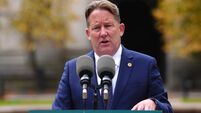
Staff at a bank bailed-out by the taxpayer are likely to receive some bonuses, British Chancellor Alistair Darling indicated today as pressure increased for any payments to be halted.
Mr Darling insisted "absolutely no figure" had been agreed with Royal Bank of Scotland (RBS) after it was reported to be proposing a package totalling £1bn (€1.15bn).
He accepted that "contractual problems" however and the right of staff other than those involved in "excessive risk taking" to be rewarded would rule out a total ban.
"I have spoken to the chief executive of RBS and I have made it clear, and he agrees, that no-one that is associated with these large losses should be allowed to walk away with large cash bonuses," he told the BBC.
"Obviously there are contractual problems with some staff and your average teller across the counter...they are not terribly well paid and I don't think anyone would quarrel with making sure they are properly rewarded."
"As RBS has said, they want to make sure they cut down these payments to the absolute minimum.
"They have to understand that these banks would not be here but for the British taxpayers, therefore they have to show the degree of restraint that people would expect."
That put the Chancellor, who also announced there would be an independent review into banking practices such as bonuses, on a collision course with former deputy prime minister John Prescott who wants an outright ban.
Mr Prescott said any bonus payments at the bank, which is propped up by a £20bn (€22.9bn) taxpayer cash injection, would be "morally and economically outrageous".
He appealed to supporters of all political parties to use "people power" to force a rethink by joining an online campaign on social networking site Facebook against what he dubbed "raw capitalism".
RBS, now 68%-owned by the Government, is due to report its 2008 results in three weeks, when it will confirm a loss of several billion pounds.
Shadow chancellor George Osborne said it was "extraordinary" that the bonus row had not been resolved earlier and criticised the latest review as another knee-jerk reaction.
"This speaks volumes about how the Government approaches the credit crunch and the whole recession which is hand-to-mouth, chasing headlines...never trying to lead things, see what is coming over the hill and plan for the long-term," he told the BBC's Andrew Marr Show.
"The party is over for the banks. You can't go on paying yourselves 20 times what a heart surgeon earns. That whole culture has to come to an end. I think the bankers, and indeed the Government, have to understand you can't just reflate the balloon that burst."
The Chancellor said the review would examine the effectiveness of banks' risk-management - including the influence of pay and bonuses, how boards operate, the balance of skills, the role of institutional investors "and whether our approach is consistent with international best practice".
Full details are expected to be announced tomorrow.
The Sunday Telegraph said RBS chiefs were said to be aiming to stem outrage by limiting the cash element being paid to each employee to £25,000 (€28,540) with the rest made up in shares in the bank.
Most of the share options would be deferred or withheld if the employee left within a set period or if their part of the bank made "significant" losses in the next two years, the paper said.
Around half of the total would be "discretionary" payments with the rest money RBS is "contractually" obliged to give to employees of ABN Amro, the Dutch bank bought by RBS.
The total payout would be around 60% lower than last year's.
A spokeswoman said that the board was "yet to make a decision on remuneration policy for the year".
UK Financial Investments (UKFI), the firm set up by Mr Darling to oversee state investments in the banks, must approve any bonus package.
British prime minister Gordon Brown has warned payments must "reflect the conditions of the economy and the performance of the banks. There are no rewards for failure in what we are proposing."
Business Secretary Peter Mandelson told bosses "to please be mindful about how this looks and what public opinion will be" - warning they could be seen as "exorbitant".
A bar on board-level bonuses on bailed-out banks is already in place but the British Government is under increasing pressure to introduce a wider ban or a salary cap of the kind introduced by US president Barack Obama.
CONNECT WITH US TODAY



Be the first to know the latest news and updates