Ignoring urban infrastructure leaves us shortchanged
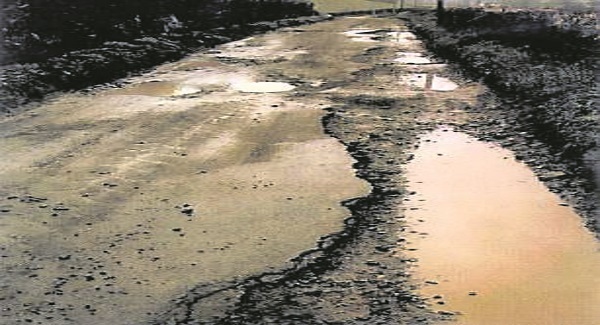
Sadly Dublin and our other urban streetscapes are not so. This is a pity on many levels, not least economic.
Let us take as a given that Irish people like more expensive real estate than less.
This is clear from our continual electoral preferences, where we return to power those that are implicitly or explicitly committed to raising, particularly residential, property values.
If that is the case then we should really see the value in creating cities that are attractive.
Historically in Ireland economists have not had a great track record of supporting urban infrastructure.
The DART was railed against as being profligate madness. And yet, we find that proximity to the DART is associated with significant premia on house prices.
This is no surprise — people value decent public transport. This is seen worldwide with London a striking example where a home 500m from a tube stop is priced at a premium of up to €45,000 (€51,000) compared to one 1.5 kms away.
Its not just public transport. In general, access to amenities is valued. So the question arises as to why we don’t see in place policies to enhance same.
Take two forms of amenities — cycle ways and urban greenways.
Sydney is never at the top of the list of cycling mecca’s but there segregated cycle ways have added significant value to homes nearby.
Across the world tens of thousands of euro are seen to be added to the value of homes from proximity to cycle paths.
Urban greenways, walking and cycling trails, have also been shown to have signigficant effects on house prices.
In Seoul this extended to houses up to 500m from the edge of a greened freeway.
Such evidence as exists also suggests that there is a positive relationship between this value and population density — when something is scarce, it is valued more.
Given all this why do we not see a much greater push for proper segregated cycleways, for greater urban green space, for a more liviable environment?
Is this down to the short horizon problem that besets Irish politics, where unless something is seen to benefit now it is not supported?
People will pay more for homes that are well serviced. That should come as no surprise.
The problem in Ireland however is that when we do build homes we tend not to service them well, or at all.
As we face down the barrel of Brexit it becomes clearer and clearer that the biggest drawback to attracting companies and experts to Ireland is the lack of quality, affordable — which doesn’t have to mean cheap — housing.
Demonstrably there is a failure in the marketplace to provide for the needs of existing, not to mind putative future consumers of housing services.
We have haphazard disjointed tax codes on landlords, an unwillingness to impose existing legislative and administrative penalties for land hoarding, and a Government which seems unable to grasp the extent and complexity of the problem.
In that scenario it is perhaps wishful thinking to muse on urban greenways and so forth.
But if we don’t take a holistic and person-centred approach to housing development we not only shortchange ourselves and our children, we are leaving money on the table.
- Brian Lucey is professor of finance at the School of Business, Trinity College Dublin.