Hillsborough and the long fight for justice
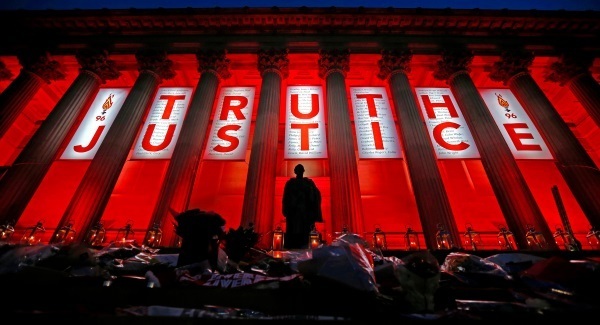
Death threats, persecution, and hostility were all part of the drawn-out battle for justice for the victims of the 1989 disaster, Professor Phil Scraton tells Daniel McConnell

Hillsborough and the long fight for justice

In 1996, Belfast-based criminology professor Phil Scraton awoke sharply in his bed and yelled out: “They all knew.”

Scraton had been leading research into the 1989 Hillsborough disaster which killed 96 Liverpool football fans, and was shaken by his realisation.

For the weeks before, Scraton had accessed police statements in the House of Lords library relating to the disaster and found that scores of statements from officers who were on duty on the day of the disaster had been altered and sanitised in an orchestrated fashion.

“I showed one officer his final statement which had his signature on every page. He said, ‘Phil that is my signature but I didn’t put it there’,” Scraton told me in an interview yesterday.

The sanitising of 164 officers’ statement was done to divert blame from the South Yorkshire Police Force towards the Liverpool fans.

His realisation that night was that the cover-up over Hillsborough was not restricted to the police but stretched right to the top of the British establishment.

Scraton will today address the Parnell Summer School in Wicklow on his work on the Hillsborough disaster.

On the night of Saturday April 15, 1989, Scraton was in a Liverpool city pub where thousands of fans were returning shell-shocked from one of the greatest football tragedies earlier that day.

As a father of two young boys,

Scraton was unable to go to the FA

Cup semi-final between Liverpool and Nottingham Forrest at Hillsborough in Sheffield.

The game kicked off at 3pm but was stopped just six minutes later because of a major crush behind the Liverpool goal.

Those Scraton met told him of the chaos outside the grounds, the failure of the police to adequately control a major crush outside the Leppings Lane terrace ahead of the kick-off, that many of them did not have their tickets checked, and they told them of the scenes of death on the terraces which saw 96 of their fellow supporters lose their lives. They were all telling the same story.

What he heard jarred sharply with the official pronouncements which had come from the police and were carried across the media in the hours since the disaster which laid the blame squarely at the feet of the Liverpool fans.

As people were dying on the terraces beneath his control box, the top police officer on duty, Chief Superintendent David Duckenfield, placed the blame for the unfolding disaster on drunken ticketless Liverpool fans who had forced entry to the ground, causing the mass overcrowding on the terrace.

It was a lie that would be broadcast on the BBC within minutes and from there travelled around the world.

And that night, Scraton’s near three-decade search for justice for those killed at Hillsborough began.

Within two months of the disaster, a small group of researchers began to fight the narrative that drunken

Liverpool fans led to the deaths of their own loved ones. “In the immediate aftermath, we wanted to present an alternative discourse to what was coming out from State authorities, ie that fans were to blame for the disaster. We set up the Hillsborough Project funded by the city council within two months,” said Scraton yesterday.

There was strong resistance to the project with Scraton and others accused of “winding up the families” of those who died.

“There was reticence in my university at the time because of the strength of criticism against the fans was so heavy, particularly the allegations of drunkenness, ticketlessness, and violence. Any empathy for those who died or who were injured evaporated,” he said.

It quickly became more sinister. “I was on my own living with my two boys and I started getting death threats, which was around the time the report was published and it was clear we were touching a nerve,” said Scraton.

Shortly thereafter came the publication of the Taylor report, which primarily blamed the disaster on a failure of policing. He also slammed the police’s failure to co-operate fully with the inquiry and criticised Duckenfield’s actions on the day, concluding that “he froze” when confronted by the unfolding disaster.

“Duckenfield’s lack of candour” had “set off a widely reported allegation” despite knowing it to be false, concluded Justice Taylor.

Scraton said while Taylor’s report was important in rejecting the attempts by the police to blame the fans, it was a very limited report and omitted many crucial aspects as to why the tragedy occurred.

“It was mixed, Taylor was under immense pressure to get a report out in months which meant he could in no way do the intense research needed to uncover the history of the stadium failures, and the policing failures,” said Scraton.

“It didn’t look at the lack of a safety cert for the stadium, the failure of stewarding, and it put the police back on the offensive for the inquests.”

Sure enough, when the inquests commenced, the police sought immediately to unwind the impact of Taylor’s criticisms, again trying to put the blame on supporters.

It turned out that everyone of the 96 who died — men, women, and children — were all subjected to blood-alcohol tests, which was prompted by claims to coroner Stephan Popper from senior police officers on the day of the tragedy.

As a result, Popper severely limited the scope of the inquest, enforcing a

cut-off point of 3.15pm, insisting that all 96 victims were already dead by then.

Also, he severely limited the jury’s discretion in terms of a verdict. He instructed them towards the “appropriate” verdicts of accidental deaths, which ultimately became the official record.

The families were left devastated.

It was shortly after the 1996 Jimmy McGovern documentary on Hillsborough that Scraton met with a former South Yorkshire police officer.

“Walking on the Pennine hills, he told me how he and his colleagues had been intimidated by senior officers into editing their official statements about Hillsborough. Eventually, he handed me a bundle of documents. A covering letter from a senior partner in the law firm representing South Yorkshire Police affirmed that statements had been subjected to ‘review and alteration’,” said Scraton.

“I knew then we were in very deep water,” he said, realising just how conniving the police were in trying to blame the fans.

A year later, once the Labour Party swept into office, home secretary Jack Straw established a desktop review of evidence relating to Hillsborough which concluded there was no fresh evidence to justify the quashing of the inquest verdicts or any new inquiry.

More heartache for the families.

Scraton then published the first edition of his book, Hillsborough: The Truth, which was serialised in the Sunday Mirror,

and included the evidence of statement-tampering by police. “I thought this was the moment everything would change, but nothing happened, and so began what I called the lost decade,” said Scraton.

Nothing would happen until 2009 when then Labour junior minister Andy Burnham addressed the 20th anniversary commemoration at Anfield and he was confronted by angry chants of “Justice for the 96” from the 30,000-strong crowd.

Burnham promised that he would get the documents relating to Hillsborough released and convinced then prime minister Gordon Brown to relax the 30-year rule on them.

This led to the establishment of the Hillsborough independent panel, of which Scraton would become lead researcher and author of the final report.

Having failed the families in 1997, the Labour government acceded to every request from Scraton and the panel in terms of resources. “I think they knew they had to go all out. But I was adamant that the report would cover everything, leave nothing out,” said Scraton.

The report was eventually published in 2012 and led to a significant double-apology from prime minister David Cameron in a packed House of Commons.

The report led to the quashing of

the original inquest verdicts and the running of new inquests which would conclude the 96 deaths were unlawful and not the fault of the fans.

Since then, six senior officers have been charged with their role in the disaster, including Duckenfield, and are facing trial.

For Scraton, his work has been honoured by his peers.

He won a Bafta for his role in a major BBC documentary on Hillsborough, was awarded the freedom of Liverpool city, and has been awarded several

honorary degrees.

He turned down an OBE because he said it was not right to accept an award for doing his job. He too is a staunch anti-imperialist, saying the British

empire no longer exists.

He sees himself as a working-class bloke who did his job. But in doing so, he played a major role in righting one of the greatest injustices in British society in modern times.

  • Prof Phil Scraton will today address the Parnell Summer School in Wicklow on his work on the Hillsborough disaster

More in this section

The Business Hub

Newsletter

News and analysis on business, money and jobs from Munster and beyond by our expert team of business writers.

Cookie Policy Privacy Policy Brand Safety FAQ Help Contact Us Terms and Conditions

© Examiner Echo Group Limited










