How many ambulances is enough?
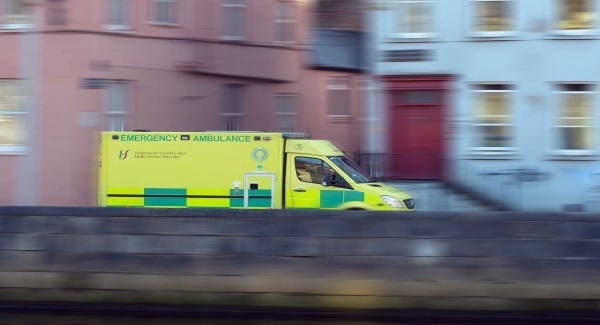
The recent story caused barely a ripple in the national media, but is an issue familiar to rural areas across the nation.
The town of Millstreet, Co Cork is to lose its ambulance.
The spectre of lost services looms large over country towns and villages — post offices and bus routes, for example, are fiercely defended by communities that rely upon them.
Ambulance services, however, are seen as an issue of life and death, and any cut to these services is met with a particular outcry.
The issue once again throws into focus the question of how many ambulances is enough to adequately cover an area?
The ambulance cover roster for Cork City and county, for example, is split between day and night shifts.
By day there are 14 emergency ambulances, three rapid response vehicles, and five intermediate care vehicles active on weekdays across Cork.
Rapid response vehicles respond to calls but do not transport patients, while intermediate care vehicles are used for tasks such as inter-hospital transfers and transporting patients from acute hospitals to set-down facilities such as nursing homes.
These intermediate care vehicles are deployed to free up ambulances so they can attend to emergencies, but they too can be called to attend in life-threatening situations if the control centre identifies them as the nearest available resource.
Five of the 14 emergency ambulances are based in Cork City, with ambulances also posted around the county in East Cork, Fermoy, Mallow, Kanturk, Macroom, Bantry, Skibbereen, Clonakilty, and Castletownbere. Four of the five intermediate care vehicles are based in the city, with one posted in Bantry.
The three rapid response vehicles are based in Bantry/Dunmanway, Millstreet, and East Cork.
The night shift is mostly the same, except that the intermediate care vehicles are not operational, and there are three active emergency ambulances in the city instead of five.
But is this enough?
The Health Information and Quality Authority (Hiqa) is the watchdog that sets standards for what is acceptable cover by the emergency services.
The metrics it uses, however, do not measure the amount of ambulances available in any given area but instead focus on the time in which the HSE responds to emergency calls.
Hiqa had set the National Ambulance Service the target of reaching 80% of “Echo” or life-threatening calls within eight minutes.
However, a report commissioned by the ambulance service argued that this target is unrealistic and is based on an unfair comparison with services in England, which has a less rural-based population.
“Even on the assumption that NAS is fully resourced and operating to international good practice standards in all of its operational processes, the theoretical best achievable performance would be 64%,” the report by Lightfoot consultants argued.
“Our analysis indicates that it could only achieve an eight-minute performance of 60.6% across Ireland, compared to around 79% for a typical English service, because of the immense difficulties with rurality in Ireland. This means that NAS cannot possibly achieve the Hiqa-prescribed target of 80% in eight minutes,” it said.
The use of community first responders — local people trained to use a defibrillator, for example — has seen improvements in response times to emergency calls.
However, issues remain for ambulance services, such as recruitment, turnaround times at hospitals and the issue of the interdependency of rural areas with few ambulances between them.
CONNECT WITH US TODAY



Be the first to know the latest news and updates