Health of the nation remains a local issue
In 2003, when I visited the Midland Regional Hospital on a few occasions, the place was a kip. It looked to be on the point of crumbling, like something that had been left behind since the 1970s.
Nearly eight years later, I had cause to visit again. Driving through the main entrance I did a double take. A bright shining building, crafted by some lovely architecture, loomed before me. Inside, it was airy and modern, a fitting location for the accommodating staff, and decades away from what it had been on my previous visit. The healthcare, according to those who knew it at the time, was excellent in there.
Presumably, it’s no accident that the years between my two visits coincided with the high career point of the local political bigwig, Brian Cowen. Between 2003 and 2011 he served as minister for finance and Taoiseach. Would the transformation of the state of the local hospital have occurred to anything like the same extent if the local man hadn’t been at the centre of power in those years? Who knows?
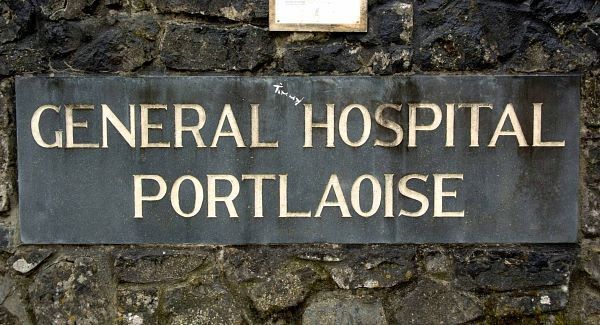
The lovely Midland Regional Hospital in Tullamore came to mind when news of travails from nearby Portlaoise Hospital.
The latter has been under the microscope for the last five years, since it emerged that there had been a number of tragic deaths of newborn babies.
Since then, problems have also been identified in emergency and surgical care.
A plan for the future of the hospital, drawn up by the Dublin Midland Hospital Group which includes Portlaoise, has been completed and presented to the Minister for Health, Simon Harris.
Leaks from the plan suggest there are strong recommendations for an effective downgrading of the facility. This would include the curtailment of 24 hour surgical and emergency services.
One of the problems at Portlaoise is that since its shortcomings began to leak into the public domain, many potential patients have gone elsewhere. The volume of maternity clients and even the volume of throughput in the Emergency Department has decreased. This in turn has an adverse effect on the skill levels of the medics treating people. The less there is to do, the less prospect of acquiring expertise through experience.
All of the above issues at Portlaoise concern the healthcare of citizens. If that were the only consideration, then the report on Mr Harris’ desk would be published, discussed and implemented post haste. Except, the healthcare of citizens is not the primary consideration in the governance of healthcare. Far more importantly, it would seem, is the politics of health.
For instance, was there any discussion about the cost/benefit of transforming Tullamore hospital when the local man sat atop the political tree? Or was it just a matter of Mr Cowen shovelling the money into the local facility because he had the power to do so?
Equally, the healthcare of those who might still be minded to use Portlaoise is secondary to the political considerations of implementing a plan designed to best serve the people.
Mr Harris, like every minister for heath who preceded him, has made the requisite assurances that things will be different with him in charge. Yet in the case of Portlaoise, he is as craven to political considerations as all his predecessors. To advocate implementing the plan for Portlaoise would be to invite wrath down on his party colleagues in the Laois constituency, of which Port-laoise is the main population centre.
The perception locally would be that the proposed effective downgrading of Portlaoise Hospital would be a negative development. In reality, the medium- term effect would be the opposite, but politics is mainly concerned with both perception and the short term. So Mr Harris, the new, bright shiny young minister, is as craven to placing political considerations above the healthcare of citizens as were all his predecessors.
The current travails concerning Portlaoise is merely a microcosm of the health of politics nationally. Within the next few weeks, the Oireachtas Committee on the Future of Healthcare is due to publish its blueprint.
The committee, chaired by the Social Democrats Róisín Shortall, has great intentions. She is a serious politician as are many others on the committee.
One can expect with some confidence that they will produce a plan which if implemented could well improve heathcare for the vast bulk of citizens.
But so what? Many other such plans have been formulated in the past.
Researching, envisaging, discussing how best to serve the healthcare of the masses is the easy bit.
The problems arise when it comes to implementation, which inevitably will mean reconfiguring the health and hospital system from one suited to the early 20th century to one for today. And in this our politicians have a record of running for cover.
The politician from the northside of Cork or the soutside of Dublin will have no issue with plans to close all the hospitals in Tipperary. But by God they will do whatever it takes — including leave their party — rather than acquiesce with discommoding their own voters.
So it goes around the country. So it will continue to go irrespective of how many brilliant plans are put forward by either politicians or medical experts.
There are a few exceptions. After the 2011 general election, Frank Feighan stuck with his Fine Gael party after it closed 24-hour emergency care in Roscommon hospital. Denis Naughten couldn’t live with that so he left the party. Feighan didn’t stand in the last election. Today, Mr Naughten is Minister for Communications. There is no evidence that the health of the citizens of Roscommon is any worse off as a result of this effort to move into the 21st century.
As long as politics rules health, it doesn’t matter how many sensible plans are put forward to benefit citizens. Perception will always trump the health of citizens. The short-term will always win over any consideration for the future. In that vein, the travails of Portlaoise can really be reduced to one big shortcoming. The town didn’t have a Brian Cowen.
CONNECT WITH US TODAY



Be the first to know the latest news and updates











