'If I'm lied to by the gardai what chance has anybody from a deprived background ...?'
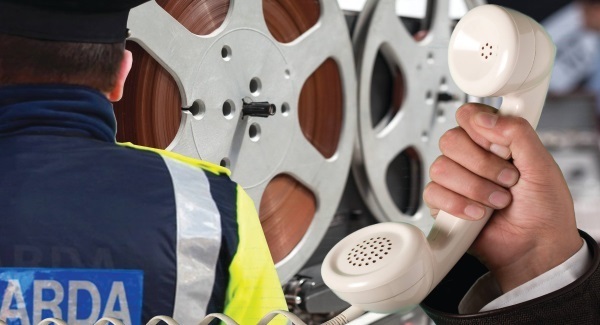
Mr O’C was surprised, but not shocked, when the issue of taping phone calls in garda stations exploded into the public domain in March 2014.
He had had his own experience of taped calls, and it didn’t reflect well on the gardaí. As a result, he contacted the Fennelly commission set up to investigate the tape recording.
Fennelly’s report was published on April 6. The only case it examined in any detail, with regard to taping calls, was that of Ian Bailey. The case brought to its attention by Mr O’C did not feature, yet it does raise some further troubling questions for the gardaí.
Mr O’C is a well-known figure in the State, residing in Munster. He does not want to be identified because the case involves his son, who has an intellectual disability. His story has been verified through correspondence with various State agencies and departments seen by this newspaper.
In 2010, Mr O’C became suspicious of the company being kept by his son. He discovered items in his son’s possession which he suspected were stolen. He contacted the gardaí, informed them of his suspicions, and arranged for a meeting with an officer and his son.
The handling of the issue thereafter by the gardaí is now the subject of a complaint from Mr O’C.
In particular, he believes that his son was not treated as a person with a disability who was in a vulnerable position. He also has reason to believe his son’s treatment was connected to the manner in which some elements of the gardaí continue to engage with police informants. One of the individuals with whom Mr O’C’s son came into contact is suspected of being a garda informant.
Mr O’C lodged a complaint with GSOC over the handling of the matter. GSOC appointed two serving superintendents to investigate two separate elements to the case.
In 2013, Mr O’C received notice that a decision had been reached in one element. The complaint was not upheld. In setting out the background, the letter from GSOC dealt with Mr O’C’s claim that he had contacted the station in question at various times looking for a particular garda who was dealing with his son’s case.
“The investigation has found that two calls were received at [named] Garda Station from your home number of the 9th June 2011,” read the notice. “A transcript of the voice calls show that you requested that a message be left for Garda B from the last call. No record of this message was found in the message book on this date. A registered letter from you has been traced to the Garda Station. Garda B has stated that he never received the letter.”
The reference to the phone calls floored Mr O’C. He had not given any permission to have the calls recorded. It was not a 999 call. Yet a garda superintendent, appointed by GSOC, had been able to get access to the tape and have it transcribed in a relatively short time span.
There the matter rested for more than 12 months. Mr O’C chased other aspects to the case in that period, but thought no more about the tape recordings until the matter exploded in public in March 2014. In the space of a few days, the then garda commissioner, Alan Shatter, had retired over the issue, and the Fennelly Commission was set up.
At that point, Mr O’C realised that the transcripts of all the 20 calls he or his son had had with guards in the local stations would be vital to his complaints against the gardaí. Information was exchanged in those calls that, as far as he could remember, backed up the complaint he had made on his son’s behalf.

In December 2014, Mr O’C wrote to the Minister for Justice, Frances Fitzgerald, who would have known Mr O’C by reputation, if not personally. He pointed out that he understood that “an inventory [of the taped calls nationally] was compiled and sent to the AG’s office”.
As a result, Mr O’C wrote: “I wish to make an access request under Section 4 of the Data Protection Acts for a copy of any information that your department/office of the Attorney General has kept about phone calls between Garda from [named] Garda Station and either myself or my son.”
The minister’s private secretary wrote back, referring him to the attorney general. He wrote to the attorney general, who referred him to the local garda station.
Mr O’C then made a complaint to the Data Protection Commissioner about the taped calls. He was entitled to the data under law.
He also wrote to Fennelly and set out his problem, and requesting assistance in accessing the tapes. Fennelly referred him to the garda unit dealing with the tapes issue. Mr O’C forwarded detailed information, including dates and numbers, of calls he or his son had made to the station.
Eventually, he got a response from the gardaí in December 2015, some seven months after he made his request.
“I have conducted searches with relevant garda management,” the superintendent looking after the matter wrote.
“These searches were based on the information supplied in your application and they have failed to establish the existence of the data requested by you.”
So, there was no record of phone conversations. Except Mr O’C knew there was, because two transcripts had been referenced in the GSOC letter in February 2013.
In frustration he wrote again to Fennelly, pointing out that the response from the gardaí didn’t make sense.
“It raises serious questions,” he wrote.
“As my voice calls were transcribed, it is reasonable to conclude that the recordings did exist. Therefore it is also reasonable to pose the question what happened to them? If they don’t exist, were they destroyed?
“As you will be aware from my correspondence with you, I could be forgiven for feeling that my attempt to obtain these recordings since December 2014 have been persistently frustrated by the Department of Justice and An Garda Siochána.”
The Irish Examiner understands that there was contact between Fennelly and the gardaí on the matter thereafter. Mr O’C also complained to the data protection commissioner about what he saw as the untruthful answer he had received from the gardaí.
Then, within months, there was a different response from An Garda Siochána. They did locate the tapes, but, by coincidence, the only calls they could access were the two that had been referenced in the GSOC letter. He was provided with transcripts of the calls, including some redactions. There was no data about the other 18 calls.
Mr O’C then went back to the office of the data protection commissioner again, and finally he received another twist to his pursuit of the recordings to which he was entitled.
The gardaí had responded to the data commissioner that “any personal data that may be in existence cannot be released on the basis of the exemption provided in the Commission of Investigation act 2004”.
The reference was to the section of the act which says any evidence before the commission must remain private. All of the taped calls nationwide between 2008 and 2013 were being kept in Garda HQ for the Fennelly Commission. So, even if the gardaí wanted to give Mr O’C the transcript, they were precluded from doing so.
Mr O’C had now received three different responses from the gardaí to his request. In the first reply, there were no tapes in existence. Where he pointed out that two calls had obviously been transcribed, they conceded that there were tapes for those calls only. Now they were saying other data “may be in existence” but they can’t hand it over. The final communication came two years after he had initiated his search for the data.
The handling of the matter by gardaí is highly questionable. How come the elements in the force dealing with the matter kept changing their story? Was a refusal, or reluctance, to hand over records of the call associated with the possibility there was something incriminating in those records? Is this an appropriate way to deal with a citizen entitled to his data? How many other applications for data have been treated likewise?
The Fennelly Commission appears to have acted to assist Mr O’C within the limit of its terms of reference. Over the course of its three years in existence, the commission was contacted by a number of individuals wishing to access data, or of the belief that records of calls they’d made had been improperly accessed.
“When individuals contacted us we referred them to the garda helpdesk to have queries dealt with because those individual queries wouldn’t have come within our terms of reference,” a spokesperson for the commission told the Irish Examiner.
Now that the commission had reported, any restrictions on accessing recordings of calls no longer apply. Mr O’C can now pursue his quest to have access to his data, but he is not confident of receiving that to which he is entitled as a citizen.
“I have long experience in dealing with human rights issues not only here but in other parts of the world,” he told the Irish Examiner.
“Even with that experience, if I’m frustrated and lied to by the gardaí, what chance has anybody from a deprived background defending themselves or their children against any abuse handed out by members of the force?”

CONNECT WITH US TODAY



Be the first to know the latest news and updates











