Dollar falls as investors eye Donald Trump's protectionist plan
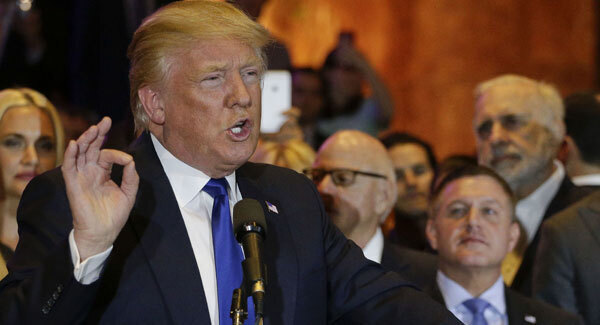
Targeting US companies with special punitive taxes and his plans, if implemented to cut corporate taxes in the US, would likely lower the amount of worldwide investments that would in time flow into Ireland, analysts have said.
After meeting with a group of CEOs of manufacturing giants, including Ford and Whirlpool, and Michael Dell, the dollar fell against the euro to $1.0733.
The Bloomberg dollar spot index— a measure of the currency against a broad range of currencies — slid 0.6%. It has fallen for four straight weeks, its longest retreat for almost 11 months. Gold rose 0.4% to €1,134.50 an ounce.
Fergal O’Brien, chief economist at business group Ibec, said Ireland would not lose existing investments but that the flow of worldwide investments by US multinationals may fall in the future.
“Trump’s promise of lower taxes and better incentives for firms to remain in the US should have provided a boost for US stocks, yet with the likes of the Dow trading in the red, it is clear that markets instead focused on the protectionist aspects of the new president’s plans,” said Joshua Mahony, market analyst at online broker IG.
“Trump’s promise for massive import taxes on products produced abroad and shipped to the US strikes a dangerous tone, threatening to spark a trade war, hard on the heels of the currency wars of the past few years,” he said.
The market might want to see tax cuts and infrastructure spending first, but this shouldn’t be a surprise. Renegotiation of trade agreements is what he campaigned on,” said Mike Lorizio, senior fixed-income trader at Manulife Asset Management in Boston.
Separately, investors said they have largely priced in the British government losing its Supreme Court appeal on whether it can trigger Brexit talks without UK parliamentary approval, but traders — both human and computer models — will scour the ruling for clues on whether the Scottish and Northern Irish regional assemblies will get a say.
UK prime minister Theresa May will learn early today whether the court has upheld a High Court decision in November that her government must get approval from fellow MPs before triggering of Article 50 of the Lisbon Treaty, the formal means of exiting the bloc.
The UK government is widely expected to lose its appeal — online spreadbetter Betfair is showing a 90% probability that the Supreme Court will uphold the previous ruling.
Yesterday, sterling rose to 85.9 pence. But analysts said the ruling could contain many as-yet-unknowns, meaning sterling volatility.
“It’s not just a case of which way they rule — the exact wording of what sort of involvement parliament will have will be important,” said MUFG currency strategist Lee Hardman.
“The knee-jerk reaction will probably be to see the pound strengthen, but the upside would probably be fairly modest on the back of that,” he added.
Crucial among the unknown risks in today’s ruling — and therefore likely trigger points, analysts said — would be whether the Supreme Court rules that MPs not just in Westminster but also in devolved parliaments would have to approve Article 50 being triggered.







