Brexit set to hinder growth in jobs
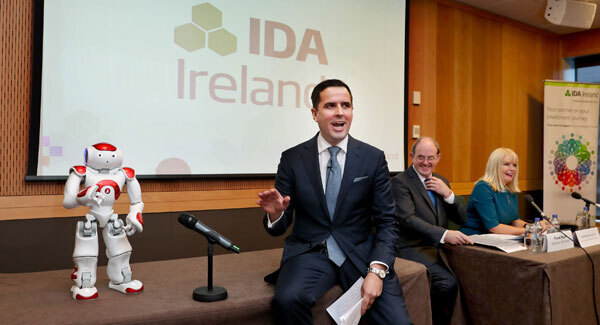
The IDA yesterday — as part of its 2016 annual results — announced that aggregate employment at client firms reached 200,000 last year, a record level, with Jobs Minister Mary Mitchell-O’Connor, adding that foreign direct investment (FDI) levels have never been better.
Yesterday’s results showed that 11,842 net new IDA-affiliated jobs were created last year, marginally up on 2015.
A total of 244 new investments were approved, compared to 213 in 2015 and job losses at client firms were at the lowest level for nearly 20 years.
However, IDA chief Martin Shanahan warned that trend is unlikely to continue.
“While there is significant uncertainty, the jobs pipeline for the first quarter of 2017 looks promising. In 2016, job losses within IDA client companies were at their lowest level since 1997.
"Given market turmoil, Brexit impacts and cost competitiveness pressure, the IDA does not expect this trend to continue,” he said.
“Our pre-Brexit outlook for 2017 was for a decrease in investment; we’re yet to see the post-Brexit trend, but we’re going to have to fight harder to get a share [of investment],” he added.
Minister Mitchell-O’Connor welcomed the news that 52% of last year’s investment was made outside of Dublin, but called for more regional investment and more from companies in emerging geographical markets.
The bulk of investment still comes from North America, followed by mainland Europe, but the IDA claims the level from emerging markets is diversifying.
The IDA is two years into a five-year strategy (to creating 80,000 multinational jobs by 2020) and said it is meeting or “significantly exceeding” headline targets, but conceded the strategy is still at the early stage.
The agency is “cautiously optimistic” of further job growth this year, but said there is now much more uncertainty for investors, amidst political uncertainty and only modest global economic growth on the horizon.
“We can’t influence outside factors but can control our competitiveness,” Mr. Shanahan said.
He added that the IDA doesn’t foresee any new threats from global tax reform, but said the change in US leadership could slow investment progress.
“Some US firms may hold off on making investment decisions until they see the new administration’s policies.
"The new administration may be more protectionist, but I expect US companies will continue to need to internationalise in order to access markets, talent, innovation and R&D. No one country has a monopoly on those things, but Ireland will be in the mix,” he said.
Chairman Frank Ryan said the IDA is “awake” to issues and is “responding accordingly”.
CONNECT WITH US TODAY



Be the first to know the latest news and updates











