Tackling France’s terror threat - is a security overhaul needed after tenth attack on French soil?
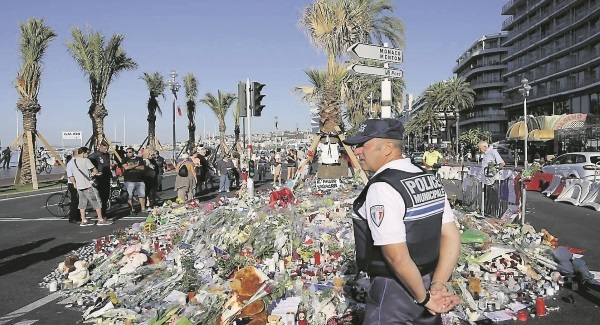
The horrifying truck attack in Nice that killed at least 84 people is the 10th strike in the country since the beginning of 2015. The French government is now considering a complete overhaul of its intelligence agencies to address this persistent threat.
A French parliamentary commission released a report last week that recommended the government fuse all its security services into one large national anti-terrorism agency.
Such an approach would mirror America’s National Counterterrorism Center (NCTC), a bureaucracy created in the years after the 9/11 terrorist attacks. The objective was to break down barriers within the US government, and pull together all agencies and departments related to terrorism issues.
But Paris should try to improve on the US’s experiences? It certainly needs to avoid making the same mistakes.
France’s law enforcement and intelligence communities are similar to Washington’s in that they have their own cultural differences, opaque turf wars, resource constraints and labour problems. None of these issues, as Americans realised, would likely be resolved overnight by legislation.

More important, standing up and successfully deploying an organisation like the National Counterterrorism Center requires each other law enforcement and intelligence division to cede power, share intelligence and provide personnel.
Are the French going to decide that the attacks in 2015 and this year are such a grave threat to national security that leaders and employees will accept a total change in the way they have been doing business for decades?
Because severe structural agony will most certainly occur. NCTC, under the overarching control of the Office of the Director of National Intelligence, was viewed with great suspicion and scepticism when it was created in 2004. Numerous problems have been resolved since then, but many critics still view the agency as a shrunken head atop a lumbering body.
Why? Because even now, real decision-making power still remains within the individual intelligence and law-enforcement organisations, whether that means the US Department of Defense, the CIA, the FBI, or some other agency or department.

The counterterrorism centre can’t compete because it doesn’t really control any of the relevant pieces. Many of its personnel are actually employees loaned from various other agencies. It can’t even bring a knife to a bureaucratic gunfight because it doesn’t own most of its own cutlery.
Of course, the counterterrorism centre does possess some strengths because it can serve as the hub for sharing counterterrorism intelligence across the entire government. It also helps break down walls among the intelligence services.
But it remains essentially a co-ordinating body. As Jean-Charles Brisard, director of the French Centre for the Analysis of Terrorism recently told The Washington Post: “We have reached in France a point where we have more coordinating bodies than we have intelligence services.”
In any case, it’s unclear if a French iteration of the counterterrorism centre could have done much to stop the assault on the Charlie Hebdo offices in January 2015, or the attack on the Bataclan concert hall and various cafes in Paris on November 13, 2015. Some of the killers were known to authorities, others not.

French intelligence had been monitoring one of the Charlie Hebdo killers, Said Kouachi, for example, but had stopped because he did not seem to be a threat at the time and there were other, more urgent suspects.
Amedy Coulibaly, who killed a policewoman and four civilians in a kosher supermarket that same day, had been in and out of prison. But, again, the police didn’t consider him a top priority.
In addition, many gunmen in the November strike were Belgian citizens. So French intelligence would have had to rely on Brussels for information and assistance. The ringleader, Abdelhamid Abaaoud, was later killed during a police shootout in a Parisian suburb. How would a central French agency have stopped them?
Instead of creating a new bureaucracy, Paris might be better to examine other approaches when reforming its intelligence communities so they can better grapple with terrorism at home and abroad.
One relatively easy step, for example, would be to pass legislation that broadens punishments for those involved, even tangentially, with terrorist cells operating in France. A terrorism charge in the US that could mean a 25-year prison sentence currently results in only three years behind bars in France.
Another example would be to commit more resources to monitoring radicals in France’s prisons. France is also experimenting with efforts to weaken ties between the jihadists and the “persuadables” within the penal system.
Yet it’s unclear if that would have the desired permanent effects. An estimated 1,200 French citizens have travelled to Syria, presumably to fight for Islamic State. Hundreds have now returned. Others within France could have “self-radicalised.” As is evident, it does not take many people to create havoc that can unsettle an entire nation. Additional legislation won’t be enough to prevent the next domestic attack.
Rather, hiring and retaining competent and effective personnel, building institutional capacity, opening up resources and providing real leadership can all help keep France safe. More funding is needed to achieve all this.
In addition, law enforcement and intelligence personnel, from senior to junior ranks, should rotate through other divisions so that all would be better informed about the overall counterterrorism effort.
One long-term effect of 9/11 is that the US intelligence community has indeed grown culturally closer. Individual agencies now better understand each other’s needs.

Rotating individuals throughout the French system might go a long way to foster trust within the system. It would help minimise intelligence silos and cultural roadblocks that might hamper France’s ability to stop the next attack.
France should also take the lead in developing a continent-wide database of all European citizens who have gone to Syria to fight for Islamic State or al-Qaeda. The US maintains one at NCTC, but France should orchestrate one for Europe as well. This could help build co-operation across Europe, as other countries feed into the database.
Paris should make this a high diplomatic priority in the EU. It should also strive to work with nations such as Turkey and Russia, largely because it’s in France’s self-interest to do so.
Thwarting Islamic State’s efforts across the continent is a European problem, not just a French one. Many nations have returning fighters at this point, so they would be willing to work together. And with the European-wide database, Paris wouldn’t have to rely on Washington for basic information.

Soon after 9/11, America had the resolve and wealth to strengthen its intelligence services and also create a vast new bureaucracy. The result has produced great successes, but also some wasteful, costly mistakes.
France doesn’t have billions of euro to fritter away trying to figure this out over the next decade. Rather, Paris should learn from Washington’s victories and failures as it tries to fight its shadowy war against terrorism within its borders.