Orlando shooting: Living every day with one eye on the door
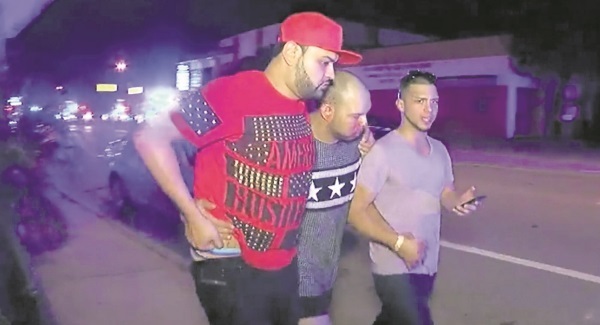
We live in a time of mass shootings and suicide attacks.
This means it is possible that, in the ordinary hours of what you view as your daily life, you are actually participating in a largely invisible war that may break out at any moment.
When it does, you may find yourself on the front lines, facing the cannons. This war has no specific geography. It can erupt anywhere, as it did early Sunday morning in Orlando, Florida.
Nothing can save us when these events unfold, no claim of innocence: We are cannon fodder. So are our killers.
We still don’t know what may have motivated the killer who attacked patrons in a packed Orlando nightclub — a well-known gay club called Pulse.
What we do know is that shared humanity is not on the killer’s agenda. Your crying out that you too are human is meaningless. Not only does the killer not care, he doesn’t hear it. Put yourself in his position: Like his targets, soon he’ll be dead.
The bomber or stabber or shooter doesn’t work on the sidelines. He doesn’t set remote timers. He’s right there with you. He’s literally the launcher and the weapon. Set in motion, he continues on his fatal course until his job is done.
John Oliver says Orlando killer targeted the 'ultimate symbol of what is wonderful about A… https://t.co/AcfMjGfgfX pic.twitter.com/V81M3qvQRR
— Irish Examiner (@irishexaminer) June 13, 2016
He has succeeded at tearing away, bit by bit, at the fabric of our lives. Along with the killings, this unraveling of daily life is his job — that’s another attribute that makes these massacres like war. The implanting of terror in our day-to-day routines is part of the wartime strategy.
I lived for years on the west side of divided Jerusalem — the Israeli-controlled, largely Jewish neighbourhoods. We often used to be surprised by a sudden loud clap like an explosion. Sometimes, it was an attack by a suicide bomber. More often, it was a sonic boom from an Israeli air force jet.
After every one of these bangs, people in the streets would look up into the sky and listen for the following sound of a military aircraft. If there was no following roar, soon we would hear sirens. The horrible litany of body parts and ruined lives and new orphans and grieving parents would recommence.
It’s not easy to live your comfortable life thoughtlessly, when you know that among you may lurk a person who sees your very existence as antithetical to his or her ideals or culture or religion or personhood or freedom.
And who may well be willing to die to eliminate you and others like you and cause upheaval in your world, as seems to have been the case with the killer at the Pulse nightclub.
All the standbys of routine bourgeois daily existence — cafés, schools, supermarkets, stadiums, airports, rock concert venues, nightclubs, noodle shops and, of course, the perennial crowded favourites: shopping centres, buses and metro stations — have been attacked by suicidal killers willing to die in the act. As have beach resorts, open-air markets and hotels and places of worship. In other words, no place where the targeted collective culture is manifest can be considered safe.
You’re not a person to the killer, but a symbol. Just by being who you are and living where you live, and participating in the community or culture to which you belong, you are the enemy. This is true no matter where the bomber or shooter comes from, no matter what degree of oppression he or she has lived under. Nor in the moment of the attack, is the bomber or shooter himself a person, as far as he is concerned. He is a weapon in a cause he believes in.
And your dead body is nothing to him but a useful tool in a much bigger battle between the society and culture that have influenced him, and the society and culture you live in.
Orlando gunman Omar Mateen had 'strong indications of radicalisation' https://t.co/tN3jy8mLVK pic.twitter.com/IIutS8xj1m
— Irish Examiner (@irishexaminer) June 13, 2016
Penned the evening before his attack, here are the words of the first suicide bomber in history, Ignacy Hryniewiecki, 25, who assassinated Czar Alexander II in 1881, also killing and wounding many in the royal retinue: “It is my lot to die young,” Hryniewiecki wrote, “I shall not see our victory.”
He thought that way as he tried to bring down czarist Russia. And this is no doubt how a suicide killer thinks to this day. They leave videos behind the way young Hryniewiecki left his note.
The difference between then and now, though, is that the target is no longer royal or military, but civilian. This evolved from the strategy Algerians developed during their war of independence from France, in the late 1950s. In the Battle of Algiers, the Front for National Liberation (FLN) planted bombs in attacks on milk bars, brasseries, cafeterias, a stadium and the headquarters of Air France.
Suicide was not part of the Algerian bombers’ plans, but the FLN’s methods showed how successful the mass killings of civilians could be.
They focused on soft targets, as civilian targets are now known. Eventually, suicide bombers were sent into soft targets, creating the tactics we now know so well.
How do people deal with this? Those who are known targets have bodyguards, like Salman Rushdie or the editors and cartoonists of Charlie Hebdo.
The rest of us cope with the threat with resignation. The central idea is to go on living one’s life as much as possible in the old way.
There are other methods, all useless but psychologically necessary, that people use in order to go on with life under this threat. If buses are the target, you don’t take buses — unless you have to. You tell your children not to take the bus. They disobey; they are used to taking buses.
You remind yourself that lightning does strike twice in the same place. Hamas blew up a bus on the Number 18 line in Jerusalem. Then a few days later, they blew up another bus on that line.
Journalist walks off as Sky News presenters refuse to link #Orlando shooting to homophobia https://t.co/QFvcidweRR pic.twitter.com/PrIEXgomGR
— Irish Examiner (@irishexaminer) June 13, 2016
More: You go to the local store or the bank at odd hours, when there are few customers. You decline to attend Friday evening prayers at the mosque. You avoid crowds, because it’s a rare suicide killer who wants to take out only one or two victims.
In Paris now, you sit at the back of the café to avoid machine gun fire from the street, should it happen, which it won’t — but now you know that it could.
You stop going to the shopping arcade in Brussels or you try to drop by to purchase your new sunglasses at 11am or three in the afternoon. You stop going to the big tourist attractions, if you’re a tourist. No more visits to the Mona Lisa.
You shop online. Maybe you don’t go to the movies; you don’t go to political rallies. Wherever you go where there might be a crowd, you don’t linger.
But you could still end up at 2am at your favourite club in Orlando, never suspecting that at this hour, in this town, this would be the target chosen by a shooter.
When I used to go running in Jerusalem, a spate of terrorist knifings had been taking place. I used to say over and over to myself the Arabic words I would shout to distinguish myself from an Israeli target.
“Sahafi!” I told myself I would shout: “Journalist!” I didn’t really think that I would be attacked and I didn’t really think this would save me if I were. I practiced the word simply as a kind of magical thinking that allowed me to keep doing my morning run.
The suicide bomber, if you happen to notice him before he strikes, doesn’t care if you shout “Journalist!” Or, preferred by many American journalists: “Canadian!”
Worst of all in this era is that strangers are always suspect. You move through life now in a haze of suspicion. Is that quite attractive young woman carrying a purse filled with explosives and shrapnel?
Why is that seeming student wearing his backpack like that? What did that smiling guy just put in the garbage can? It’s not that cold, why the down jacket? Do those three men over there look, somehow, not quite right? We’re no longer on our own, having fun, going about our business, living our lives, our minds elsewhere. Death stalks us. We’re on guard.
That’s how I lived in Israel years ago, when it was a big relief for me to return to the United States and stop my personal security scans.
But now, with the outbreak of rogue cells and freelancers, an attacker (or a couple of them) can pop up anywhere, it seems. Even San Bernardino, California, or Orlando.
Orlando. We go on living our everyday lives, but one eye is always on the door, looking for the fellow with the guns and bombs.
The worst thing is that we no can longer imagine that this behaviour is entirely silly or foolish.
Amy Wilentz served as the Jerusalem correspondent for The New Yorker. She is the author of Martyrs’ Crossing: A Novel, set in Israel and the West Bank, and several non-fiction books, including Farewell, Fred Voodoo: A Letter from Haiti. She teaches in the Literary Journalism program at the University of California, Irvine, where she also founded and directs the Forum for the Academy and the Public.
CONNECT WITH US TODAY



Be the first to know the latest news and updates