Seán Feehan of Mercier Press: The man who defied the odds to tell the stories of Ireland
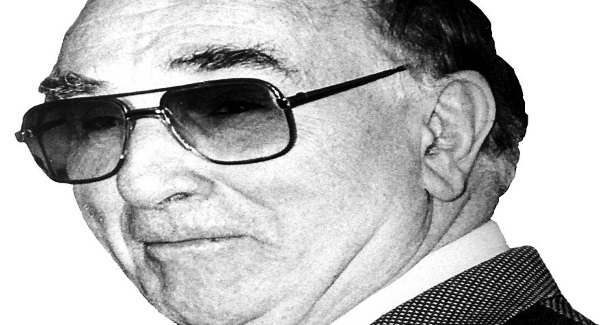
The last week in May is the 25th anniversary of the death of Captain Seán Feehan, who founded Mercier Press, in Cork, in March, 1944. He had a profound impact on Irish book publishing.
Feehan began publishing while serving in the army. Initially, publishing was little more than a hobby. He started, he said, on “a wing and a prayer”, by publishing The Music of Life, by James O’Mahony of University College Cork.
Mercier Press was named after Cardinal Désiré-Joseph Mercier, the Belgian prelate who showed the inadequacy of arms against the strength of ideas, while resisting German occupation during the First World War.
“A nation that has never lost its faith must have a distinct spirituality to offer the world,” Feehan said.
For decades, Irish missionaries had distinguished themselves around the globe, and he felt that their dedicated work afforded tremendous opportunities for Irish development, especially in publishing.
“What we are tying to do in the Mercier Press is to encourage the young Irish historian, the young Irish scientist, the young Irish economist,” he said. He wished for Irish experiences to form the platform for these books.
“Irishmen, generally, are slow to lay the value of their experience between the covers of a book,” Feehan said.
Tom Barry’s Guerilla Days in Ireland was first published by the Irish Press, but Mercier Press brought it out in paperback. Feehan later persuaded Liam Deasy to write Towards Ireland Free, on the War of Independence, and Brother Against Brother, on the Civil War.
“The type of book that I like to publish is the one that reflects us truthfully to ourselves,” Feehan said.
At first, he published many religious books. This Tremendous Lover, by Fr Eugene Boylan, was a massive seller.
“We sold over a million copies of that, all over the world,” said Feehan. However, the demand for religious books disappeared in the wake of the Second Vatican Council.
Mercier then focused on Irish matters, especially history. The Course of Irish History, based on a series of radio lectures, was a massive seller.
When RTÉ first tried to interest other publishers, they demanded between £1,000 and £2,000 in subsidy, but Mercier Press agreed to pay a royalty on the book, which sold up to 90,000 copies around the world.
Mercier also took on the publishing of books based on the Thomas Davis Lecture series on RTÉ. Although much has been written about Irish censorship, Mercier Press had little difficulty with the official censor.
“Even in its worst days, it was comparatively mild compared to that imposed by the Catholic Church,” said Feehan. In 1966, Mercier Press published an English translation of Frederick Von Gagern’s Marriage Partnership, which dealt with intimate aspects of marriage. This book — which actually had the imprimatur of the Bishop of Cork and Ross, Most Rev Dr Cornelius Lucey — was a groundbreaking study. The author — a doctor of 20 years’ standing — treated sexual matters in a detailed, sensible way.
Mercier Press broadened its offering in the 1960s, with Ballads from the Pubs of Ireland, which quickly sold 40,000 copies. Mercier went on to publish various humourous books, such as Des McHale’s book of Kerryman Jokes, and his follow-ups, Dublin Wit and Irish Wit.
In addition, Feehan formed a strong friendship with the playwright John B. Keane, whom he persuaded to write a popular series of books: Letters of a Matchmaker, Letters of a Love Hungry Farmer, and Letters of a Successful TD.
Gill & Macmillan published my first two books, centring on Éamon de Valera. Both made it to the bestseller lists, but when I suggested a book on Michael Collins and the Treaty, for the 60th anniversary of the signing of the 1921 Treaty, Gill & Macmillan said there would be little market for anything on Collins.
Feehan promptly accepted the idea and told me, when the book came out, that it would still be in print ten years after my other two books had gone out of print. He was right.
Several years later, when Tim Pat Coogan expressed a desire to write a biography of Collins, Gill & Macmillan told him, “there’d be very little interest in that”. Hence, Mr Coogan turned to an English publisher.
Collins has generated more popular interest than de Valera in recent years. In time, the balance will probably shift back, as the focus is turned on the Long Fellow’s involvement in later aspects of Irish life.
Publishers in Dublin and London tended to ignore much of what happened outside of Dublin. Hence Seán Feehan’s magnificent contribution as an independent publisher, in covering so many broad aspects of Irish life, will be appreciated all the more in coming years.











