12-year-old Aaron is the proud owner of two new lungs and a kayak
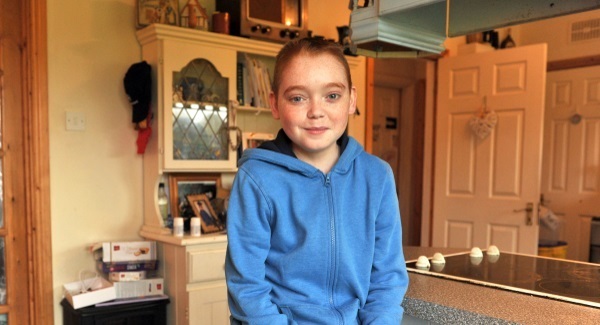
The story of Arron O’Leary’s life so far is one of love, hope, hospitals, pills, moments of acute anxiety, overwhelming relief, and ultimately, matchless generosity.
It is the tale of a 12-year-old with cystic fibrosis who was in pretty bad shape last December but who is now the proud owner of two new lungs and a kayak.
Paul O’Leary, Arron’s dad, meets me at the door when I visit their home in Ballinhassig, Co Cork. Just inside the door, under the stairs, is the stash of oxygen tanks Arron relied on to compensate for the shortcomings of his lungs. There’s also a bipap machine, a breathing apparatus that helped get more air into Arron while he slept via a mask.
Paul, overjoyed, tells me a chap from BOC gases is on his way to collect the whole kit and caboodle.
“That’s it, all of that gear is going now, Arron doesn’t need it anymore. We won’t miss it. We had the big oxygen machine upstairs at night and it used to vibrate the whole time. We had to put it on a mat to try and quieten it,” Paul says.
The reason the machinery is getting the heave-ho is that Arron got a donor. Last May, his lungs were so below par that his doctors placed him on the lung transplant list.
Life changing call
On December 7, Paul got the life-changing call to tell him his son had a donor. Ironically, it was the same day that a long-awaited adult cystic fibrosis ward opened at Cork University Hospital (CUH). In fact, Paul and wife Caroline were attending the opening when the call came through from the transplant service at Freeman Hospital in Newcastle. It set in motion a process that Paul and Caroline outline as flawless.
“We got a bluelight escort to the airport, thanks to the gardaí,” says Caroline. “They came back out here to Ballinhassig with Paul so that he could pick up our passports, and then brought him to the airport.”
In no time, an aircraft arrived in from Wales to transport them and on arrival in Newcastle, an ambulance was waiting.
“We had no time to think. Within 10 minutes of arriving at the hospital, Arron was in surgery. The way the system worked was amazing. I know we constantly hear about patients on trolleys, but when the system kicks in, it is really brilliant,” Paul says.
The double lung transplant began about 6.30pm. “We were watching the clock for hours and the clock wasn’t moving. It took six hours but it felt like six months,” says Paul.
By 7.30am the next morning, Arron’s breathing tube was out. A few hours later he asked to be helped sit up. “Now I’d like a cup of tea,” he said.
He was out of intensive care within two days. He was five and a half weeks in Newcastle, making progress every day. He hopes to return to school in March, once the three-month critical post-transplant period has passed and the danger of his body rejecting the new organs has subsided.
A bitter pill
Arron’s cystic fibrosis diagnosis came early after a good pick-up by a nursery nurse at the Bon Secours Hospital in Cork where he was born. “At about two days old, a nurse noticed something wrong with his stomach,” Caroline says.
It turned out to be meconium ileus, an obstruction of the small intestine. He was baptised that night in the Bons and rushed for surgery to Our Lady’s Children’s Hospital in Crumlin.
“He was in for five weeks. It was touch and go for a while. They told us he had cystic fibrosis ,” Caroline says.
The diagnosis set off alarm bells. Her then two-and-a-half-year-old toddler Cian was producing nappies that Caroline was unhappy with.
“We had brought him here and there and sought a second opinion, but it was sort of dismissed as a toddler thing. But once I started to read up about cystic fibrosis, I knew Cian had it too,” she says.
As soon as they returned to Cork from Crumlin, they brought Cian for a ‘sweat test’, the gold standard for diagnosing cystic fibrosis. The test measures was the amount of chloride in the sweat; those with cystic fibrosis have more chloride (a component of salt) in their sweat than people who do not. The sweat test was positive.
Despite their suspicions, the confirmation was still devastating.
Cian was traumatised too. “He only saw me once in the five weeks that Arron was in hospital. Then I get home and we start shoving meds into him. It was an awful shock for him,” Caroline says.
I ask how it was possible to cope with this double diagnosis?
Steep learning curve
“It was a steep learning curve,” Paul says. “But you can’t go off crying,” Caroline adds. “You have to deal with it. You have to keep it normal for the kids. And Cian’s cystic fibrosis is fairly mild. He is rarely sick.”
Over the years, despite the heavy demands of their care schedule — hospital trips, physiotherapy sessions, meetings with dieticians, not to mention the daily medical routine in their own home — Caroline and Paul were keen to give back to the cause.
Caroline and her sister Lynda Moore and friends Michelle Hogan and Marguerite Waters set up Cork 65 Roses, organising a gala ball over a number of years and ultimately donating €150,000 to the Munster CF charity, Build4Life.
In 2010, she came up with an idea for their own Calendar Girls production, baring all for a good cause.
Caroline sings the praises of Cathy Carlton, secretary of the southern branch of Cystic Fibrosis Ireland for all her help. And she can’t speak highly enough of the nurses at CUH. Or the dietician and physio who regularly visited Arron at home. Or the respiratory consultant Barry Plant.
“He has done great things for cystic fibrosis. The doctors at Freeman Hospital told us we were lucky to have him on our doorstep.
And the fact that Cian will be moving into his care in two years (at age 16, children attending CUH switch to the adult service) is a great reassurance,” Caroline says.
Arron meanwhile, remains in the capable hands of CUH paediatricians David Mullane and Muireann Ní Chróinín.
“For all the bad press CUH got in relation to the delays opening the new CUH adult ward, the staff are outstanding,” Paul says.
“Arron is their first paediatric lung transplant patient and they were treating him for 12 years. They were so excited for him when we got the call. They got him to transplant stage and they were on the ball straight away when he came home,” he says.
There have been many other generous gestures: Cork City Hospitals Children’s Charity flew over to Newcastle Christmas week with toys. RTÉ’s Late Late Toy Show donated two gorgeous Christmas jumpers, one each for Arron and Cian, as well as an X-box. The staff at CUH sent him Beats headphones.
Sainsbury’s in Newcastle organised a trolley dash. The goodwill has been phenomenal. Cork City Hospitals Children’s Charity has promised to fly the brothers to Eurodisney in October after Arron was unable to make the trip last year.
Road to recovery
So what of Arron himself? What’s the prognosis going forward?
“I still have cystic fibrosis, it’s just not in my lungs”, he says, saying a new set of lungs does not mean an overnight cure.
“While the donated organs don’t contain the defective gene that caused the disease, cystic fibrosis still causes problems for the digestive system requiring ongoing treatment to deal with nutritional problems and other symptoms.
He is likely to develop diabetes, Caroline says. And he will be on medication for the rest of his life. He takes 17 or 18 pills every day, each meticulously recorded in a notebook by his parents.
“You cannot miss out on any of the tablets. He would be in serious trouble if we forgot any of his anti- rejection drugs,” Paul says.
A tupperware box in the kitchen contains the assortment of meds.
“If you compare the size of that box to all the machines and tanks in the hall that we can now dispose of, it’s nothing,” he says.
And it will make the regular trips to their caravan in Caherdaniel, Co Kerry, smoother.
“All the gear we had to bring for Arron filled three quarters of the car boot. It used to take forever to get on the road. Now all we’ve got is that box of tablets,” he says.
Arron’s IV port is also a thing of the past. This was a small portable device fitted beneath the skin through which antibiotics were fed.
It cut down on hospital trips — where there was always the fear of cross infection — because it meant antibiotics could be administered at home.
His new nebuliser is tiny compared to what he used to have.
He will still need physio and dietary advice and intends continuing with a personal trainer, Dave Moore, whose boot-camp style approach really appeals to Arron and who helped build up his pre-op strength.
Trips to CUH will continue, at least once a week, for blood tests to make sure his body is coping with his new lungs. There will also be intermittent trips to Newcastle. By the end of March, all going well, he will be able to resume a more normal life style. From now on, Arron will be celebrating two birthdays, one on January 19, his actual birthday, and one on December 7, his transplant birthday. He is looking forward to kayaking in the summer
Career-wise, what is he thinking of? “Well, a realistic job would be a garda,” he says. “But my dream job would be an ice trucker in Alaska, you can earn $20,000 (€18,000) a month.
These dreams for the future were of course made possible by the generosity of a donor and the donor’s family.
“The transplant nurse at Freeman told the donor’s mother that a boy was walking down the corridor with new lungs.
“The nurse said the mother got great consolation out of that. It was the time of her loved one’s funeral,” Caroline says.
Caroline and Paul will be eternally grateful to the donor and plan to formally thank the family in time and urge everyone to carry a donor card.












