Euro at seven month low against the dollar ahead of ECB meeting
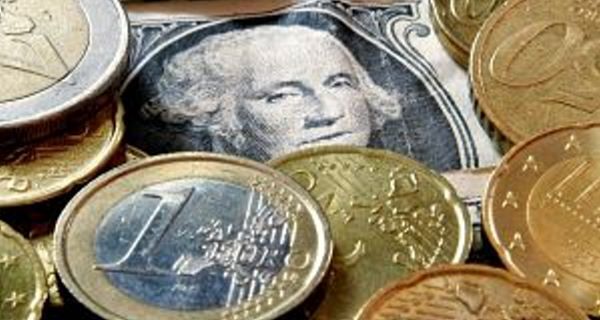
The euro fell towards its weakest levels in seven months against the dollar yesterday as investors speculated the European Central Bank will expand a stimulus programme when it meets next week.
Euro at seven month low against the dollar ahead of ECB meeting

ECB president Mario Draghi reiterates officials will do what they must to accelerate inflation that has undershot their 2% target since 2013.

The euro is this month’s worst-performing major currency against the dollar, apart from the Danish krone.

The euro’s slide underlines the policy divergence between an ECB preparing to ease further and a US Federal Reserve that’s set to raise interest rates for the first time in almost a decade.

Investors “should never underestimate Mr Draghi’s commitment to deliver easier policy”, said Kit Juckes, a London-based global strategist at Société Générale.

“Whatever it takes’ means exactly that. These conclusions point me toward a weaker euro,” he said.

The euro fell 0.1% to $1.0611 in late London trading yesterday, after sliding to $1.0566 on Wednesday, the lowest since April.

US financial markets were shut yesterday for Thanksgiving.

The euro has fallen 3.6% versus the dollar this month, just short of the 3.7% drop in the krone, which is pegged to the 19-nation shared currency.

The yen has weakened 1.6%.

“We will do what we must to raise inflation as quickly as possible,” Mr Draghi said last week.

Inflation is “very low,” ECB vice president Vitor Constancio said in an interview on Wednesday.

Futures indicate a 72% chance the Fed will boost its main rate by its December 15-16 meeting.

That may send the euro lower before the ECB’s gathering next Thursday, with a risk it will drop as low as 95c by the first quarter of next year, according to Goldman Sachs Group.

“The hurdle is low for a doveish surprise on December 3,” Robin Brooks, Goldman Sachs’s New York-based chief currency strategist, wrote in a research note.

As risk-taking resumes in January, the divergence trade should pick up steam,” he said.

Meanwhile, options traders are the most bearish on sterling against the dollar in more than four months, while gains made after UK chancellor of the exchequer George Osborne increased the government’s forecast for growth next year on Wednesday have been pared back.

Bank of England governor Mark Carney’s message to politicians earlier this week that low interest rates will remain for some time is also damping the outlook for sterling, which has depreciated against all of its Group-of-10 peers this week.

Meanwhile, a referendum on Britain’s membership to the EU, scheduled to take place before the end of 2017, will add to the reasons for investors to be cautious on sterling next year, according to Simon Derrick, the chief currency strategist at Bank of New York Mellon in London.

“The pound is becoming increasingly exposed to both domestic and political risk,” Ian Stannard, head of European currency strategy at Morgan Stanley in London, wrote in a note.

“We maintain our pound-dollar bearish medium-term view,” he said.

Sterling fell less than 0.1% to $1.5125 in London trading, after gaining 0.3% on Wednesday. It was little changed at 70.21 pence per euro.

x

More in this section

The Business Hub

Newsletter

News and analysis on business, money and jobs from Munster and beyond by our expert team of business writers.

Cookie Policy Privacy Policy Brand Safety FAQ Help Contact Us Terms and Conditions

© Examiner Echo Group Limited







