Citigroup sounds the alarm on world economy
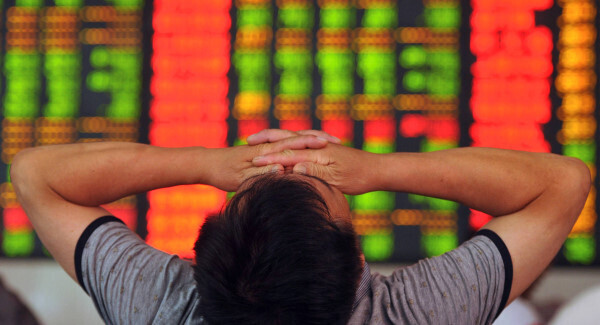
Citigroup is sounding the alarm bells for the world economy. In a new analysis, the New York-based bank’s chief economist, Willem Buiter, said there is a 55% chance of some form of global recession in the next couple of years, most likely one of moderate depth and length.

Citigroup sounds the alarm on world economy

Unlike the US-driven international slumps of the past two decades, this one will be generated by sliding demand from emerging markets, especially China, which has surged in size to become the world’s No 2 economy.

“The world appears to be at material and rising risk of entering a recession, led by EMs and in particular by China,” wrote Mr Buiter, a former UK policy maker.

Among reasons for worry is his view that in reality China is already growing closer to 4% than the government’s goal of about 7% targeted for this year.

A shallow recession would likely occur if expansion slowed to 2.5% in the middle of next year and stayed there, he said.

Other emerging markets such as Brazil, South Africa and Russia are already in trouble while developed economies are still lacklustre.

Commodity prices, trade and inflation remain sluggish and corporate earnings are slowing.

Mr Buiter is a frequent outlier.

Counterparts at Goldman Sachs Group and JP Morgan Chase are playing down the risk posed by China to rich economies, while those at Societe Generale said this week that they envisage just a 10% chance of a new global recession with cheap oil providing a buffer against the emerging market weakness.

In the case of China, Mr Buiter reckons its facing a “high and rapidly rising risk of a cyclical hard landing” given excess capacity and debts in key sectors as well as corrections in the markets for stocks and real estate.

As for the advanced economies, Mr Buiter said China’s woes could infect them via declines in trade given it accounted for 14.3% of global commerce in 2013.

China unloading some of its $6tn (€5.36tn) foreign assets such as US Treasuries could also roil international financial markets, while the dollar could surge as investors seek a safe haven.

A 2016 recession could be avoided if monetary and fiscal policies are eased, yet Mr Buiter sees most rich nations running low on ammunition either because interest rates are at rock bottom or because politicians won’t want to use the tools they have.

If the Federal Reserve and Bank of England raise rates soon they could be cutting them again by the end of next year, he said.

“Today, the interest rate is out of commission as a policy instrument in most developed markets and fiscal space is more severely constrained than in 2008 almost everywhere,” according to Mr Buiter.

x

More in this section

The Business Hub

Newsletter

News and analysis on business, money and jobs from Munster and beyond by our expert team of business writers.

Cookie Policy Privacy Policy Brand Safety FAQ Help Contact Us Terms and Conditions

© Examiner Echo Group Limited









