Exporters to benefit from UK election result
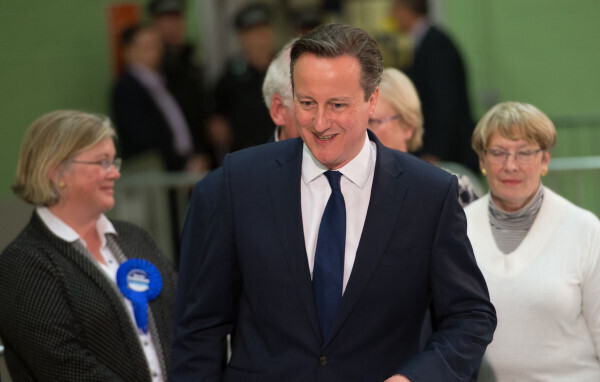
David Cameron securing an overall majority has allayed the fears of financial markets in the short-term at least, analysts said.
An indecisive election result would have led to weeks of political wrangling at Westminster and possibly led to a rout for sterling, which had rallied strongly in recent months as recovery took hold in Britain.
Many companies in the Republic have benefited from a weakening of the euro because it provides a huge cost advantage when selling exports into Britain.
The Government in its Spring Economic Statement last month partly based its strong economic growth forecasts on assumptions for a euro-sterling exchange rate of 72 pence this year and next, down sharply from an average rate of 81p in 2014.
Sterling yesterday surged 1.5% against the euro to over 72.8p, its biggest gain for over three years.
In an upbeat assessment, chief UK economist Vicky Redwood at London’s Capital Economics, predicted sterling would rise further against the euro, and therefore help maintain the competitiveness of the huge Irish exporting base into the UK.
The Conservatives’ “commitment” to budget debt reduction contributed to the relief of the markets, while the stronger economic recovery in the UK, relative to the eurozone, and fears about Greece refinancing its enormous debts will likely help keep the euro low, Ms Redwood said.
But analysts say that prime minister David Cameron, strengthened by his election victory, will strive to open negotiations on renegotiating a new relationship with the EU at an early stage and could now be emboldened to bring forward the UK referendum on Britain’s membership of the EU. He had pledged to hold the vote by the end of 2017.
Despite Mr Cameron’s determination to keep the UK in Europe, a British exit or ‘Brexit’ from the EU would be hugely disruptive for the Irish economy, north and south, many Irish experts have warned.
The UK exiting the EU would strip 3.6%, or about €6bn from the Republic’s export base should full tariff barriers be re-installed in Britain and the North and threaten the security of thousands of jobs across the whole of Ireland, the Institute of International and Economic Affairs (IIEA) said in a major study in March.
The IIEA predicted that worst hit would be jobs in labour-intensive sectors such as agriculture, food and small manufacturing businesses.
The consequences of the UK’s departure would be felt more acutely across Ireland than any other European region and have a “disproportionate impact” on Irish-owned businesses because of the importance of the UK market for small exporters, the think tank had said.
Ratings agency Moody’s yesterday said the Conservatives’ election victory might have implications for Britain’s sovereign debt rating if it led to the country leaving the EU.
However, Mary Rose Burke, director of corporate affairs and policy at the Irish Business and Employers’ Confederation, said that there could be unexpected benefits for the Irish economy because Ireland too favours reforms in Europe.
CONNECT WITH US TODAY



Be the first to know the latest news and updates