No benefit to singling out fat people for fines
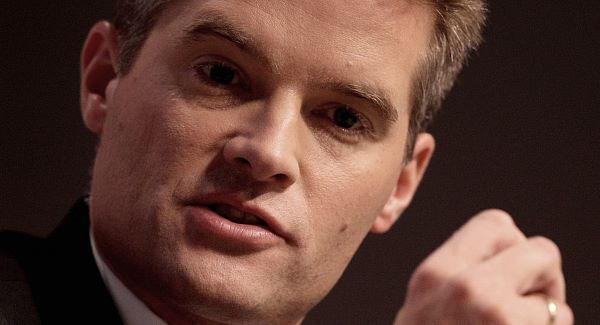
I use the term ‘fat’ instead of ‘obese’ to underline the prejudice implied in such a stance by a senior government minister.
I could add the word ‘poor’ too, as the cohort he references are, by definition, at the lower end of the income scale.
Poor, fat people being discussed by an Oxbridge senior politician is one of those stomach-churning scenes that make me want to throw up.
Using Mr Harper’s logic, then, my father should have had his pay cut because he was a heavy smoker. Never mind the fact that society in my parents’ day was infused with tobacco smoking as a legitimate part of civil society. Sports sponsorship, including his favourite, golf, was dominated by cigarette advertising.
Wall-to-wall marketing in all forms of media and the allowance of smoking in every public environment, including pubs and on commercial aircraft, supported an industry that had an enormous influence on politics.
The political system, in fact, played a large role in facilitating a culture of coolness around smoking that effectively killed generations of Irish people before their time.
‘Kill’ is an emotive term but it’s an apt description of what happens when a society allows its citizens to be fully exposed to products that end lives early. Cigarettes had that effect then, and they have that effect now.
This brings us on to the poor, fat people debate. It seems to me that obesity is disproportionately evident among lower income classes in all western countries, including Ireland.
The narrative proposed by Mr Harper is that government needs to take hard actions to counter this kind of behaviour. Let’s punish poor, fat people by clipping their miserable benefits when they don’t do enough to lose weight.
The reason why obesity is more prevalent among lower income earners has nothing to do with their behaviour compared to those of us pampered in the higher income echelons. Instead, it’s a function of two powerful forces that applied to smoking at one point — cost and advertising.
Like it or not, high-fat foods and high-sugar drinks are inexpensive compared to other forms of food. The advertising and availability of those foods has never been more widespread or intense.
You can add another factor too: People today, at all income levels, have far less knowledge about home cooking compared to prior generations.
That provides just another reason why the wrong food and drink are rational options for so many.
Mr Harper needs to jump out of his ivory tower if the objective really is to improve the nation’s health while avoiding the stigmatisation of one income group.
He might start by bringing back the home economics course that was destroyed about 30 years ago in the UK; this time, make it something of importance to boys and not just girls.
Secondly, some hard questions need to be put around the pervasive advertising penetration achieved by soft-drink and high-fat food producers.
In the same way as cigarette advertisers fought tooth and nail to protect their ads for good commercial reasons, those who purvey high salt and sugar products argue the merits of their marketing strategies. It will take strong political leadership to fix that.
In 2004, then health minister Micheál Martin picked up the cudgel against cigarette makers in Ireland when most countries were afraid of their awesome lobbying power. Instead of targeting poor, fat, and vulnerable people, our politicians have to pick on someone their own, and possibly bigger, size if the objective is to lower the epidemic of obesity spreading through our society.
CONNECT WITH US TODAY



Be the first to know the latest news and updates