Noonan denies budget was ‘missed opportunity’
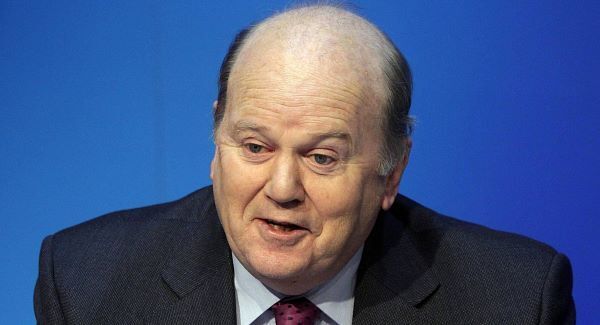
Finance Minister Michael Noonan yesterday published an open letter to Professor John McHale — chair of the Irish Fiscal Advisory Council — responding to criticism of Government economic policy outlined in the Board’s Fiscal Assessment Report in November.
The council took a couple of high profile pre-Christmas shots at the Department of Finance, saying the October budget was not tough enough and had been a “missed opportunity” to further accelerate the reduction of the country’s budget deficit and debt levels.
Mr Noonan said yesterday he did not agree and believed the fiscal stance adopted in the budget was “appropriate for Ireland at this point of the economic cycle”.
He said the tax and spending initiatives would support job creation, build consumer confidence, and strengthen economic recovery, while the target of pushing down the deficit to 2.7% of GDP this year will position the public finances on a steady downward path.
The report also questioned the reliability of recent GDP growth data. In its November report, it suggested that of the near 6% GDP growth seen in the first half of last year, around 2.5% could be attributed to “contracted production” or “contract manufacturing exports”.
This covers goods produced by overseas firms on behalf of Irish-resident firms for one of their end clients; with the sale being technially recorded as an Irish export and the contracted production being listed as a service import. The report claimed that this practice heavily flattered real growth figures.
“My officials are conscious of the impact of the presence of the multinational sector on Irish national accounts aggregates and how this complicates the forecasting process. Gaining a better understanding has been a central part of the department’s analytical focus over the last number of years,” the minister said, adding the budget’s economic review and outlook section highlighted the potential for the impact of contracted production to unwind or accelerate in the short-term.
Mr Noonan also said that — in line with council recommendations — the department has improved its reporting of risk analysis.
In response to the council idea that without the impact of changes to the EU-wide national accounting systems, Ireland would have exceeded the deficit ceiling for 2015, Mr Noonan said that Government is committed to achieving the fiscal targets and exiting “the excessive deficit” on schedule.
“This has been the overarching goal of fiscal policy over the last number of years. Decisions on the measures introduced in Budget 2015 were made in light of the full range of data available, including the impact of the statistical changes,” he said.
Addressing the council’s concerns about water charges, Mr Noonan said that savings to the exchequer should accrue over the longer term.
“In the more immediate future, the increased investment by Irish Water in terms of installation of water meters and infrastructure will mean that expenditure will exceed revenue for the coming years.
“The gap between the two will be made up of equity and borrowings,” he said.
CONNECT WITH US TODAY



Be the first to know the latest news and updates