Economist’s call to lower bond yields
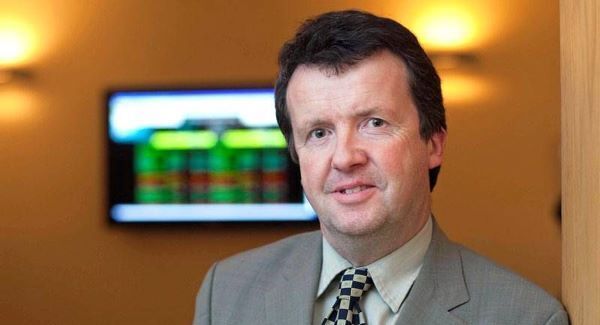
In Merrion Stockbrokers’ latest bond market review and outlook, chief economist Alan McQuaid suggested that with continued growth in the local economy and with the ongoing stabilisation of Ireland’s political make-up, long-term bond yields should be lower than the 2.26% level currently being seen and closer to the 1.56% levels being charged for Belgian bonds.
“Ireland’s strategy, in recent times, has been to under-promise and over-deliver on the budgetary targets front, which has served the country well in terms of lowering its bond yields dramatically,” Mr McQuaid said.
He added: “All things being equal, we see this trend being maintained in 2014. The benchmark 10- year bond yield has hit record lows this year and is currently at just under 2.3%, which is very good news as regards servicing the country’s large debt. The modest funding target for 2014 — coupled with very positive economic data — has helped fuel the rally in Irish government bonds to record lows.”
“However, we still think the rally has further to go and continue to believe that Irish government bonds should — because of stronger economic growth potential and a more stable political backdrop — be trading at a par with Belgian paper, all things considered. Belgian 10-year debt currently yields around 70 basis points less than its Irish equivalent,” he said.
In terms of debt investment recommendations, Merrion is tipping 10-year Portuguese bonds, short-term Swedish debt, long-term Irish Government debt and UK index-linked paper.
“The ‘grab for yield’ is still a key strategy as regards the eurozone ‘peripherals’, at this point in time. With the ECB in the background willing to do more, if needed, to combat the deflationary threat and boost growth, it does look like the yield compression over Bunds will continue in the short-term.
“Aside from Greece — where the government could fall at any time — Portuguese bonds offer the highest yield within the periphery and have further to go in the rally,” he said.
CONNECT WITH US TODAY



Be the first to know the latest news and updates