Small Business Q&A: Jim Clarkin from Oxfam Ireland
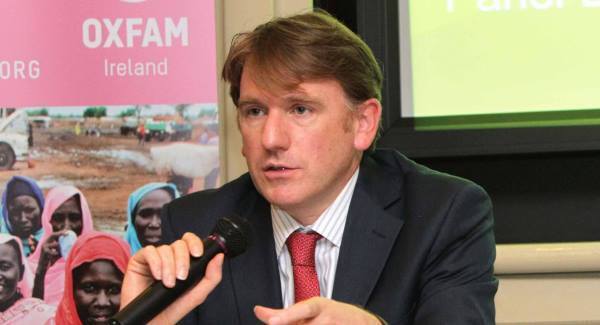
Well, we see the gender pay gap as one of the biggest obstacles to eradicating poverty globally. People also need to realise that this is not an issue just for women, it is an issue for families and societies alike. Particularly in the extreme poverty end of the spectrum, there are over a billion people now considered to be in extreme poverty around the globe.
Over 70% of those are women or girls and with the rich/poor gap growing, it makes things even more difficult. Globally, women perform about two thirds of the world’s work, they produce at least half of the world’s food and yet they only earn 10% of the world’s income and own just 1% of the world’s property. So, you can see straight away that reducing this gender gap is important not just for poverty, but also for the economies of countries as well.
A lot has to do with assumption. There is an assumption within some countries that we have reached equality, therefore, everything between men and women is equal. However, if you look at even here in Ireland, there is a 13% gap, on average, between the pay of women and men. Only 30% of management positions are filled by women and that percentage drops the higher up the management chain you go. One of the more startling trends from our report was the fact that if trends continue it will take 75 years before women get close to global parity with men in the pay scale.
I’m sure it does, but that is one example of where change can benefit. Childcare in Ireland is very expensive and a huge contributing factor to why women decide not to go back to work.
We give women a number of legally-allocated times to take off work in order to take care of children and family. If we introduced the same times for men, then it would be a non-issue. The issue should be about employing the best candidate for the job.
However, the other thing for businesses is that employees or management within a business, that represent the demographics of their customers, are much more effective and respond much more quickly to changes with those markets, as opposed to businesses that don’t.
So, it is in the interests of businesses to reflect a balance on gender gap.
Listen to this week's and previous shows