Chirpy stock debut for Twitter, but not everyone was a winner
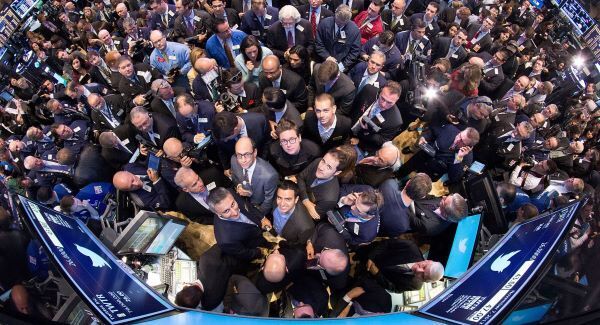
This week’s Twitter IPO has set a lot of tongues wagging coast to coast in the US, and beyond.
When the youthful social media debutante curtsied for the first time, the investor boys all rushed to grab a twirl with her on the dance floor.
Big money was made when the share price ended up 73% at the end of the first day of trading, valuing the company at $25bn (€18.7bn), the IPO having been initially set at $12.8bn, Over $2bn has gone into the coffers of Twitter following the flotation, putting it just behind Facebook in the IPO league table.
The surge suggests that the public offering was priced way too cautiously. This looks to be good news for the Wall Street underwriters who get to scoop much of the pool.
It would seem that the investors in Twitter have lost out as a result of the cautious approach.
The lead underwriter was Goldman Sachs — another big pay day for these boys. Almost $60m in management fees alone.
Still, the initial shareholders are quids in. Not so, Nasdaq which missed out on the IPO, and was passed over in favour of the New York Stock Exchange.
The Nasdaq has suffered due to the mishandling of the flotation of Facebook, attended as it was by severe technical glitches.
Facebook’s share price subsequently plunged by one half, though it has recovered well to surpass its flotation price.
The biggest winner in the Twitter IPO, on paper at least, is private equity boss, Suhail Rizvi. His 15% stake was worth $3.75bn at close of business on Thursday. Also laughing all the way to the (interest-free) bank is his friend, the Saudi prince, Alwaleed bin Talal, who pumped $300m into Twitter two years ago.
Co-founders Evan Williams and Jack Dorsey are paper billionaires now, but the forgotten third co-founder, Noah Glass — considered by many to be the true father of Twitter — now lives in relative obscurity having missed out on big riches.
It was Dorsey and Glass, former bosom buddies, who cobbled together the idea for the network, back in 2006, when they were working for the third co-founder Evan Williams — already a wealthy man following the sale of his web diary service, Blogger to Google.
Williams ran a company called Odeo. Glass, at the time, was restless following the failure of his marriage.
Nick Bilton of the New York Times has just published an account of those years entitled Hatching Twitter — A True Story of Money, Power & Betrayal.
Bilton suggests that Dorsey conceived the original idea of a status sharing service with people informing each other in real time about what they are doing. Glass , feeling lonely, wanted a service that would allow people to hold conversations in real time on their phones, or PCs.
The idea was that there would be a “steady stream of conversation percolating out”. Glass came up with the name ‘Twitter’ to describe the “light chirping sound made by certain birds”.
Earlier, the group had dismissed as too creepy Williams’s suggestion that the service be called, ‘Friend Stalker’.
It was decided to limit each tweet to 160 characters — the maximum length of a mobile phone text message — this has since been reduced to 140 characters.
The first ever tweet was sent by Dorsey in Feb 2006. In 2007, 5,000 tweets a day were sent — in 2009, the figure reached 35m. In 2012, it was close to 350m, with 230m users.
Tweeting has become a huge tool for journalists and campaigners in search of comradeship. Information on rolling events can be accessed almost instantaneously, allowing communities up-to-date information on local disasters, for example.
Twitter is particular useful as a means of promoting blogs and advertising campaigns. Links to other social media tools are often crucial.
Politicians and others in the public opinion business benefit from the immediate feedback that Twitter affords.
So can Twitter emulate the success of Google, Facebook and You Tube?
The jury is out. Some investors and advertisers remain to be convinced.
The company is still loss-making, yet has a stellar value. Shades of 1999-2001 all over again, one wonders.
Supporters of the stock suggest that the company is well positioned for growth, with 65% to 70% of revenues coming from mobile phones.
Many users are educated, articulate, middle class, with a good age spread, and not over-exposed to the fickle teenager market.
The fact users are looking for specific information gives Twitter characteristics similar to Google, but sceptics fear that the Twitter format is advertising repellent.
Says Rob Romero, portfolio manager, Connective Capital Management: “...the revenue model is not yet established enough and their reach and frequency from an advertiser perspective is not as uniform as Facebook. Twitter users are typically enthusiasts looking for short nuggets of news. Facebook engagement is deeper and broader.”
Money talks and this week it managed also to tweet...

CONNECT WITH US TODAY



Be the first to know the latest news and updates