Paving the way to making our banks better citizens

To fulfil their role in recovery banks need to rebuild the trust that has been decimated by events of the past three years, writes Bob Diamond

SOON after the financial crisis began in 2008, I was at a meeting in the US where a senior White House economic adviser put a question to me: “Do you think banks can be good citizens?”

As I started to answer “Yes,” he interjected: “If your answer is ‘yes,’ think about the fact that no one will believe you.”


Today’s economic environment, in which we are all living and working, is particularly challenging. In Europe, Britain and the US, we are feeling the effects of the unsustainable levels of public and private debt accrued in the years before 2008. Spending cuts are being put in place by governments and households alike, with varying degrees of public acceptance and social unrest.

The single most important thing for banks and other businesses to focus on in 2012 is economic growth and job creation. But, to play their proper role in bringing about new increasing employment, banks need to rebuild the trust that has been decimated by the events of the past three years. That requires bankers to use the lessons learned from the crisis to become better and more effective citizens.

Simply put, the private sector has an obligation to be the engine of growth and employment, and banks have a vital role to play in achieving that end.

Frankly, banks have done a very poor job of explaining how we contribute to society. We need to fix that as part of the process of restoring trust in what we do.

At the most fundamental level, banks are entrusted with deposits from individuals, businesses, and governments.

We put that money to work by helping people to buy homes, for example, or by lending to growing companies. Banks also provide critical services to governments and business, by providing direct access to global buyers of debt and equity, and by establishing large, consistent markets of buyers and sellers. Some characterise these activities as speculative trading, and even caricature financial markets as casinos. In fact, these markets serve a fundamental client need.

Of course, to meet these needs, banks must be safer and stronger than they were prior to the crises. The reality is that much is different in today’s financial sector. Banks are not borrowing as much; they have more capital; and they have far more stable and liquid sources of funds to lend.

Strong banks want strong regulation, and we believe that no taxpayer money should ever again be put at risk to rescue a failed or failing bank. But, three years on from the 2008 financial crisis, we still face considerable challenges, as the continuing eurozone crisis demonstrates.

So it’s not surprising that many people doubt that anything has really changed. The only way that banks will win back the public’s trust is to become better citizens. That starts with demonstrating that we act with trust and integrity. The interests of customers and clients must be at the very heart of every decision we make.

In 1970, the Nobel laureate Milton Friedman — one of my favourite economists — wrote an influential article arguing that the only social responsibility of business is to increase its profits. On that point, I disagree.

Businesses must increase profits in a way that creates sustainable shareholder value, not just short-term gain. This applies across industries, not just in banking.

Banks can, and should focusing on the interests of the customers, clients, and communities that they serve. The challenge is to balance our obligations to all of our stakeholders, both customers and shareholders, including the pension funds that help millions around the world save for retirement.

That is not always easy, and the decisions that we — just like any other business — make every day are imbued with inherent dilemmas. But doing what’s right for customers, clients, shareholders, and communities will ensure that we get those judgments right much more often than we get them wrong.

That is why the answer to the question posed to me three years ago is that banks must be good citizens. I appreciate that persuading people of that concept will require they see a visible difference in the way banks participate in society. People may not recognise any difference right now; the change that is now taking place is in its early stages. But we are determined to keep working at it, and I am committed to making it happen.

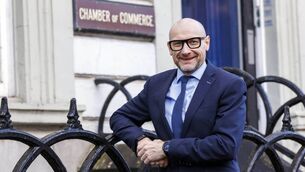
Bob Diamond is chief executive of Barclays. (C): Project Syndicate.

More in this section

The Business Hub

Newsletter

News and analysis on business, money and jobs from Munster and beyond by our expert team of business writers.

Cookie Policy Privacy Policy Brand Safety FAQ Help Contact Us Terms and Conditions

© Examiner Echo Group Limited