ECB likely to hold off on rate hike as eurozone inflation falls
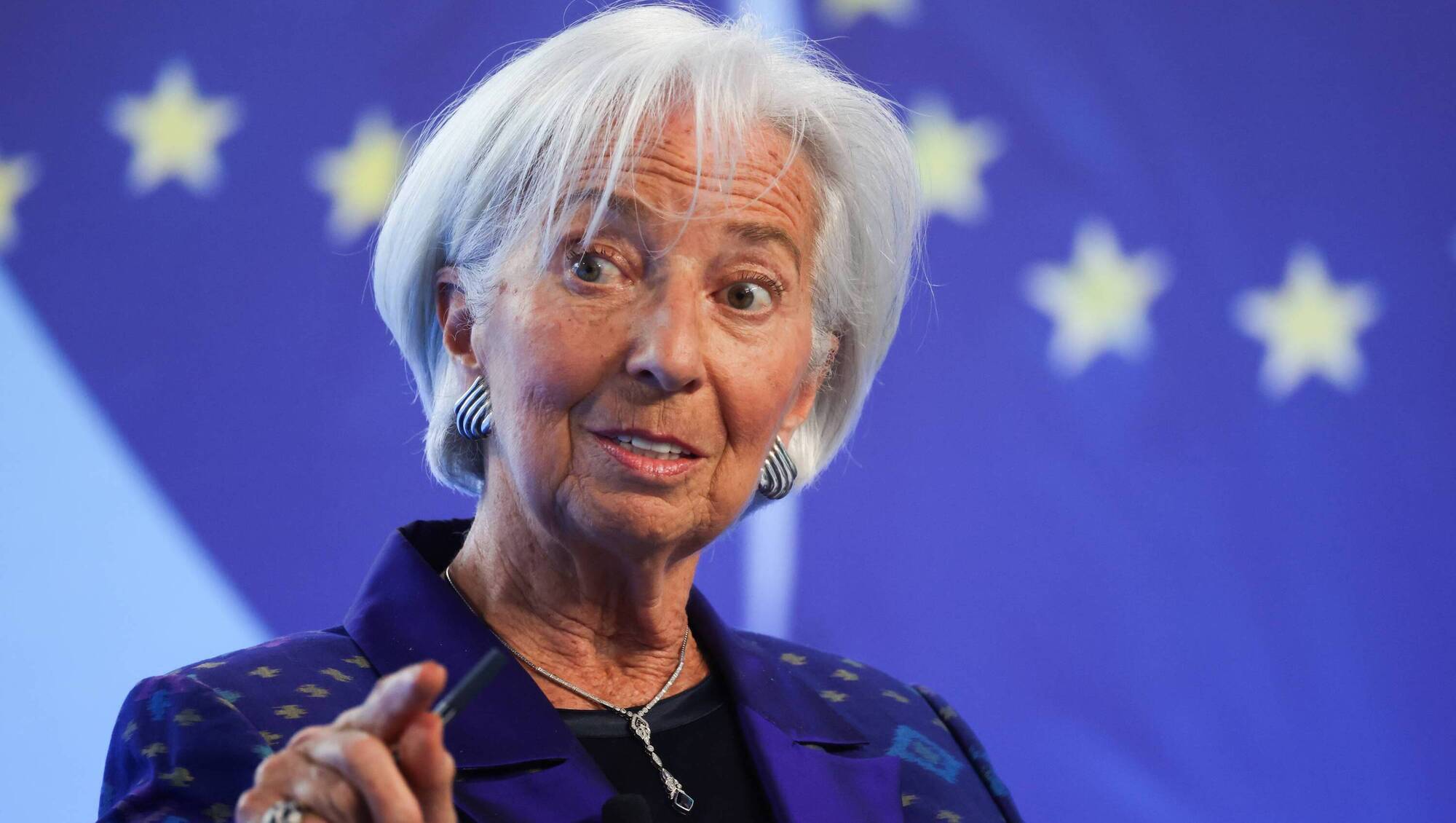
Annual inflation rate in June stood at 2.8% across the eurozone — down from 3.2% in May
European Central Bank president Christine Lagarde and its governing council will meet on Thursday to discuss interest rates in light of escalating tensions in the Middle East.

European Central Bank president Christine Lagarde and its governing council will meet on Thursday to discuss interest rates in light of escalating tensions in the Middle East.

The European Central Bank (ECB) is likely to hold off on a second interest-rate hike in the coming week while keeping that option open for September as inflation across the eurozone falls slightly.

Late last week, Eurostat released data showing that the annual inflation rate in June stood at 2.8% across the eurozone — down from 3.2% in May. 

A year earlier, the rate was 2.0%.

In Ireland, inflation during June was running at 3.4%, down from the 3.6% recorded in May.

After the ECB increased borrowing costs in June following a spike in energy prices, officials initially expressed confidence that peace negotiations between Washington and Tehran would limit the fallout of the conflict on eurozone consumer prices.

However, renewed fighting in the region and uncertainty over vessel traffic through the Strait of Hormuz have put them back to square one, according to Greek central bank governor Yannis Stournaras.

Over the weekend, US forces hit Qeshm Island in the Persian Gulf, as well as southern cities including Shadegan, Sirik and Hajiabad, Iranian media reported. 

State-run IRIB News said Iran’s army retaliated early Sunday with drone strikes targeting US forces in Kuwait at Camp Buehring and the Ali Al Salem Air Base.

Kuwait, where an oil facility and a power and desalination plants have been hit in several consecutive days of assaults, said it was responding to new drone and missile attacks, without giving details. 

Bahrain sounded warning sirens later, before saying it had intercepted a wave of Iranian aerial attacks.

Data since the June meeting probably won’t push ECB officials into immediate action on Thursday. 

Oil and gas prices are close to the baseline scenario that policymakers outlined last month, and inflation has slowed more than expected.

An ECB bank-lending survey due on Tuesday is unlikely to change the picture significantly.

Brent crude oil — a benchmark for global oil prices — was trading at around $87 a barrel on Friday which is below the $95.60 recorded during the last ECB meeting in June.

That gives officials time to assess how the situation evolves over the summer. 

President Christine Lagarde can point to a wealth of data arriving before the September gathering, including two more inflation prints, a reading of second-quarter growth, and several business surveys.

The first of those comes on Friday, when S&P Global publishes its monthly purchasing managers poll.

In June, the composite measure for the currency bloc rose to exactly 50, the threshold separating expansion from contraction.

Investors and economists figure that the new information will ultimately convince the ECB governing council to deliver more tightening at their September 10 decision.

“If we were to see a big disaster in activity data from now until the September meeting, that could increase the incentives for a hold as long as energy prices don’t go crazy,” said Bank of America economist Ruben Segura-Cayuela.

“But nothing indicates activity is going to severely deteriorate.”

Chief eurozone economist for Bloomberg Simona Delle Chiaie said they expect the “ECB to keep borrowing costs unchanged in July before hiking one final time in September”.

“Tighter credit conditions will add to the forces tempering the inflationary impact of the energy shock, such as limited second-round effects, preventing a need for even higher rates.”

According to the latest data from the Central Bank of Ireland, during May, Irish mortgage interest rates dropped to the eurozone average for the first time in more than three years.

The average interest rate on new mortgage agreements was down two basis points from April’s 3.5% average as added competition in a historically concentrated market begins to take effect.

The average rate matched the eurozone for the first time since March 2023, having exceeded it since then, the Central Bank said.

Irish mortgage rates are now the 12th highest in the 21-country eurozone, down from 10th place in April.

Bloomberg

x

More in this section

The Business Hub

Newsletter

News and analysis on business, money and jobs from Munster and beyond by our expert team of business writers.

Cookie Policy Privacy Policy Brand Safety FAQ Help Contact Us Terms and Conditions

© Examiner Echo Group Limited