David McNamara: This oil shock is worse than 2022
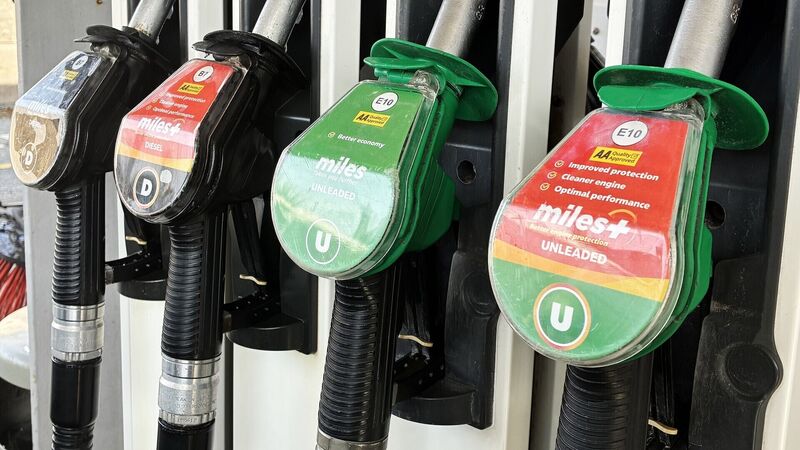
Any new Government supports should be tightly targeted and preserve incentives to reduce Ireland’s reliance on fossil fuels, which remains among the highest in the developed world. Picture: Brian Lawless/PA Wire

As markets slowly price in a longer-lasting disruption from the Middle East conflict, European governments are dusting off playbooks used in 2020 and 2022 to support households and firms through the current shock.
However, the key difference today is many countries lack the fiscal capacity to match the largesse of previous crises, with the notable exception of Ireland.
According to the OECD, in the median G20 economy, government gross debt has risen by close to 40% of GDP since 2007, immediately prior to the global financial crisis, with a significant chunk of this debt built up since 2020.
Other spending demands have also recently emerged, such as rising defence expenditure, and are now adding pressures from longer-term trends, including ageing populations and climate change.
With many European governments running substantial fiscal deficits, the question remains whether bond markets might baulk at a fresh wave of supply in the coming months. Both short and long-end rates are structurally higher than at the start of the Russia-Ukraine war, implying the “r-g” snowball effect (interest rate minus nominal growth) could quickly resemble an avalanche if we see a greater stagflationary shock than in 2022.
For now, bond markets appear well-enough behaved, but the trickle of early commitments by governments has tested markets, notably in the UK, where the 10-year gilt yield has tested 5% in recent weeks.
Two key lessons from the measures adopted post-Ukraine were the poor targeting of supports and the design flaw in policies that did not preserve incentives to save energy.
On both counts, most countries failed, with the OECD, in its recent economic outlook, calling out Canada and Germany as notable exceptions in designing partially effective policies. This time around, bond markets will likely compel governments to implement more targeted support schemes.
In 2022-23, analysis by the IMF showed European governments spent, on average, nearly 3% of GDP on energy support packages. In the UK, the figure was 4.5% of GDP, while in Ireland, a similar 4.5% of GNI* package was spent across both years, equivalent to about €12bn.
These sums are unlikely to be repeated across Europe. That means the private sector will likely pick up a larger tab, while windfall taxes on energy companies could also feature more prominently.
Although fiscal capacity is lacking in many countries, Ireland is actually in a stronger position than four years ago. Debt-to-GNI* has fallen from 84% of GNI* in 2022 to 62% in 2025, alongside an ongoing annual fiscal surplus of 3-4% of GNI*.
The Government has also built up a substantial war chest of over €70bn in its various sovereign wealth funds. This expanded capacity does not mean the Government should repeat some of its previous scattergun supports, many of which were only recently ended.
Instead, any new supports should be tightly targeted and preserve incentives to reduce Ireland’s reliance on fossil fuels, which remains among the highest in the developed world.
- David McNamara is chief economist at AIB