David McNamara: Middle East conflict risks global macro shock
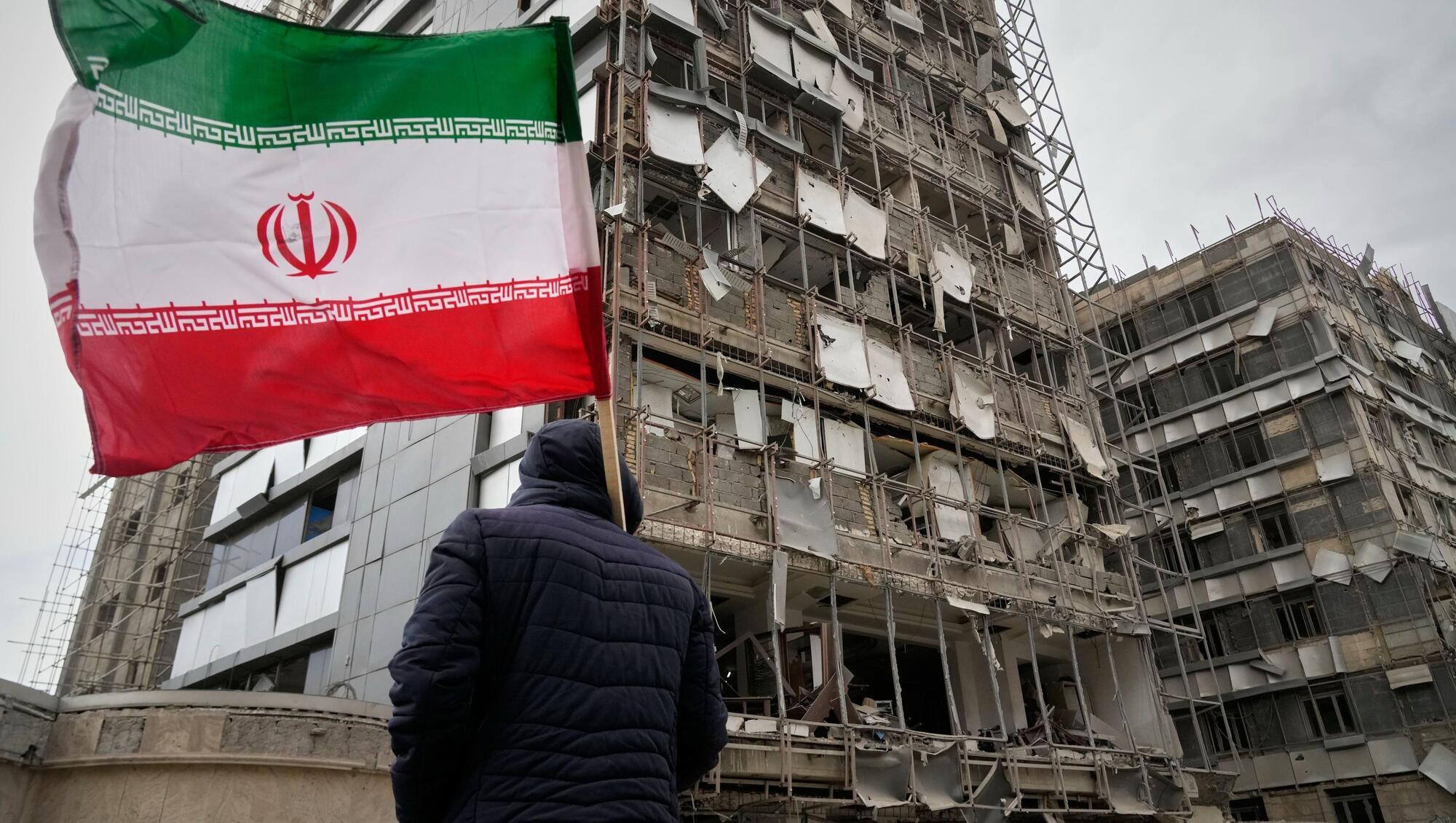
A man holds an Iranian flag as he looks at the damaged façade of Gandhi Hospital in Tehran. Picture: AP Photo/Vahid Salemi
The US and Israeli attacks on Iran, and Iranian escalation to other Gulf states over the weekend, raises the risk of a spillover to the global economy, although the impact on markets so far looks contained.
While the societal cost in the Middle East could prove devastating, regional conflicts typically do not spill over to wider macroeconomic shocks. So far, markets have been jolted by the current conflict, with safe haven assets gaining, such as gold and the US dollar, alongside rising energy prices and lower equities.Â
In the aftermath of previous attacks on Iran in 2025, markets quickly recovered ground in the following days. However, there are fears that the scale of the current conflict, including the killing of the Iranian supreme leader and the attacks on major Gulf economies, which could illicit a wider shock.
There are two key channels of risk for the global economy in the current conflict – energy prices and economic confidence. On the first, an energy shock could re-ignite the inflationary surge last seen in 2022, quickly feeding through to consumer prices and shift the outlook for central banks. So far, commodity price rises are a fraction of what occurred after the invasion of Ukraine; although oil prices have spiked in early trading on Monday, with the benchmark brent crude rising to nearly $80/barrel from $73 on Friday.Â
Expectations of a sharper ramp up in oil prices may have been dampened by an Opec+ statement committing to increase supply over the weekend. European natural gas prices are up nearly 25% and typically have been more volatile in response to geopolitical shocks.
It must be noted that Iran itself is a relatively small producer, accounting for less than 4% of global oil output. However, it has the potential to disrupt trade through the key Strait of Hormuz, through which 20% to 25% of global oil and around 20% of seaborne liquefied natural gas (LNG) traverse. It is also a significant route for Saudi Arabia, UAE, Qatar, and other Gulf states.Â
On the importer side, most of the Gulf oil and gas is shipped to Asia, with China, India, and Japan directly exposed. However, Qatar is also a major supplier of LNG to the European market. Ireland’s direct trade exposure to the region is very limited, but it is a net importer of fossil fuels so would be indirectly impacted by rising commodity prices on global markets.
On the second channel, a sustained conflict could also dampen consumer and business confidence, as was seen during the initial Ukraine invasion. While less observable than moves on financial markets, a confidence shock could pause investment and hiring decisions by firms, and in turn, dampen consumer spending.
It is also worth noting that the balance of power in global energy markets has shifted markedly compared to the last major Gulf war involving the US in 2003. The US is now the world’s largest oil producer at nearly 22% of global output, compared to just 6% in 2003. Moreover, the ‘carbon-intensity’ of the global economy has diminished as countries have slowly shifted towards renewables.
David McNamara is AIB chief economist