Oliver Mangan: US rate cuts would undermine strong dollar
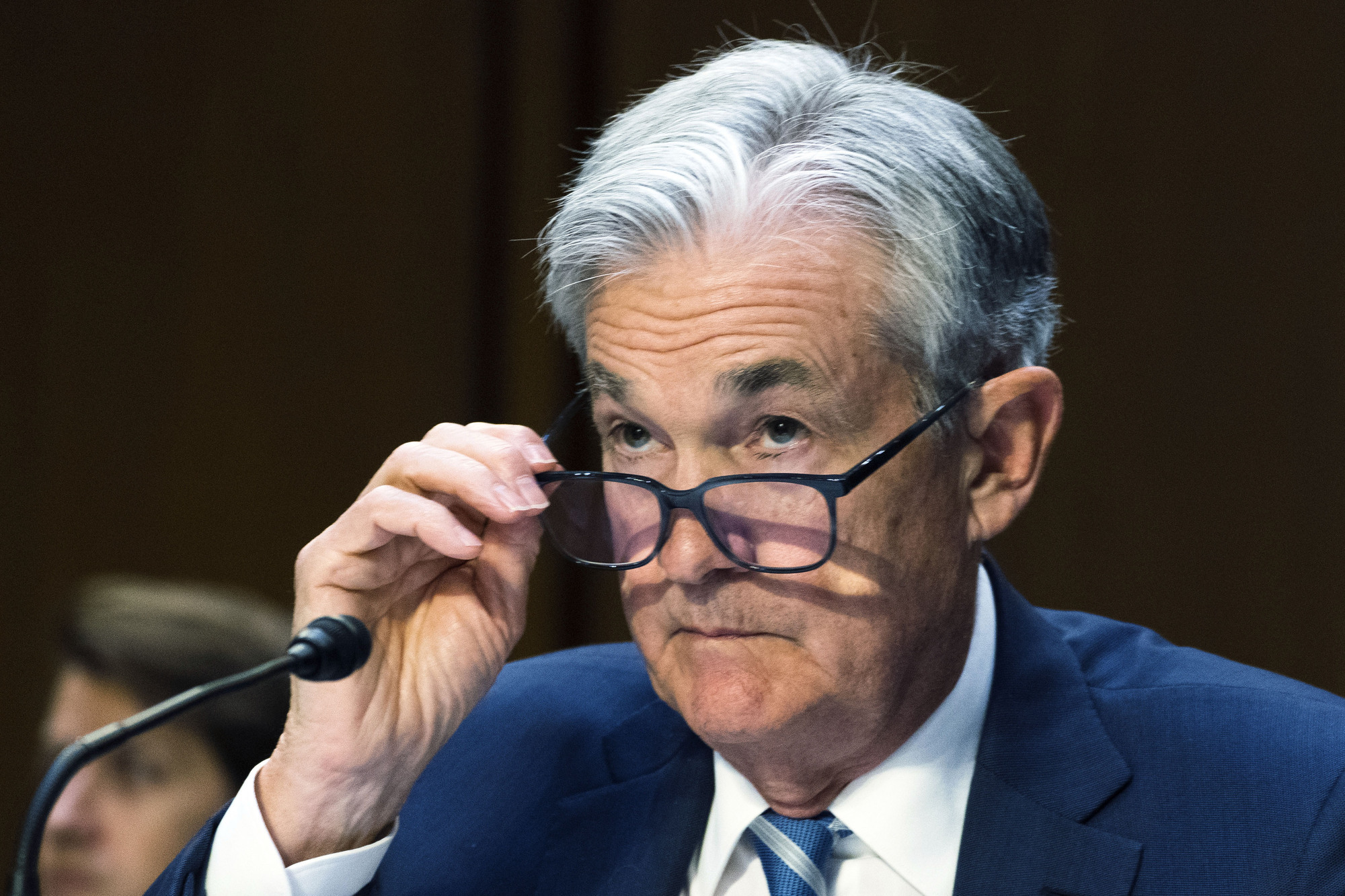
US Federal Reserve Chairman Jerome Powell has delivered a rapid pace of increase in US interest rates. Picture: Manuel Balce Ceneta

Interest rates have been a key driver of currency markets in the past couple of years.
The dollar was in the ascendancy from mid-2021 through to autumn 2022, as a rapid pace of increase in US interest rates, and rising US bond yields drove the currency higher. It rose by circa 25% in trade-weighted terms during this period, making significant gains against a broad range of currencies.
The final quarter of 2022 through to end of January 2023, though, saw a change in the dollar’s fortunes. It lost significant ground as other central banks stepped up the pace of rate tightening, with 75bps hikes becoming the norm, boosting currencies like the euro and sterling.
Meanwhile, in marked contrast to other central banks, the Bank of Japan continued with its very accommodative monetary policy in 2022, keeping the key official rate in negative territory. Widening interest rate differentials saw severe downward pressure on the yen, which fell to over 30-year lows against the dollar in the autumn, with the US currency rising above ¥150.
More recently, most of the major currency pairs have been relatively range-bound, despite significant volatility in financial markets. Expectations that interest rates would go even higher than previously anticipated have evaporated everywhere, following the emergence of stresses in parts of the banking system, and the associated risk of tighter credit conditions.
The market view now is that we are nearing the end of the rate-tightening cycle. Against this changing backdrop, the euro has been confined to a narrow $1.05-$1.10 range so far this year, while sterling has traded between $1.18-$1.24, with the yen moving in a wider ¥128-¥138 corridor versus the dollar. While the dollar is now well below the 20-year highs hit last September, it still remains at elevated levels.
The stresses that have emerged in parts of the global banking system recently could have a bigger impact on the US economy than elsewhere. It is likely to experience a more pronounced tightening of credit conditions, given the uncertainties around deposit flows in small to medium-sized US regional banks.
Hence, markets see rate cuts being implemented in the US later this year, ahead of elsewhere. The extent of policy easing is also expected to be greater in the US than most other economies. Markets see US rates falling below UK levels next year and the Fed’s own rate guidance suggests that the current wide gap between US and Eurozone rates could be largely eliminated by 2025.
As already noted, interest rates have been a key driver of currencies in the past number of years. Thus, if US rates start to be cut later this year, before elsewhere, then the dollar could be expected to lose ground, especially given that it is still at an elevated level.
Meantime, in terms of the euro, the ECB continues to attach a very high importance to getting inflation back down to its 2% target, meaning it will be slower to ease policy.
Overall, if markets are correct in their pricing of the future course of interest rates, the euro could rise to around the $1.13 level later this year and make further gains against the dollar in 2024 as the gap between US and Eurozone rates narrows.
- Oliver Mangan is Chief Economist with AIB