Oliver Mangan: Brexit vote pushed UK from G7's strongest performing economy to weakest
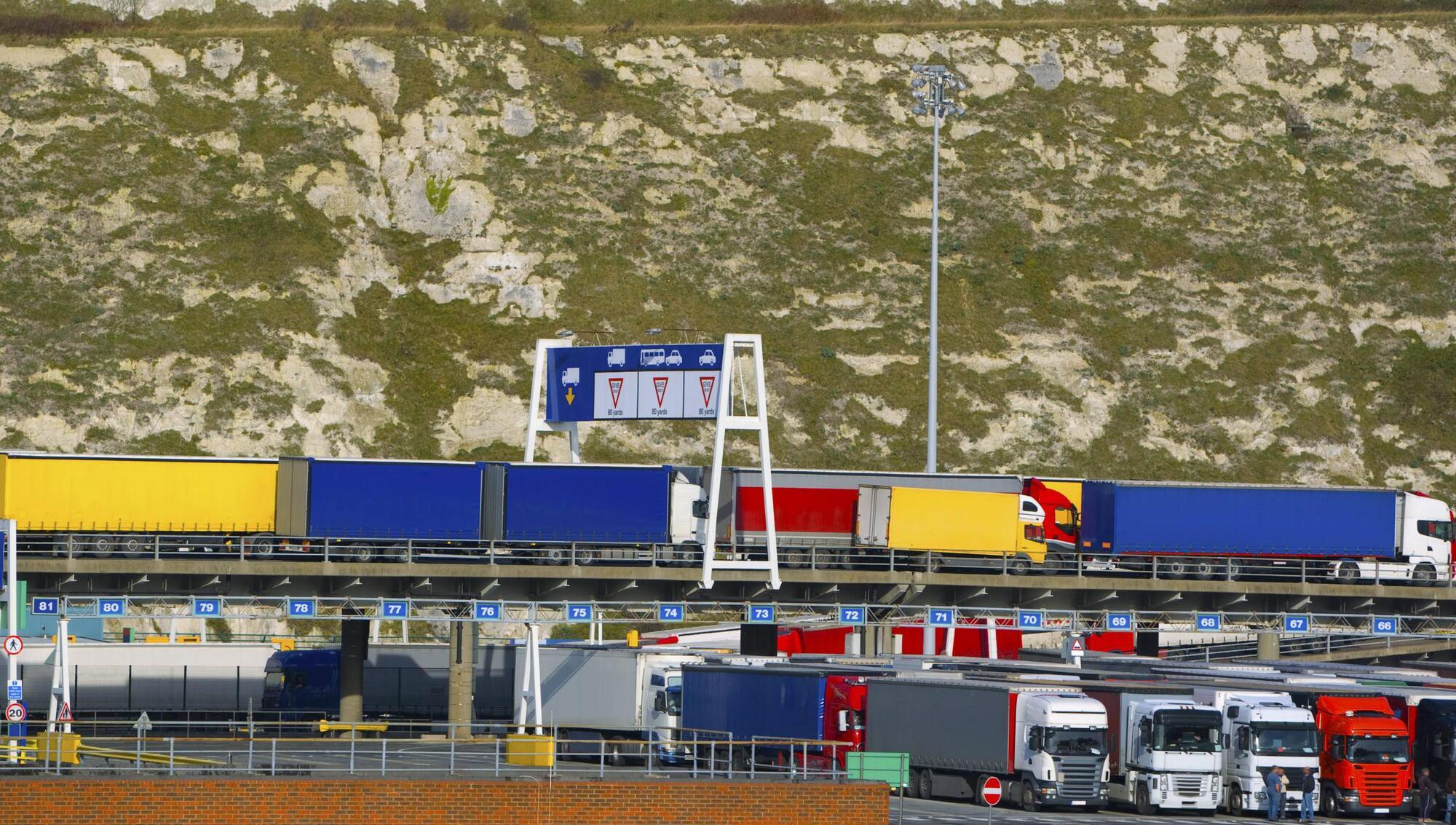
Trucks at Dover Port: UK exports have fallen
The remarkable recovery of the Irish economy after the financial crisis of 2008-2011 crisis was based around two main pillars: A very painful programme of fiscal austerity to restore order to the public finances and a renewed focus on foreign direct investment and exports.
Even in the aftermath of the Covid-19 pandemic and in the midst of a global energy crisis, the results are evident with the Irish economy in 2022 enjoying record levels of foreign investments and exports, full employment, low debt levels and both budget and balance of payments surpluses. The Irish template for recovery, though, does not have much appeal in the UK.

The UK economy has gone from being the strongest performing G7 economy before the June 2016 referendum on EU membership to the weakest in the past number of years. It had a relatively poor Covid crisis, with GDP contracting by 11% in 2020 compared to the contractions of 6.2% in the eurozone and 2.8% in the US.
The UK is now having a poor energy crisis, with the economy’s performance weaker than elsewhere.
GDP in the UK in the second quarter of 2022 was still below its pre-Covid levels, whereas it was higher, by near 2% in the eurozone and 3.5% in the US. In this regard, the UK’s departure from the EU's single market has seen a big hit to trade with mainland Europe, leaving the economy in a weakened state.
The OECD recently estimated that the deterioration in UK net external trade after Brexit, which is attributable to greatly shrunken exports, will knock more than 6% off its GDP over 2021-2023. The financial fundamentals are not good either, with the OECD projecting a budget deficit of 5.3% of GDP and a balance of payments deficit of 7.2% of GDP for 2022.
The new UK government has called out that action needs to be taken to address the poor performance of the economy. However, it is adopting short-term policies that will make the deficits even worse, with the state picking up an open-ended, potentially large tab to cap household energy bills.
By some estimates, these measures could see the budget deficit blow out to around 10% of GDP, and UK government debt is already high at 100% of GDP. More worrying, analysis by the Institute of Fiscal Studies suggests the budget deficit may still be close to 5% of GDP by 2026-2027. The UK public finances, then, could be moving on to an unsustainable path.
Not surprisingly, the markets are not impressed. The Bank of England had to intervene last week with a bond purchase programme to stabilise the gilt market after yields soared.
Meanwhile, sterling came under severe pressure. Indeed, government policy is now undermining the bank’s efforts to get inflation back under control.
The Bank of England is likely to respond with an outsized rate hike at its next meeting. Markets are looking for rates to be hiked by 1.25% to 3.5%, and to be raised even further, to 5.75% by next summer.
However, we doubt there will be monetary tightening on this scale as it would inflict far too much damage on the already weak economy.
- Oliver Mangan is chief economist at AIB