Brian Keegan: Ireland must sell its green credentials to investors
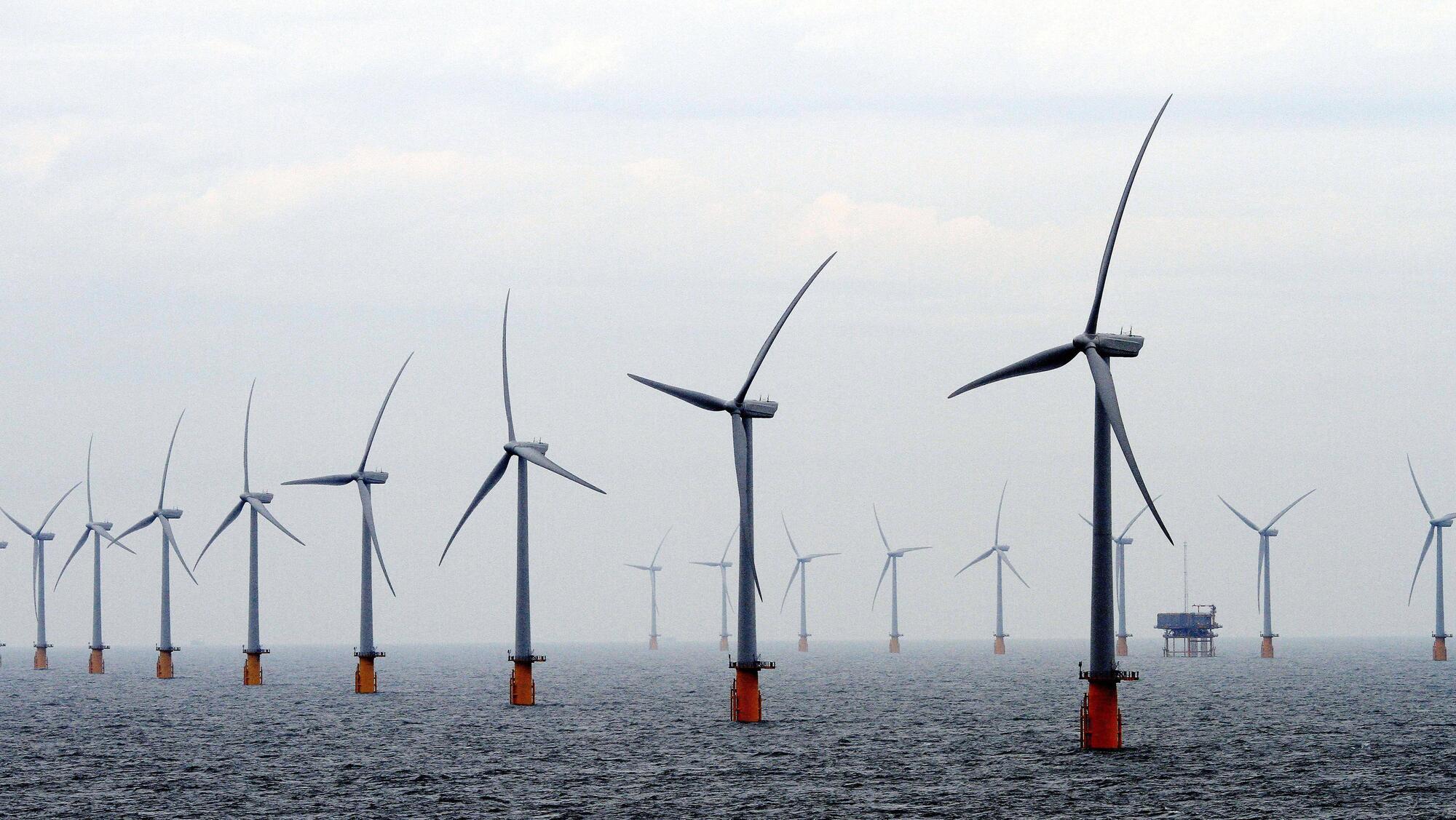
A serious weakness in the Irish offering to FDI lies in our sustainable energy shortfall. Picture: Gareth Fuller/PA
The week of March 17 is a great week to be selling Ireland.
Criticism that members of the Cabinet became a de facto diaspora last week misses a crucial point — that Ireland, not only seeks investment from overseas, but is itself a major overseas investor.
It is remarkable that, for instance, Irish companies are among the top 10 investors globally in the US.
Of course, the Irish government should look to our foreign interests — and history and tradition dictate that the third week of March is an ideal time to do so — a confluence that other countries can only envy.
Ireland’s prosperity continues to be driven by foreign direct investment (FDI). About one in every 10 jobs in this country are directly created by such investment.
CLIMATE & SUSTAINABILITY HUB
Despite the emerging global consensus — though still far from practice — that an effective rate of 15% corporation tax should be levied, the 12.5% rate of corporation tax nevertheless remains a major calling card for FDI.
This is because the 15% rate kicks in only where the global turnover of a corporate group exceeds €750m. It is, therefore, applicable to a small and select cohort of industry — thus, the Irish tax rate remains an attractive incentive.
If tax policy was the main driver of FDI in the past, prospective investors are now asking different questions about where to locate.
Some, like the availability of an educated workforce, are to be expected. Others, like the availability of housing, are not as pressing as we may think.
Irish destinations like Cork and Dublin compete with major cities across Europe, many of which are also experiencing significant housing supply challenges.
It is not enough to say: “We’re OK because the competition is just as bad.”
We need to address our housing shortage, and a swift resolution would not only benefit Irish society, it would also boost our profile as an attractive location for FDI.
We also need to think about energy security, not merely in terms of limiting our dependence on foreign sources, or even the availability of natural resources, but also about our own commitment to sustainability and renewability.
At one investment forum I recently attended, a question was asked about the uptake of electric vehicles in Ireland — not by an idealistic start-up promoter, but a senior economist at a venture capital fund.
The point is that, in the FDI realm, a country’s ability to establish credible green credentials is becoming an essential part of the bigger pitch — and those credentials will be looked for at every step of the supply chain.
When Ireland’s economic policy became outward-facing in the 1960s, we had to be nimble enough to provide the educational infrastructure needed by the new wave of manufacturing and research entities landing on our shores.
The challenge we now face is similar — are we nimble enough to provide the energy infrastructure we need to attract fresh investment and retain the investment we already have?
The challenge is not merely a matter of “how much?” — it is well-documented that our capacity to generate sufficient electricity as a nation is being stretched, and we may already have lost some investments because of it.
The real challenge now is in the “how” itself — specifically, how wind can be harnessed further to meet our energy needs.
Our government ministers and agencies can — and do — provide satisfactory answers to most of the questions put to them by prospective investors. For now, though, a serious weakness in the Irish offering lies in our sustainable energy shortfall.
- Dr Brian Keegan is director of public policy at Chartered Accountants Ireland