Declan Jordan: Aer Lingus sale compromises commitment to regional development
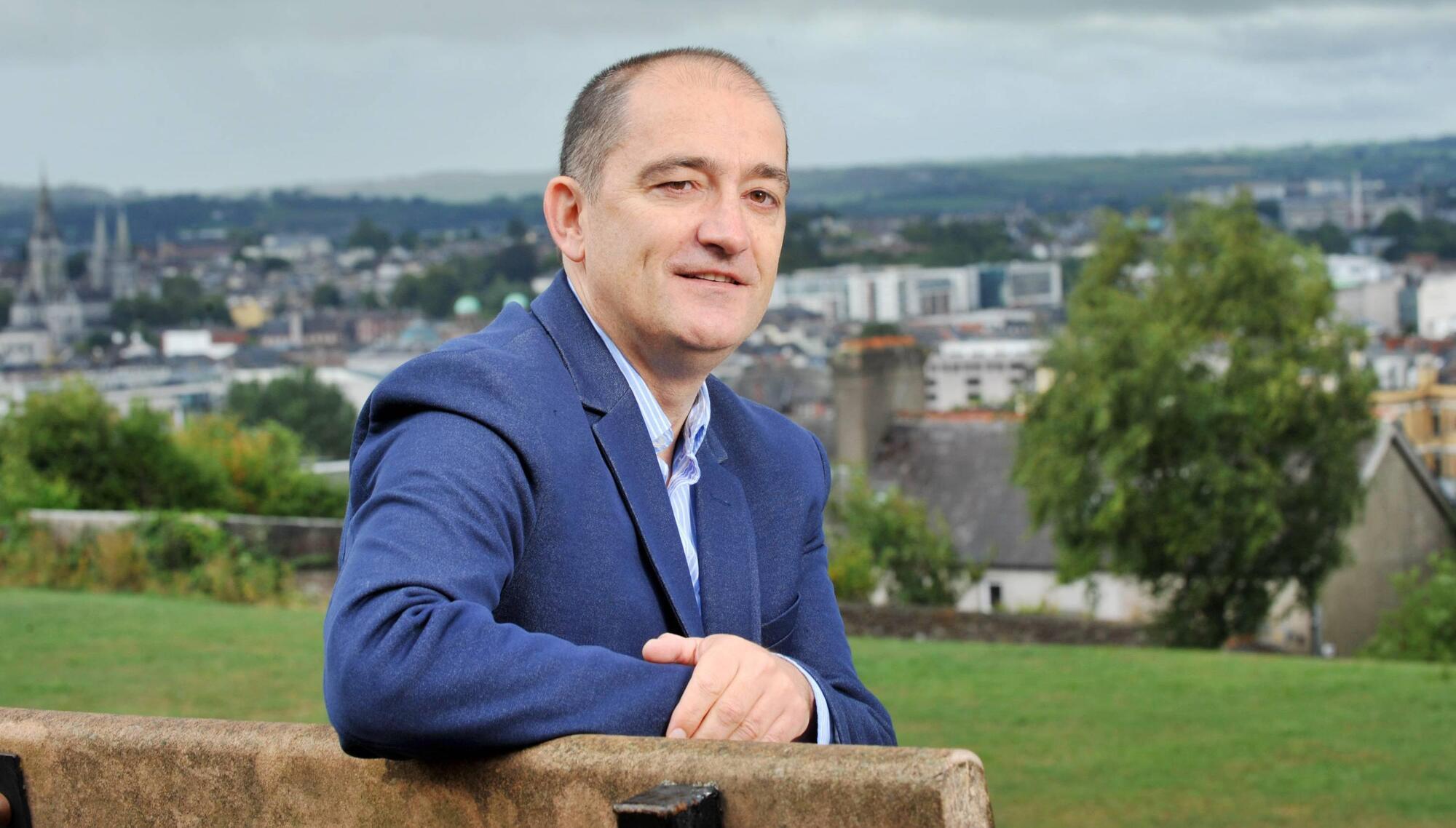
CUBS senior economics lecturer Declan Jordan says the disengagement from commercial activity undermines the State's ability to meet successive governments' stated commitment to balanced regional development.
The decision by Aer Lingus to close its Shannon Airport cabin crew base has led to renewed concerns for balanced regional development in Ireland.
This is primarily a blow to the workers and their families, who have endured such a difficult year in the pandemic. The threat of further layoffs by the airline is also a huge worry for the remaining staff.
The knock-on effects to the Mid-West and western region are difficult to estimate, but may be significant if this is a first step on a path to fewer and fewer services from the airport.
The removal of ground and cabin crew from Shannon will make it easier for the airline to scale back its operations further. It was reported last July that Aer Lingus management were reviewing the scale of their flying programme from Shannon and Cork airports and the ongoing viability of their regional bases.
This stems from the decision to sell the State’s minority stake in Aer Lingus six years ago. While nobody could have predicted the dramatic events for the sector in the last year, the sale agreement included an undertaking that Aer Lingus continue to operate its existing daily winter and summer scheduled frequencies between London Heathrow and Dublin, Cork, and Shannon for at least seven years post-acquisition.
Of course, Aer Lingus is now a private, for-profit business and these are the kinds of decisions that private businesses in highly competitive markets often need to make. It is easy to be critical of Aer Lingus, but these outcomes are foreseeable consequences of the removal of State interests in strategic economic assets like this.
Successive Irish governments claimed to be committed to balanced regional development.
However, the default ideological preference for private sector provision and disengagement by the State in commercial activity undermines our ability to meet that commitment.
It was clear, when the sale of the State’s stake in Aer Lingus was first proposed, that the needs of regions for international connectivity would be compromised.
A similar mindset can be seen in the push to outsource the provision of bus routes to private operators that are motivated by profit maximisation. This will mean rural communities get fewer services and people are then required to drive more.
The savings in economic efficiency are achieved at the cost of isolation and marginalisation, as well as environmental costs. Since these costs do not feature on any financial statements, they are generally not considered.

The costs to the region from Aer Lingus’ efficiency-driven assessments are also not included in any economic analysis, and so are not included in the decision-making process. These costs are borne by other businesses and communities in the region.
The implications are often invisible because it may be that the cost is in the activity that does not happen; the businesses that do not come to the region, the deals that go elsewhere, or the tourists that decide to spend their valuable time in more accessible places.
The economic activity foregone poses a huge challenge to our ability to enable thriving regions, and it is important to recognise that Shannon Airport serves a region from Kerry, through the mid-west, and beyond Galway. That includes two of our largest cities.
The National Planning Framework states that Limerick and Galway should plan for population growth of at least 50% out to 2040. These city regions need to prepare for a transformational change in the next two decades.
This new loss of services at Shannon Airport and the risks to existing services in coming years will compromise our ability to build thriving city regions.
It is difficult to know what the Government can do to counteract the costs of past and future downgrading of services to Shannon Airport. There is a case here of reaping what has been sown.
What we do need, however, is a level of honesty in stated commitments to the regions. We may need to sacrifice a degree of economic efficiency, but having regions outside of Dublin thriving and contributing to economic and social progress would be worth it.