John Daly: Ireland's food and drink firms can weather this latest crisis
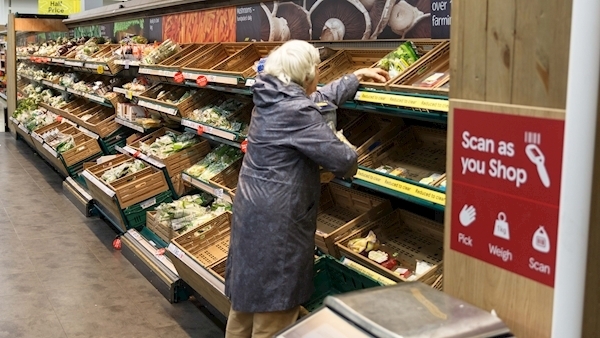
In this peculiar new Ireland of empty supermarket shelves and panic-buying, the food on our tables has never seemed more relevant, writes
While the uncertainty around Brexit might have been the key concern of just a month ago, it has quickly moved to the back row as the impact of Covid-19 becomes the single key challenge facing all businesses in the food and drink sector.
In a world where food provenance will become consumers’ primary concern, Ireland’s world status in sustainability and quality will surely see the industry emerge a winner when the current crisis passes.
“On the supply chain side, there may be knock-on delays to inputs sourced from abroad such as ingredients and packaging. Delays in exporting may also be a consideration, particularly exports to markets where travel and movement is restricted,” said Owen McFeely, director of retail and consumer practice at PwC Ireland.
On the upside, many Irish food and drink companies have done their Brexit planning and have been ready for potential disruption.
“This planning is now standing to businesses as they are able to quickly mobilise their Covid-19 contingency plans,” said Mr McFeely.
With increased Brexit certainty at the end of last year, many companies had planned significant capital investment for 2020, which had been on hold during the negotiations.
“However, the uncertainty of Covid-19 will challenge the industry and force a reassessment of 2020 plans,” said Mr McFeely.
Another issue is the potential impact on employees and their health, including the knock-on effect of absenteeism. Due to the nature of the industry, working from home may not be an option for many Irish food and drink companies as it is for other sectors.
“In the longer term, you have the wider impact of an economic downturn and its associated impact on consumer confidence. There is a high degree of uncertainty with regards to this and we can only continue to assess the situation on an ongoing basis,” said Mr McFeely.
While Irish SME food companies are optimistic about their growth prospects, they are less certain about the future performance of the economy, according to recent research by PwC and Love Irish Food.
With the vast majority focusing on the home market for growth, expansion into export markets is an area for potential development. Notwithstanding the current Covid-19 restrictions, eight-out-of-10 Irish food companies had expected revenue growth in 2020, of which a third anticipated revenue growth in excess of 10%.
With up to a third of owners having delayed investment over the last three years due to Brexit uncertainty, their current optimism is underscored by plans for capital investment in 2020, of which one in 10 indicated would be in excess of €3m.
“The markets with the greatest potential for the Irish food and drink sector include the local Irish market with our research showing that Irish consumers have a preference for shopping local,” said Mr McFeely.
International markets, including the more mature UK, EU, and US along with the growing Asia and African economies, continue to provide export opportunities for Ireland. That said, the effects of Covid-19 on exports to some of these markets may be impacted in the short term as movement and consumer demand are affected.
“However, with strong trade relationships built up over many years, trade will quickly pick up again as we emerge from the current crisis. Whilst the current crisis will challenge the industry in the short-term, a return to more normal trading conditions will ultimately occur as the world tackles and deals with Covid 19,” said Mr McFeely.
A stunning Irish success story — and one that will still be enjoyed in many places over St Patrick’s Day — is Jameson Irish Whiskey, now in double- and triple-digit growth in more than 70 markets across the world.
It continues to spearhead the renaissance of the Irish whiskey category with the brand achieving its 30th year of consecutive growth, selling 7.7m cases in 2018/19, up from 7.3m cases the previous year.
“Jameson is quickly becoming a truly global brand,” said Conor McQuaid, chairman and chief executive of Irish Distillers.
In the US, the Irish whiskey category sold 4.5m nine-litre cases in 2018, with sales of Jameson representing 78% of total Irish whiskey sales.
“In those local bars that are Irish owned or themed, bar staff took Jameson to their hearts and were instrumental in introducing customers to the brand and spreading the word — and you really can’t get a greater endorsement than that.”
He added that “the popularity of Jameson in the US was the tailwind to the global renaissance of Irish whiskey, and Jameson in particular, over the last 30 years.”
Another Irish brand with significant export potential is Five Farms Irish Cream, a “farm-to-table” product crafted from single batches of West Cork cream combined with premium Irish whiskey.
In a joint US-Irish venture between McCormick Distilling Company in Missouri, one of the oldest distilleries in the US, all of the ingredients are sourced and produced from five family-owned farms in the Barryroe area, all of which are located in a single cluster.
“The people from McCormick who came over were so impressed to see the land and cows feeding out in the open, most of their set-ups have cows feeding inside on the likes of maize,” said group spokesman Laurence Sexton.
“It’s great to see grass-fed milk regarded as premium. That’s our advantage — being capable of having cows out on grass for up to 300 days a year.”