David McNamara: US Supreme Court may prove biggest barrier to Trump tariff agenda
Legal institutions could check the US president's plans
David McNamara: US Supreme Court may prove biggest barrier to Trump tariff agenda

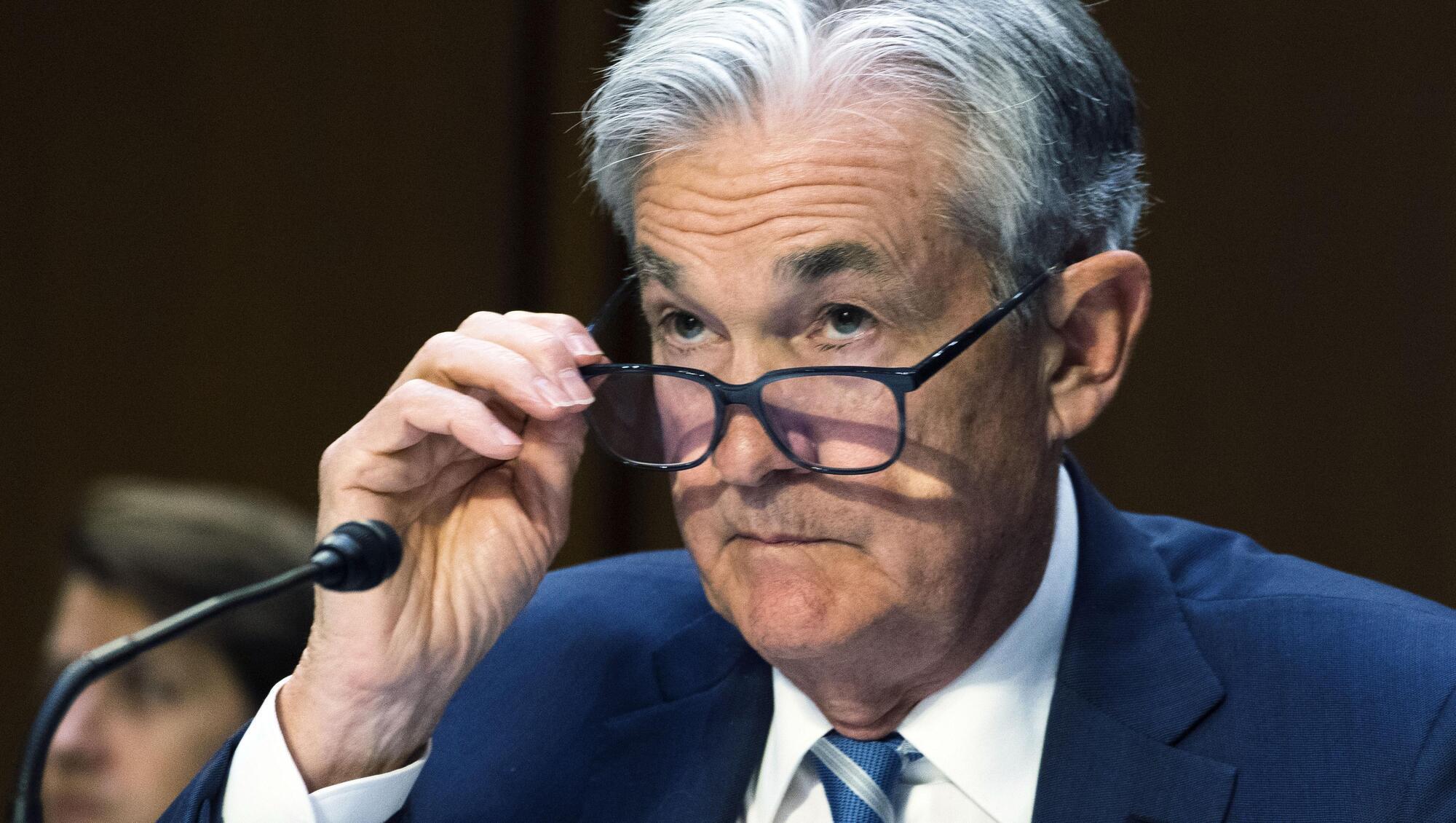
US federal reserve chair Jerome Powell. Mr Powell's term as chair ends in May. Picture: AP Photo/Manuel Balce Ceneta 

With US equity and treasury markets apparently restraining president Donald Trump’s expansionist plans for Greenland, last week’s U-turn once again highlights the power of US financial markets in checking his political agenda. Nonetheless, the reverberations from politics to markets have faded since the initial shock of the Liberation Day tariffs in 2025. 

Indeed, in the week leading up to the president’s Davos speech on January 21, the benchmark S&P 500 shed about 2.8% of its value, while treasury yields rose 10-15 basis points (bps) across the curve.

These moves pale in comparison to the ructions following the 'Liberation Day' tariffs in April 2025. In the week following those tariff announcements, the S&P 500 lost over 12%, compounding already sharp losses through March, while treasury yields surged c.50 bps and the dollar fell sharply. Since then, dollar losses have been sustained, but the US 10-year is today trading around 4.3%, compared to a mid-2025 peak of nearly 4.9%. 

Other recent salvos from the White House, such as the political attacks on Fed chair Jerome Powell, escalations in tensions with China, and attacks on Iran and Venezuela, have barely registered a blip on US markets.

Therefore, while the 'Taco' (Trump always chickens out) trade may have held this time, there are plenty of exceptions to this rule in the first year of Trump 2.0. Whether investor complacency is now at play, the diminishing market effects from Trump’s unorthodox policies could eventually render this Taco narrative moot.

As we have highlighted previously, outside of geopolitics, a key near-term risk for markets remains the ongoing tug-of-war between the US government and the Fed over its independence to set monetary policy. Indeed, Mr Powell recently attended a US Supreme Court hearing in relation to the US government’s case against Fed governor Lisa Cook, whom Mr Trump is seeking to remove from the board of governors. While no decision has been handed down, the arguments heard so far tentatively point to Ms Cook remaining in situ at the Fed. 

Meanwhile, a US justice department investigation into wrongdoing by the US Federal Reserve in relation to a construction project has drawn a sharp rebuke from Mr Powell and former Fed chairs. With a new chair set to take the reins this year, investors will be questioning their ability to set a course for monetary policy free of political pressure.

Also on the legal agenda is an impending US Supreme Court decision on Mr Trump’s reciprocal tariffs announced on Liberation Day, with lower courts ruling the tariffs illegal. Although other avenues can be found to apply tariffs, if both the Fed and tariff cases go against the US government, then legal institutions might yet prove to be a firmer check than markets on the Trump agenda in 2026.

David McNamara is AIB chief economist

More in this section

Cookie Policy Privacy Policy Brand Safety FAQ Help Contact Us Terms and Conditions

© Examiner Echo Group Limited