Irish Whiskey to benefit from reduced import duty in China
Irish Whiskey to benefit from reduced import duty in China

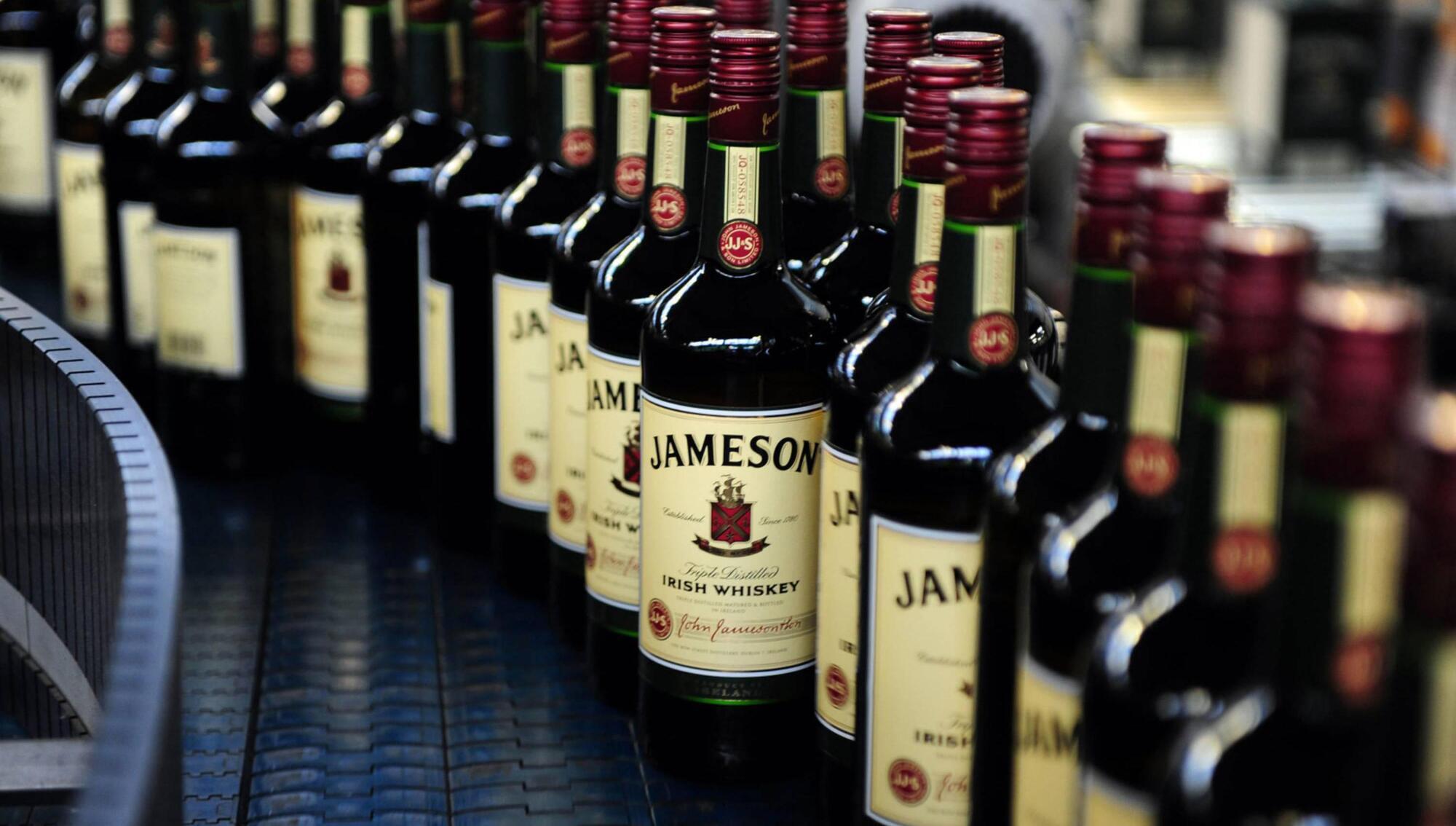
Pernod Ricard, parent company of Irish Distillers, considers China a high-potential, “must-win” market for its spirits portfolio, including Irish whiskey. Picture: Aidan Crawley/Bloomberg

Irish whiskey distillers received an unexpected advantage early this month when China’s Customs Tariff Commission announced a reduction in import tariffs on whisky and whiskey products, lowering the rate from 10% to 5%, effective 2 February 2026. 

While initially highlighted as a deal to benefit UK/Scotch whisky, following high-level discussions between the United Kingdom and China during Prime Minister Keir Starmer’s recent meeting with Premier Xi Jinping in Beijing, the China Ministry of Finance confirmed the reduced tariff applies uniformly to all whisky and whiskey categories. Thus, Irish whiskey will benefit alongside Scotch, Japanese, and US brands.


Despite a 5% decline in global whiskey exports in 2025, Irish whiskey exports to China demonstrated sustained growth, with brands such as Irish Distillers’ Jameson outpacing Scotch competitors despite market volatility. While the United States remains the largest market for Irish whiskey—accounting for one in three bottles sold—China is increasingly recognised as a key target for expansion.

Pernod Ricard, parent company of Irish Distillers, considers China a high-potential, “must-win” market for its spirits portfolio, including Irish whiskey, notwithstanding recent short-term challenges. As of late 2025, Jameson continued to achieve growth in China, offering a positive outlook for Pernod Ricard amid a broader 27% sales decline in China across its wider brand range during the first quarter of their 2025/2026 financial year.

The tariff reduction in China will be welcome news for Tommy Keane, Operations Director at Irish Distillers and recently appointed Chairman of Pernod Ricard’s Irish operations. Mr. Keane has been implementing cost-reduction, efficiency, and sustainability initiatives in response to a “dynamic cost environment.” The company is also introducing price increases for certain products in the Irish market on 22 February to address rising operational expenses.

The clarification from China regarding the uniform application of the import tariff will mitigate potential competitive disadvantages for Irish Distillers’ Jameson brand, which might otherwise have faced challenges from Bushmills, the Diageo brand distilled in Belfast, entering the Chinese market from a lower-cost base.

This adjustment follows the EU–India trade deal that substantially lowers whiskey tariffs from 150% to 40% over time. The stark contrast between the two agreements may drive strategic reassessments, as the scale of opportunities in India could shift focus from China.

A tariff reduction in India impacts a previously protected market, while China’s adjustment restores a more moderate competitive landscape in a market already open but niche in terms of export value. Despite the dominance of locally produced brands, Jameson has performed strongly in India, benefiting from a taste for premium whiskey among Indian consumers; sales have now surpassed the UK by market ranking. Lowered barriers are expected to further boost market share for Pernod Ricard-owned Jameson as they pursue the growing affluent population in India. Market reports indicate Irish Distillers is positioned for significant export growth to India in 2026, powered by the new EU–India agreement reducing import tariffs, initially to 75% and further to 40% over seven years. In 2024, Irish whiskey sales in India rose 57% year-on-year, with India emerging as a top five growth market and surpassing the US in long-term prospects.

The pending EU–Mercosur trade deal, although not yet ratified, also presents growth potential for Irish whiskey. Exports to Mercosur countries—Argentina, Brazil, Paraguay, and Uruguay—comprise a small but expanding market, with sales reported at €4 million for the year preceding January 2026. While volumes remain modest relative to major markets such as the US or UK, the region holds considerable growth promise, contingent upon the removal of high tariffs under the EU–Mercosur agreement.

According to the Bord Bia Export Performance and Prospects Report 2025/2026 released in January 2026, forecasts for Irish whiskey exports are described as facing a “transition year” following a 5% decline in 2025. Growth is anticipated from new and developing markets, especially in Asia -notably India and China- and South America.

However, Irish whiskey prospects in the USA for 2026 are cautiously optimistic, with expectations of a market stabilization and return to growth following the decline in 2025 caused by a 15% tariff, the depreciating dollar and inflationary pressures. While the U.S. market share dropped 2025 it remains the largest market, and despite challenges it is expected to stabilize, even as the industry explores emerging markets to diversify.

More in this section

Cookie Policy Privacy Policy Brand Safety FAQ Help Contact Us Terms and Conditions

© Examiner Echo Group Limited