ECB ‘unwilling to face failure of its fantasies’
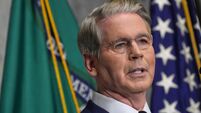
Honohan also attempted to bury the notion that it was the savage bailout terms imposed on us that has us in the current fix. He made it clear it was the huge budget deficit that prompted the cutbacks and not the impositions of the IMF and the EU, considerable though these pressures may be.
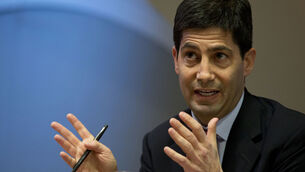
The governor and Trichet look united on the measures struggling EU economies need to take to redress the difficulties they themselves created. And the argument is pretty tight apart from the fact it ignores a simple principle of economics — that a depressed economy can’t rise from the ashes if further cuts are imposed.
Paul Krugman, the US Nobel prize-winning economist in a recent New York Times article, accuses Trichet of being the chief architect of “the doctrine of expansionary austerity”.
His argument is that under Trichet the ECB has started preaching austerity “as a universal economic elixir” that should be immediately imposed everywhere at a time when economies need to be boosted and not jeopardised by misguided policies that will make recovery even harder to achieve.
In Krugman’s view Europe has to prepare “for some kind of debt reduction,” involving aid from stronger economies, plus “haircuts” imposed on private creditors. But he notes that “realism appears to be in short supply.”
What Krugman says echoes the reality facing a lot of people. Last week the Finance Minister asked firms to write to him about the difficulties they were experiencing in getting money from the banks. His move had the ring of desperation about it.
If the banks are lending, why would the Finance Minister feel it necessary to engage in such an exercise?
The reality is that Irish banks are still strapped for capital and cannot do their basic job of lending for personal and commercial purposes. There is growing evidence too that more individuals are facing huge financial pressure from the banks via debt collectors.
These are issues that will not vanish into the ether as Krugman points out.
He is dismissive of Trichet’s stance on the crisis and argues Europe, in effect, is lost for ideas and its response could plunge the entire continent into an even deeper mess.
If Greek banks collapse that might force Greece out of the euro, a move that could cause massive problems across the continent.
“So what is the ECB thinking? My guess is that it’s just not willing to face up to the failure of its fantasies. And if this sounds incredibly foolish, well, who ever said that wisdom rules the world?”
They are pretty strong words from one of the world’s most respected economic thinkers.
In contrast Trichet’s speech in Achen on Thursday, when he was honoured with the Karlpreis 2011 by Germany, focused on ensuring that those in trouble bear the pain and claw themselves out via cutbacks and self-imposed hardships.
To help that process in the future he even suggested the setting up of a ministry of finance for the EU and powers for Europe to intervene directly in the formation of national budgets.
He also eloquently defended the philosophical ideals and deep sense of humanity that underpins the EU dream of a continent at peace and enjoying significant prosperity.
But the fear is that unless the ECB wakes up to the dangers in the current crisis and makes radical changes on debt restructuring, those ideals may be put in serious jeopardy.