Sutherland’s intervention will bolster Kenny’s case
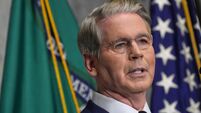
Sutherland, who is also a former attorney general in a previous Fine Gael-led coalition government, said money lent to states following breaches of the agreed limits on budget deficits had to carry some penalty “but should not amount to an unduly punitive sanction like it does now”.
His comments were made in a column he wrote earlier this week for the Financial Times and anticipated yesterday’s face-to-face between Enda Kenny and his European counterparts in Brussels.
What can be done to soften the blow of the €85 billion bailout deal with the EU and the IMF is far from certain, but Sutherland has made his views clear and who knows whether his intervention cuts some ice with the main power brokers in Europe — the French and Germans.
It is clear, however, that even in advance of any attempt to renegotiate the bailout terms, Angela Merkel and Nicolas Sarkozy want their pound of flesh as a quid pro quo for any easing of the bailout terms that Fine Gael has committed to renegotiating on behalf of the Irish taxpayer.
That payback is an increase in Irish corporation tax that, if agreed, could do serious damage to long-term inward investment which we are now counting on to underpin economic growth for the next two years at least.
Sutherland pointed out the gap between the 5.8% interest rate we are being charged for the €40bn worth of loans from Europe, and the significantly lower 2.9% interest rate the EU has to pay to borrow the money.
The former EU commissioner described the differential between the two rates as “exorbitant” and added it was “probably unsustainable having regard to likely growth rates.”
“Far from helping to solve the problem, it is therefore likely to exacerbate it,” he said.
His comments should help Taoiseach Enda Kenny as he locks horns with Merkel and Sarkozy at their meeting in Brussels to discuss, among other things, the terms agreed with the previous Fianna Fáil regime.
It is far from certain how far these negotiations can be advanced beyond some easing on the cost of borrowing at this point.
Burning bondholders appears not to be top of Merkel’s agenda and, because she is deemed to be politically vulnerable, it is far from clear how much of the €16bn in unguaranteed bonds can be negotiated at this stage.
Certain politicians have done a lot of hectoring about burning the big financial houses who saw fit to lend to us.
There is a case and an argument in favour of that, but the high-profile public lobbying by some politicians on that issue appears to have done us no favours.
Some argue those politicians are right, that we have nothing to fear and if we toughen this out we will win the day.
They could be right, but we will never know that until we win that argument and the bondholders are faced to take a hit of several billions on what they lent recklessly to us.
With interest rates on the increase and food prices starting to soar, not to mention the huge oil price spike, Europe could struggle to pull itself through this crisis intact.
While Germany is still powerful economically, Merkel is under political pressure. Sarkozy has an agenda that wants to see corporation tax rates standardised, irrespective of the consequences for Ireland.
Right now we could do with a serious windfall of good luck, but the Gods appear to have forgotten us.