David Davin-Power: Rivals scrambling to deal with Sinn Féin surge
There was a whiff of desperation about the abuse heaped on Sinn Féin and its economic plan by Simon Coveney and Paschal Donohoe, their denunciations echoing around the City Assembly rooms yesterday morning.
Mary Lou McDonald will “go wild with the State’s credit card” and the voter will end up paying the bill; her plan is a “con job” that will drive business from our shores and threaten jobs; Sinn Féin is allied to the Communist Party in Europe; a coalition involving the party and Fianna Fáil will link the “wreckers and the reckless”.
Clearly rattled by the demand for change highlighted by the polls, the Tánaiste sought to recast his party’s appeal.
Fine Gael, he argued, is the real repository of political change — why, hadn’t they successfully repealed the Eighth Amendment and brought in same-sex marriage?
It was all a far cry from the ‘steady as she goes’ message that characterised the Fine Gael campaign launch which stressed the need for continuity rather than change in the face of the challenge of Brexit.
No-one is denying the dangers the coming year will bring, but right now the backwash of Boris Johnson’s election victory has brought some relief from the incessant Brexit headlines.
The electorate here is savouring that respite and is in no mood to have the subject raised again. It is surprising that Fine Gael strategists didn’t pick this up, and their decision to highlight the perils of Brexit in the early stages of the campaign cost them valuable time.
It’s clear, too, that the confidence and supply arrangement of the last four years has been a disaster for Fine Gael — and and a substantial millstone for Fianna Fáil — and has led directly to the demands for change. For many voters, the perception has been that Micheál Martin has been part of the Government set-up and not merely a buttress for Fine Gael — a view heartily encouraged by Sinn Féin.
Leo Varadkar hasn’t ruled out a full-blown coalition between the two should the numbers not fall his way, but that would prove a disaster for both in the long run.
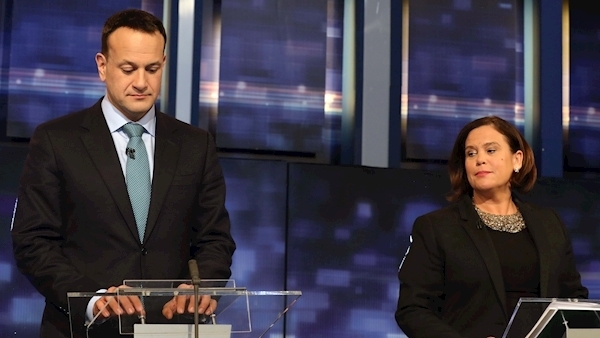
Moreover, attacks on Sinn Féin and RTÉ’s initial decision to exclude its leader from last night’s debate all served to create the impression that the old boys’ club was ganging up on Mary Lou McDonald.
There is no party more experienced and adept at exploiting a sense of victimhood than Sinn Féin, and there can be little doubt that that too has played a part in the remarkable surge in support for the party.
Mary Lou herself can claim some of the credit for the unexpected upturn in Sinn Féin’s fortunes. Since the disastrous European and local elections, she has ditched the hectoring condescension that marked many of her Dáil contributions for a more measured tone.
Her party’s manifesto, it is true, resembles an economic fantasy land where banks and multinationals blithely accept heavy taxation, and where a hugely increased pension burden would be borne — if I understand her correctly — by a population swelled by a soaring birthrate.
But it is unlikely to be implemented, and has instead served to distinguish Sinn Féin from its rivals and the party is unlikely to be troubled by attacks from employers’ group Ibec.
The fact is that Mary Lou McDonald now leads a mainstream political party, but both Fine Gael and Fianna Fáil have failed to fully recognise that.
Sinn Féin, it is true, is linked to those who have blood on their hands, and played a shameful role in prolonging a squalid conflict that blackened the name of this country for a generation. But that ended when Leo Varadkar was 15, and has little relevance for many of his generation.
That’s not to say the party should not be held to account for those years, but those claiming that they make Sinn Féin unfit for office shouldn’t expect to profit at the ballot box.
As Fine Gael is discovering, the electorate has short memories, and a couple of years of relative prosperity has made voters’ recollection even hazier. Lashing Fianna Fáil for its part in the economic crash is likely to be as effective as pointing out Sinn Féin’s role in a conflict that cost 3,500 lives.
The only crumb of comfort for a commentariat that failed to detect what is a remarkable swing to Mary Lou's party is that it took Sinn Féin by surprise too, as is evident from its defensive candidate selection strategy.
Just as the party failed to spot the drubbing that was coming down the tracks in last year’s elections, it seems it didn’t see the upturn in its fortunes approaching and may not be well equipped to benefit from the surge.
One minister yesterday was taking comfort in that volatility, gamely suggesting that it might see the tide turn in Fine Gael’s favour by the weekend.
Their fortunes may improve marginally, but the likely outcome remains a messy one, with Micheál Martin eventually emerging as taoiseach.
CONNECT WITH US TODAY



Be the first to know the latest news and updates