Losing our religion: Can Francis offer new hope and energy to Church?
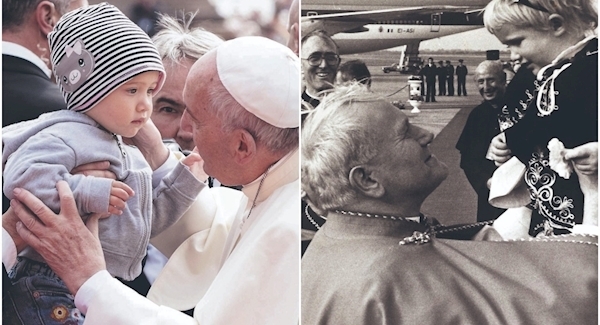
One of the things that can be said with a degree of certainty about the visit of Pope Francis to this country this weekend is that it will not slow, never mind halt, what Cork-born Professor Brendan O’Leary, from the University of Pennsylvania, has called “the de-Catholicising of Ireland”. That process began back in the 1960s and has progressed inexorably since then.
It is a truism, of course, that Pope Francis is coming to an Ireland very different to that which awaited Pope John Paul II in 1979. We are in what the former Abbot of Glenstal Abbey, Mark Hederman, agreed with Miriam O’Callaghan recently on RTÉ Radio 1 is “post-Catholic Ireland”. This is not to say that Irish Catholicism is in terminal decline, but it is to acknowledge that the place and status of the Catholic Church in Irish society and culture has radically changed.
Back in April 1974, Fr Michael Paul Gallagher SJ wrote what can now be regarded as a bellwether article in The Furrow magazine entitled ‘Atheism Irish Style’. The author referred to a pastoral letter issued the previous December by the then archbishop of Westminster, cardinal John Heenan, in which the cardinal focused on “the great decline in churchgoing in England”.
It had a new element: Young people who were beginning to abandon religious practice while still at school.
“I want to suggest,” wrote Fr Gallagher, “that Ireland is facing a comparable decline in religious faith and practice. As yet it may not be as immediate a crisis as in England, but it seems inevitable that it will become much more serious in the coming years. Already many parents, priests and teachers are aware of increasing numbers of young people for whom traditional religion makes little sense.”
Fr Gallagher said what seemed to be fairly central to “atheism Irish style” was a disenchantment with the externals of Church life and practice. “What one can only loosely and inaccurately term ‘atheism Irish style’ usually takes the form of alienation from the Church. By alienation I mean feelings of withdrawal, even of revulsion from something in which one is externally involved.”
That sense of alienation and especially revulsion — bearing in mind Fr Gallagher was writing in 1974 — would become much more accelerated and widespread following the shocking revelations contained in the Murphy, Ryan, and Cloyne reports about clerical sex abuse and cover-ups in the 21st century.
At the time, Fr Gallagher sought to pinpoint causes of loss of faith here. “What, then, are some of the specific lacks in Irish Catholicism that allow alienation to take hold? They may be summarised under three headings: Faults in the teaching of religion in schools; failings in the pastoral ministry of the Church; and weakness in the quality of Christian living in families and Irish society.”
As to how to respond, Fr Gallagher said: “The essential response and not always an easy one is to face the facts. If this were done we might have no difficulty over pastoral changes... Recognition of the growing crisis would almost automatically change our wavelength of thinking and communicating and planning for the future. But the ostrich posture is tempting — to evade the writing on the wall, keeping the head down in safe, unshifting sand.” And that, of course, is exactly what happened.
This article appeared five years before the historic visit of Pope John Paul II to Ireland, and in 1979, on the eve of that visit, there was a hope, indeed an expectation in some quarters — not least on the part of the Irish bishops — that the papal visit would bring about a revival and a renewal of Irish Catholicism, that the situation identified five years previously by Fr Gallagher would somehow be addressed and perhaps reversed.
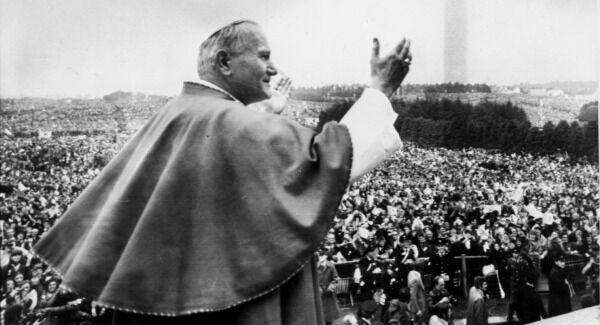
I covered that visit for the Irish Press and was made acutely aware, more than once, of the weight of expectation being invested in the visit, especially at the higher echelons of the Irish Church. It would reverse trends and reanimate the faith of a new generation of Catholics. Alas, it was not to be. The hope that there might be a renewal proved groundless. The historic visit left no lasting effect. In fact, the only tangible evidence that it ever took place is the large papal stone cross in the Phoenix Park. This was largely because, for too long, those in positions of power in the Irish Church had opted for what Fr Gallagher had called “the ostrich posture”.
By the time Mary Kenny’s book, Goodbye to Catholic Ireland (could there have been a more apposite title?), appeared in 1997, the country had been living for five years with the fallout from the Bishop Eamonn Casey-Annie Murphy affair.
“When the scandal of Bishop Casey of Galway broke upon Ireland in May 1992 — Eamonn Casey had had an affair in 1974, had fathered a child, deserted and denied mother and child, and in a desperate attempt to hide the truth had used diocesan funds to pay off the claims made by the mother of his son — it was a scandal unprecedented in Ireland for 200 years... People were flabbergasted; breathless; appalled; disbelieving. And bitter,” wrote Kenny.
“The furore over Casey — followed by the controversy over the X case — marked 1992 as the year when Catholic Ireland began to slide into retreat and decline, the year when Irish Catholicism was seen as being in the wrong.”
In a wider context, Kenny linked the decline of the institutional Church to the decline of the Catholic faith as a central part of Irish culture.
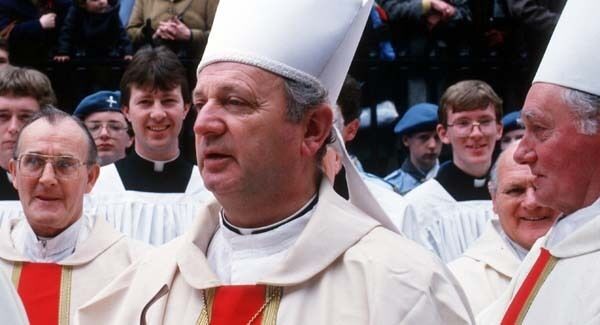
“Although Catholicism has marked certain values, and has deposited its heritage in the culture, it is widely accepted that the Catholic Church means much less to young people in Ireland today than it has ever done in the course of Christian history. The young Irish no longer see Catholicism as part of their identity.”
The influence of religion in Ireland has been on the wane from even further back than the Casey-Murphy scandal. But since then it has been an accelerating phenomenon. Today there is an abundance of evidence that Ireland is losing its religion. And the socio-moral implications of this have been dramatic, though we are far from having a full picture. Too much has changed too quickly for us to be able to discern a pattern. And while the increasing marginalisation of religion may be welcomed by ardent secularists and militant atheists, it presents a profound challenge for wider society.
Since the foundation of the modern Irish State in 1922, religion has been the social cement the provided cohesion and stability, and it was religion primarily that shaped our common moral framework. Our value system was rooted in religion.
In Moral Monopoly, Tom Inglis of UCD traced how the Catholic Church established a monopoly over Irish morality. “In the heyday of the Catholic Church’s power, particularly during the 50 years after the foundation of the State, its influence expanded beyond the religious field into the field of politics, economics, education, health, social welfare, the media and many other fields. The power of the Church meant that it structured not just the religious life of the Irish people but their social, political, and economic life as well.”
That moral power has been declining since the 1960s, and the monopoly over morality has been broken, even though, as Inglis pointed out, “at the height of their power in the 1950s, some bishops came close to advocating a theocratic state”.
In 2008 Malachi O’Doherty’s book Empty Pulpits: Ireland’s Retreat from Religion appeared. He said the collapse of religion, in one of the most conspicuously devout countries of Europe, is fascinating and pertinent to an understanding of the world we live in.
Akey to that understanding is the spread of secularisation. “One simple sign of secularisation is the reduction in the numbers of people going to church,” according to O’Doherty. “A more stark one is the reduction in recruitment to the priesthood, ministry, or religious orders.
Another is the relaxation of the felt need in government to defer to the institutional Church or the religious sensibilities of the electorate. All these trends are strongly evident in Ireland.
O’Doherty says we are not all atheists — yet. “But we are getting by without God most of the time.”
That last statement remains something of an untested hypothesis; a drift away from the institutional Church (and it is more than just a “drift” these days), should not be readily equated with a loss of faith.
“Faith does not simply disappear overnight, and there are continuing signs of spiritual vitality in our country,” Fr Gerry O’Hanlon SJ reminded us in his recent book, The Quiet Revolution of Pope Francis. “But the institutional presence needed to support this faith in the longer run can no longer be taken for granted.”
Nevertheless in the 10 years since the publication of Empty Pulpits, the trends identified by the author and the profound changes they were symptomatic of have become even more pronounced. Back in November 2014, the headline on the front-page lead story in The Irish Catholic stated: “Church has ‘lost the battle’ with secularism — archbishop”.
The archbishop in question was Michael Neary of Tuam. The paper reported that in his homily at the Mass for the Association of Papal Orders in Ireland at McKee Barracks in Dublin, Dr Neary said the Church in Ireland found itself “at a rather bewildering crossroads”.
Warning that the Church was regarded with apathy by many people, Dr Neary said: “This is because the whole society, like an Irish village of 50 years ago, knows and is tacitly acknowledging something that hardly needs to be said — that a great struggle, social, political, intellectual, and profoundly cultural, has been fought. And that we have lost.”
Dramatic proof of that loss is to be seen in the outcome of two referenda — that on same-sex marriage in 2015 and on repealing the Eighth Amendment earlier this year.
So it’s not at all strange that Fr Brendan Hoban, a co-founder of the Association of Catholic Priests (ACT), should write an article in this newspaper two years ago, about the forthcoming papal visit, in which he states: “The gap between 1979 when Pope John Paul visited Ireland and 2018 is much more than 40 years. It’s unquantifiable — a tsunami that defies description.” We live, he said, in a completely different Ireland inhabited by a completely different people.
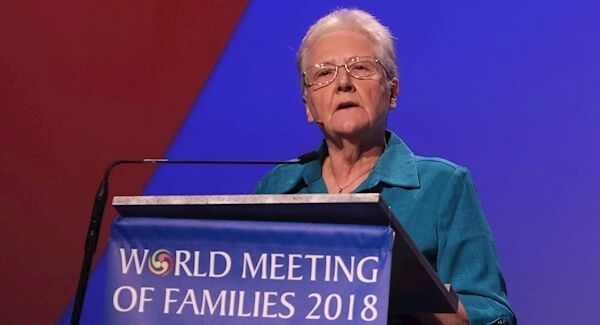
The two-day window for the Pope’s visit (36 hours, really) is short. The three big formal events will be the Mass in Phoenix Park, the Mass at the Marian shrine in Knock, and the World Meeting of Families event in Croke Park.

It’s on another front that the visit of Pope Francis will really be gauged. We shouldn’t fool ourselves: Papal visits are like extended rock jamborees — for 36 or 48 hours they generate a feelgood factor, then we all go back to what we were doing beforehand. They are a distraction, and it may even be time for a major rethink about these visits.
Of course Francis is coming with enormous goodwill. He has, as Fr Gerry O’Hanlon so persuasively demonstrated in his new book, a different vision for the Church than his predecessors, Benedict XVI and John Paul II.
The extent to which he has changed the public image of the papacy, moving it away from the monarchical model, is well captured in a new film by Wim Wenders, Pope Francis: A Man of His Word.
But he has disappointed also. Paul Vallely, an otherwise sympathetic biographer, has focused on problem areas: “He has made little progress on a topic that perplexes him, the role of women in the Church. And the resignation last week of Marie Collins (Vallely was writing in March 2017), the sole remaining survivor on the pontifical sex abuse commission, suggests he is not winning the hidden civil war being waged inside the Curia between the reformers and those who are consistently blocking important remedial action on paedophile priests and episcopal cover-ups.”
One of the main “blockers” was cardinal Angelo Sodano, Vatican secretary of state from 1991 to 2006. Earlier this month the Irish Times had confirmation from former president Mary McAleese that she refused an attempt by Sodano in 2003 to discuss a concordat with Ireland that would have a clause protecting Vatican and diocesan archives. It occurred during a State visit to Italy. “I told him I thought it extraordinarily inappropriate, and very, very dangerous to the Church, if it was pursued,” said Mrs McAleese.
Meanwhile, Marie Collins wrote a column for the Irish Times shortly afterwards in which she said Pope Francis saying sorry it happened, sorry you were hurt, won’t cut it anymore. “He should admit the responsibility the Vatican and Church leadership hold for past events in Ireland and set out how he is going to deal with the abuses happening today in other parts of the Catholic world. He needs to do more than make promises. He must commit to action.”
Will that happen?
“Can Francis give new hope and new energy to the Catholic Church in Ireland?” said Fr Hoban.
Will his visit arrest the spiral of decline from 1979 to 2018? Or will it encourage yet another revisiting of the old, tired redundant solutions that have been tried and found wanting time and time again?
The issuing of a letter by Francis earlier this week, addressed to the “People of God” — an unprecedented move — is not going to give any “new hope” to victims of abuse. The Pope acknowledges that “we showed no care for the little ones. We abandoned them.” With yet another promise of a “no-tolerance” policy, there is still no action plan. That has already caused deep disappointment among victim groups.
The end of Irish Catholicism is not nigh. This second papal visit may not change much. But the Irish Catholic Church, in however marginalised a manner, will continue to have a presence in Irish society.
A comment by Mary Kenny is pertinent: “Catholic Ireland dead and gone? It’s been pronounced dead many times before, by myself and thyself and all, but it has a way of enduring just the same, although perhaps in different livery.”
Just what “form” that livery takes is something we must await. As to what extent it will bear the imprint of Pope Francis, and his desire for a “people’s church”, depends on whether it embraces the “quiet revolution” of the first Jesuit Pope.
The convocation of a national synod, in the aftermath of this visit, could be the first real indication of steps in that direction.

CONNECT WITH US TODAY



Be the first to know the latest news and updates