Mica Paris is bringing a little dream of Ella to Cork
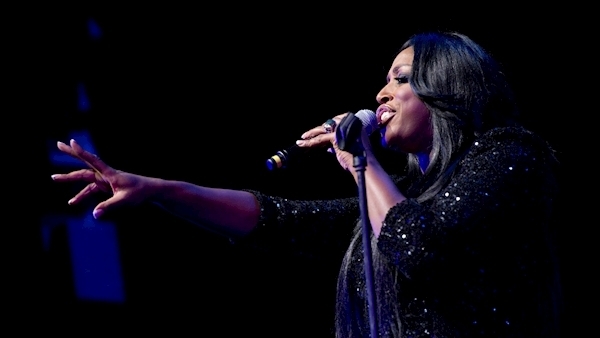
Mica Paris kicks off the Cork Jazz Festival tomorrow night with a show featuring the songs of Ella Fitzgerald. She tells about her own rise to fame and her love of the American legend.
“I never lose it. My grandparents raised me and they were ministers, so I went to church seven days a week. Choir practice, bible study: it went on for 15 years. It was great, because it was also a whole community of musicians.
My grandparents were Jamaican, Pentecostal church. Their house was full of music. My aunts and uncles were classically trained, and they were always rehearsing, everything from ragtime to Mozart.
When I walked home from school, I could hear the piano from the bottom of the street.”
“I signed my deal with Island Records when I was 18, and the album came out when I was 19 and went mental in the charts. I didn’t know it was going to happen so quickly; I was quite surprised.

Browns was the big club back then, in Holborn, and everyone was there: George Michael, Prince, all these record execs. We’d go, but I couldn’t keep up. I wasn’t a drinker, so I was always throwing up in the toilets.
I think I was lucky: because I was such a kid, everyone was protective of me. I remember thinking, why do two people keep going into the toilet all the time? I remember asking someone and them saying, ‘Mica, they’re doing drugs.’
And it was like, ‘Aaaah, I see.’ I was so green.”
“My grandparents really thought I was going to become a drug addict in the industry so I kind of made it my mission to prove them wrong.
They were terrified; I had to beg them to let me sign my first deal because they thought I’d end up a train wreck.
But too many of my idols had gone that way; Marvin Gaye had just died a couple of years before my deal, and he was my number one.
I had all the dangers drilled into me and I had the fear of going to hell because honey, trust me, I was pretty sure it would happen. If you are indoctrinated seven days of the week than you kind of believe it.”
“I’m an eternal optimist and I always knew this was what I wanted to do.
When everyone told me it would be tough for me, or impossible, or that I’d never get signed, I just had an unshakeable belief in the gift I’d been given, and it didn’t matter how many people said no. I just didn’t stop.
My job here is to touch people with the gift I’ve got. That might sound romantic or idealistic but it was my modus operandi and it’s what kept me going.
When you’re on stage and you see people respond emotionally to your voice and they’re uplifted by it, you kind of know that that’s bigger than the other stuff. It’s the most powerful thing in the world.
No industry can own you.”
“There aren’t a lot of female performers though. It’s mostly male: female vocalists? Not really.
I’m 31 years in the business and I kind of hoped there’d be more like me by now, with my kind of singing... church and all that.
It’s true, when I started we only really had Sadé, and she was really big. The UK hadn’t had someone with a big gospel voice before; I was a teenager with this huge voice.
Brits were like, ‘Wow, she’s not American’. Then it was Shaka Khan, Prince, Natalie Cole: I was swarmed on by Americans and they dragged me over and I ended up touring the States and living there. I still visit a lot.”
“I saw him in June; we were at the Polo with the Queen and stuff. I hadn’t seen him for months, but usually I see him quite a bit when he’s in London. We catch a drink or we bump into each other.”
“Yes, I’m like that too. Chris has his own thing going on but for me, I think taking pride in how I dress comes from the church thing too.
You had to have your Sunday best, your church outfits were pristine and weren’t touched for anything else.”
“I’ve been an ambassador with the Amy Winehouse Foundation for six years; it’s an amazing foundation and they do great work.
After my brother was shot 18 years ago, I worked with mothers who lost sons to gun crime. You have influence when you have that platform and you have to use it.
Whatever I do, if it’s a song, a radio show, a book, the intention is always the same: to inspire. That’s what an artist’s job is, any way you can do it. We’re here to serve humanity.”
“I felt drawn to pay homage to her two years ago on her centenary. This woman was incredible: I just wanted to give her some respect. She probably had the longest career known to man, and she was totally independent.
People run around with this feminism thing now, but she was out there for years doing all these things that only men were supposed to do and she didn’t make a big drama about it.
As a musician, she was constantly evolving, which is why her catalogue is so massive. Her versatility makes her a hero of mine, and the fact she died doing what she loved, and the fact that no-one sounded like her.
I do Ella in Mica Paris way; I’m not here to copy, I’m here to appreciate and pay homage.”
“Well, I’ve got chills now. No, I didn’t know that. Thank you for telling me! I hope I’ll get as warm a reception as she did: fingers and toes crossed.”

CONNECT WITH US TODAY



Be the first to know the latest news and updates









