Snoring is no joke: Important that you are aware of the solutions
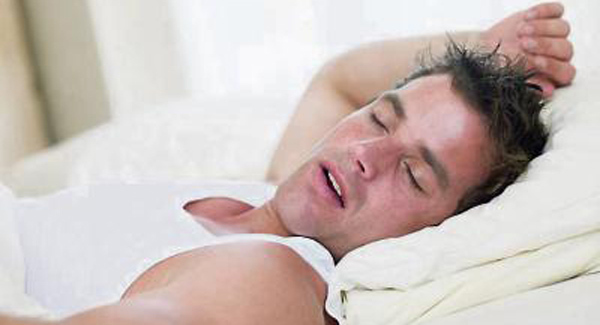
Snoring - or sleeping next to a snorer - can both cause lack of sleep, and despite the jokes, it can be an intractable issue. However, there are solutions, says .
I probably snore - apparently, up to half of us do at some point in our lives. I don’t know for sure though, because I’m asleep during my hypothetical snoring, as is my husband - he can sleep through earthquakes, volcanoes, and small children repeatedly coming into our room in the middle of the night (only one of these theories has been tested in real life).
Unfortunately for me, I can’t sleep through earthquakes or volcanoes, nor can I sleep through any kind of snoring, no matter how gentle, which is why my husband is used to an elbow in the ribs in the middle of the night.
He doesn’t snore all the time, but when he does, it has an impact. I try the elbow-in-the-ribs and I mutter and I grumble and sometimes I sleep on the couch, because once I’m awake, I’m wide awake, and at that point even the sound of breathing keeps me from nodding off.
We’ve tried different things - a snore spray that does seem to work, although it’s possible that waking him up to use the spray is what does the trick - it gives me the chance to fall back to sleep before he does.
I’ve tried ear-plugs but seem to have bought the ones that don’t actually block out any noise. I’ve tried a white-noise app - great for drowning out the sound of a neighbour’s alarm but not so great to with snoring.
So what next - accept snoring as something normal we just have to live with? No, says MyoFunctional Therapist Bridget O’Connor.
“Snoring is common, but common doesn’t equal normal. It’s definitely not normal, it’s sleep disordered breathing.”
Using what she calls “facial physio”, O’Connor helps people with sleep disorders in O’Connor Dental Health, the practice she runs in Cork with her dentist husband Tony.
“Your sleep is so important; sleep is at the epicentre of your health but so many kids, teens, and adults are not sleeping properly – they might appear to have the correct number of hours but if their sleep is interrupted, they won’t have healed during that time, and won’t have made enough chemicals to keep themselves in good form throughout the day.”
But what causes snoring to begin with? I asked Patrick McKeown, author of The Oxygen Advantage.
“There are two types of snoring. Mouth-snoring is when the soft tissue at the back of the palate vibrates. If you breathe through the nose, it automatically stops mouth-snoring, so that’s one type resolved without any surgery or device.
"Mouth-snoring is pretty common and mouth-breathing during sleep increases the chance of Obstructive Sleep Apnoea; that’s when the individual is snoring and stops breathing for a period of time.”
McKeown, who runs clinics to help people with sleep disorders and other breathing-related issues, has a simple solution to stop mouth-snoring: “We use paper tape across the lips — we’ve been using it for 15 years.”
For children who are mouth-breathing, McKeown has free online courses available on his website ButeykoClinic.com. “Mouth-breathing affects sleep in children and therefore impacts learning, can cause crooked teeth, has implications for speech, and changes the structure of the face.”
The other type of snoring is nasal-snoring, he explains. “This is turbulence inside the nasopharynx. The harder you’re breathing through the nose, the more you snore. So we get people to breathe through the nose, but also give them breathing exercises, to practice light, calm breathing.
"A lot of people heavy breathe – it’s caused by modern living, lack of exercise, talking all day, being under stress, the food we eat; and heavy breathing amplifies snoring.”
Of course, many people don’t realise they’re snoring – if they don’t have a partner giving them an elbow in the ribs, they may be oblivious. So how can you find out if you snore?
“I’d ask do you ever wake up making noises – a snorting noise in the throat,” says Bridget O’Connor, “Or you can try to record yourself on your phone. There are many presentations of a sleep disorder — snoring is only one of them, but it’s definitely a sign of a problem.”
So if you realise you’re snoring, what can you do? Start with your GP, who may advise lifestyle changes, or refer you for a Polysomnogram (to rule out Obstructive Sleep Apnoea), or suggest a dentist who practices sleep medicine.
The dentist may offer to fit a Mandibular Advancement Device (MAD) – Bridget O’Connor explains what this is.
“The dentist takes moulds of the mouth and make a Mandibular Advancement Device which the patient wears to bed. The lower jaw is propped forward, then the tongue comes forward too, so it’s less likely to fall back and create snoring.” It does come with a warning though.
“Down the road it can change the match between the upper and lower jaw, creating a mismatch so that’s one of the warnings they have to give. Patients can end up in for worse trouble with jaw joint problems. So a MAD needs to be short-term.” Snorers who have tried everything else might opt for a CPAP machine (a tube and mask device) or surgery.
For my husband, getting breathing working correctly seemed like a good first port of call, so he tried a Skype consultation with Patrick McKeown. Within a few minutes, McKeown had established that my husband is more than likely breathing through his mouth at night, and showed him some breathing exercises to change that habit, as well as sending him paper tape to use.
Then as we waited for the new breathing habit to kick in, I got some general tips from sleep expert Jean O’Hanlon.
“When our sleep is disrupted by a snoring bed partner, we tend to wind up sleep deprived and fatigued ourselves. This lack of quality sleep can leave us feeling stressed, anxious and irritable, and unfortunately, even more likely to be agitated by sounds like snoring.
"It’s a vicious circle! Sometimes, the anticipation of the sound can be enough to put us on edge. This state of vigilance means we’re more alert, making it difficult to relax into sleep.”
O’Hanlon, who teaches mindfulness in Cork, suggests finding techniques that sooth our nervous system in order to fall into deep, stage 3 restorative sleep.
“Then we’re less likely to be bothered by noise should it arise. Yoga, breathing techniques, and meditation can greatly help with improving our sleep quality, and the benefits are more powerful when these techniques are practised consistently over time.”
And what if you’re not into yoga or meditation? “We need to feel safe and secure in order to fall into a deep sleep, so if we have worries or lengthy To-Do Lists swimming around our heads, it’s challenging to truly switch off.
"Journaling or jotting these down on paper can really help you let go and sleep more soundly. If physical tension is a problem for you, try an Epsom Salts bath or Magnesium Oil rubbed into tense muscles.”
She has some tips for the snorer too. “Things that can help include devices or pillows that encourage sleeping on the side— or sewing a tennis ball into the back of a T-shirt! — as snoring tends to occur when we lie on our backs.
"Also, dietary and lifestyle changes can help. The main things to avoid are alcohol, spicy food, dairy products and cigarettes.” So did the breathing exercises work?
So far so good. I don’t know for sure if it’s because I’m sleeping better and therefore oblivious to snoring, or if the snoring has stopped already, but I haven’t slept on the couch in a while now… and my husband’s ribs are starting to recover too.
CONNECT WITH US TODAY



Be the first to know the latest news and updates